BY ROYAUME
November 2026
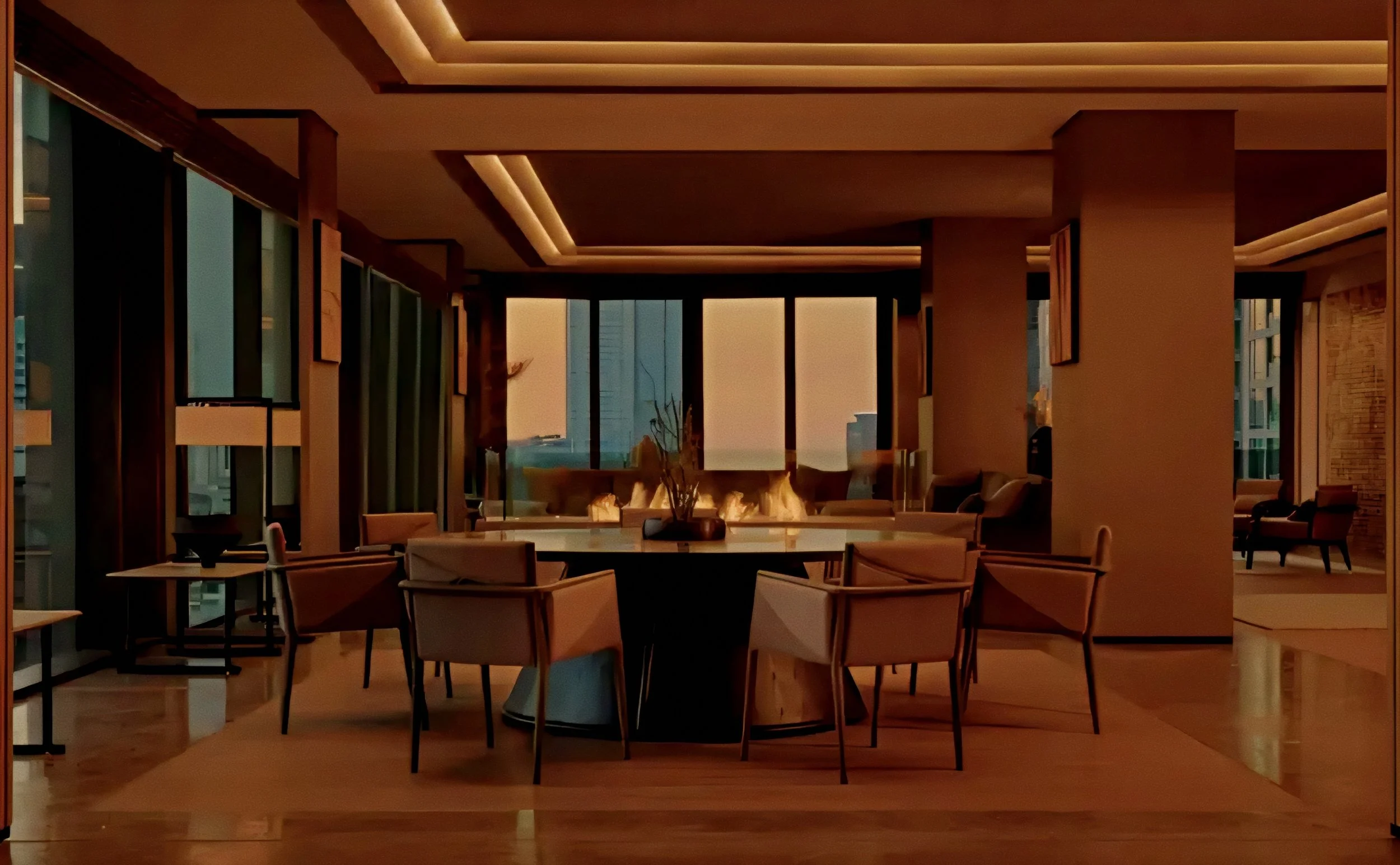
Layered ceiling soffits and muted leather upholstery gathering around a glowing hearth at twilight. Photo: Aman Nai Lert Bangkok
Aman Nai Lert Bangkok arrives as Thailand’s defining inaugural urban Aman sanctuary, set within the seven-acre emerald canopy of historic Nai Lert Park along Bangkok’s prestigious Wireless Road corridor. Occupying the lower 19 floors of a sleek 36-story tower set amid a dense tropical canopy, the architectural marvel houses 52 expansive suites and 39 branded residences, anchored by an extraordinary living Sompong tree—the third-tallest in Bangkok—that pierces through the lower pool and open-air voids into the sky. Handed entirely to legendary architect Jean-Michel Gathy of Denniston, working in close collaboration with architectural partner Openbox Architects, alongside interior lead David Schoonbroodt, the 56,000-square-meter masterwork establishes a profound bridge between early twentieth-century Siamese enterprise and modern ultra-luxury. The estate’s unbroken history dates to 1894, rooted in the legacy of Lert Sreshthaputra—famously known as Nai Lert or Phraya Bhakdinorasreth—the visionary pioneer who introduced Thailand’s first ice factory, motor bus system, ice rink, and department store. In 1915, he purchased the wilderness along the Saen Saep Canal, constructing a permanent teakwood family home from leftover naval ship timber—the historic Nai Lert Park Heritage Home that stands adjacent today as a private museum—while preserving the jungle as Siam’s first Western-style public park long before Lumphini Park existed.
The creation of this vertical sanctuary represents a singular collaborative vision between Naphaporn ‘Lek’ Bodiratnangkura, CEO of Nai Lert Group and great-granddaughter of Nai Lert, and Vladislav Doronin, Chairman and CEO of Aman Group. Seeking a custodian of silence and space to protect her family’s century-old estate, Bodiratnangkura partnered with Doronin as he strategically transitions the Aman brand from remote wilderness refuges like Amanpuri in Phuket into global urban gateways. Jean-Michel Gathy structured the building’s massing around Nai Lert’s century-old Sompong tree, conceiving the spatial sequence as a psychological decompression chamber where guests do not merely sleep, but feel. The arrival experience begins under a wave-like canopy roof at a shaded, greenery-interwoven metal porte-cochère, transitioning into a ground-floor lobby dominated by a bespoke black-and-gold lacquer mural tracing Bangkok’s winding waterways behind a desk hand-carved from four distinct layers of local wood. Here, low-key lighting, ambient stillness, and the signature Aman scent immediately isolate guests from the metropolitan chaos outside.
Ascending to the double- and triple-height main reception on the 8th and 9th floors, the architectural narrative deepens into a series of monumental spatial statements and fine heritage metaphors. Directly behind the reception desk sits an art installation by Martin Gerlier featuring 3,000 hand-crafted ceramic spinning tops precisely mapped to form the Thai numeral one (๑)—a dual homage to the prestigious 1 Soi Somkid address and the pioneering spirit of Nai Lert. Suspended over a reflective pool within a triple-height oval atrium floats a breathtaking 12-meter brass tree sculpture boasting 6,000 hand-gilded leaves that gradient from shimmering gold down to deep charcoal-black, symbolizing the continuation of the family lineage and echoing the living Chamchuri rain tree outside. The surrounding public spaces extend this storytelling, from the 1872 Bar adorned with wood-carvings honoring traditional Nang Yai shadow puppetry to the multi-story limestone atriums on guest floors, where water features, minimalist white stones, and the actual fingerprint of the Nai Lert family's daughter pressed permanently into the limestone walls offer an extraordinarily tender touch.
The interior design masterfully fuses a Japanese-inspired minimalist Godai framework—balancing the five elements of fire, earth, wind, air, and void—with rich, tactile Thai craftsmanship. Rather than replicating the antique teakwood structure of the 1915 Heritage Home, David Schoonbroodt mathematically mapped the geometry of its historic parquet floor planks, translating the pattern into the cut of the resort's massive Supergenti stone tile lobby floors. Walls of light-colored stone, textured flexible bamboo stone, and heavy teak panels are framed by double-height hardwood screens hand-carved by Chiang Mai artisans and inlaid with rivers of gold leaf. As daylight filters through intricately slatted timber ceiling louvers and openwork wooden lattices, it casts shifting, ripple-like shadows across the floor, blurring the boundary between the outdoor park canopy and the indoor sanctuary. Avoiding hyper-decorated clichés, Aman Nai Lert Bangkok stands as a hyper-exclusive, living monument to Siam’s golden age—a timeless sanctuary where architectural gravity, natural heritage, and quiet luxury effortlessly converge.
The Teak Boudoir
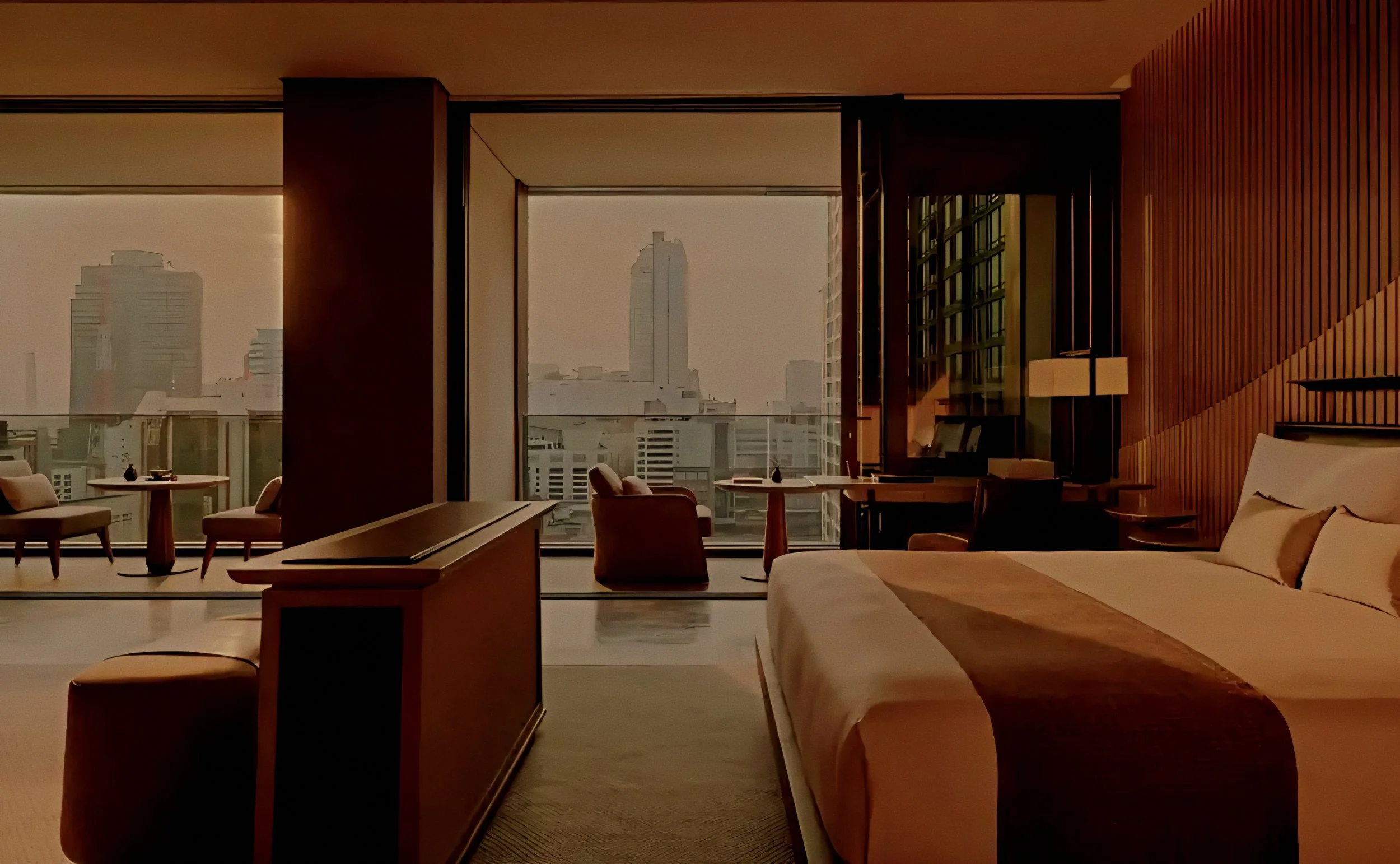
Fluted timber paneling and tailored upholstery framing panoramic city fenestration under quiet twilight. Photo: Aman Nai Lert Bangkok
Rejecting the high-density convention of typical metropolitan high-rises, the accommodation inventory at Aman Nai Lert Bangkok is engineered around an exceptionally restrained floor plan. The hotel houses a highly exclusive collection of just 52 suites—with no standard guestrooms in sight—delivering a private estate mentality elevated high above the capital. Ranging from an expansive entry-level 94 square meters up to magnificent multi-room footprints, each space functions as a serene retreat from the frantic urban pulse below. While the vertical tower structure naturally precludes traditional land-bound villas, master architect Jean-Michel Gathy and interior designer David Schoonbroodt—with technical interior development executed alongside Archetype Group—configured every interior to mimic the volumetric freedom and tactile quietude of a self-contained private residence.
The bedrooms serve as masterclasses in understated Japanese-Thai minimalism, anchored by oversized king beds meticulously oriented to face soaring floor-to-ceiling glass walls. Directly behind the headboards, feature walls are hand-paneled in authentic banana tree bark woven in subtle organic tones, their sweeping curves mathematically echoing the sloping rooflines of ancient Siamese royal architecture. On opposing walls, custom hand-textured plaster and resin relief panels snake delicately across the space, tracing the historic silt banks of the Chao Phraya River. To preserve an unencumbered visual field, state-of-the-art televisions are fully retractable, remaining hidden within bespoke footboard cabinets until summoned.
Extending the private residential domain, the building also houses 34 exclusive Aman Residences spanning up to 18 floors, offering layouts from 127-square-meter one-bedroom homes to sprawling 2,200-square-meter four-bedroom penthouses with 3.2-meter ceiling heights. Complementing the residential offerings on the 9th floor are three intimate Heritage Rooms—private event enclaves bathed in natural light and serviced by dedicated Aman hosts, designed to feel like wandering through separate wings of a private manor house. Across both suites and residences, every architectural line prioritizes spatial order, balance, and physical tranquility over superficial decoration.
The Monolith Oasis
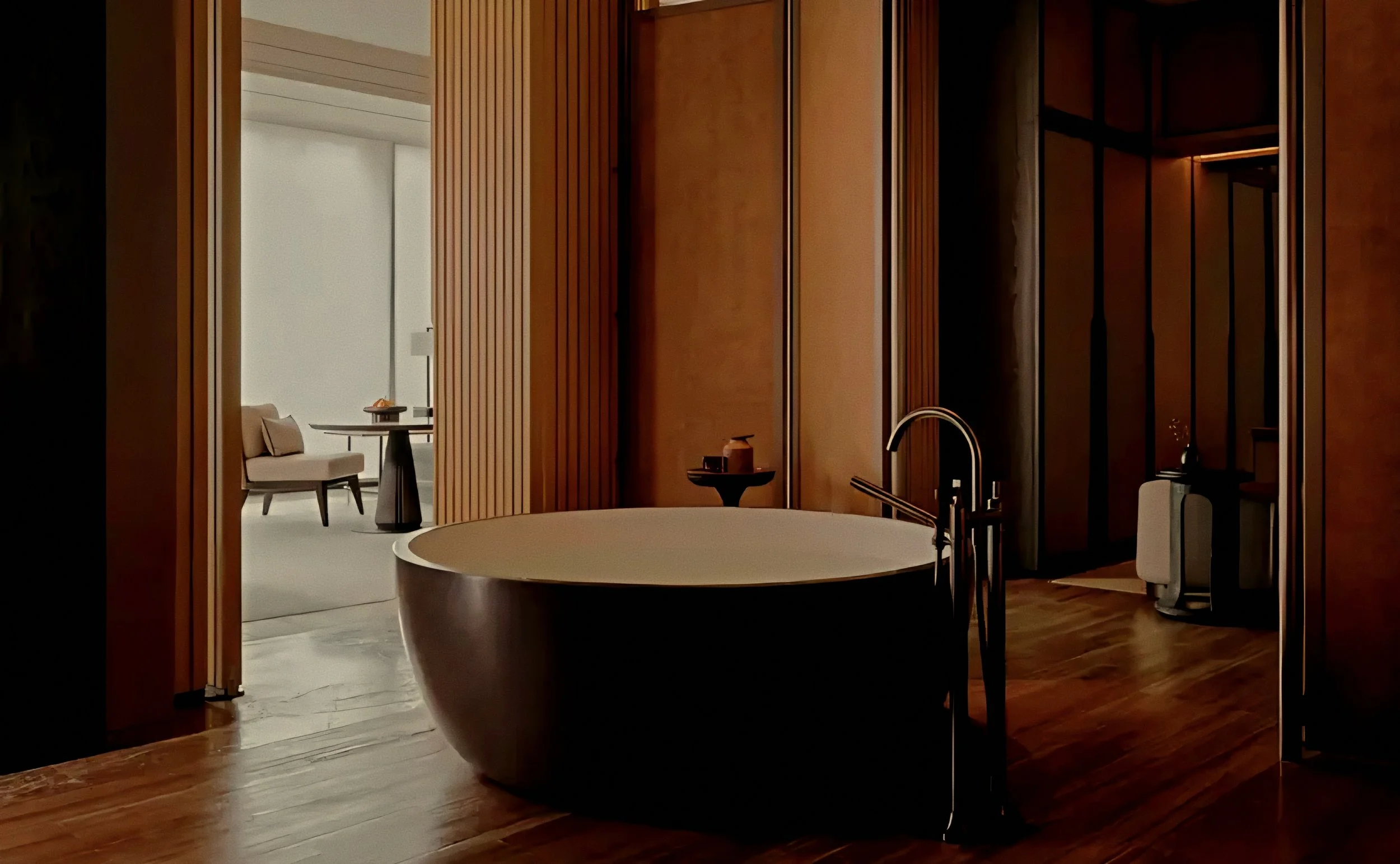
A monolithic dark soaking vessel resting on rich timber flooring beside amber-lit architectural joinery. Photo: Aman Nai Lert Bangkok
Conceived as deep-cleansing sanctuaries, the bathrooms within the suites at Aman Nai Lert Bangkok embrace a lavish spa-like scale. Wrapped in smooth local limestone and custom textured bamboo-finish stones, these wellness volumes blur the line between personal grooming enclaves and private bathhouses. The absolute architectural centerpieces are magnificent, oversized circular soaking tubs positioned directly alongside floor-to-ceiling windows, allowing guests to submerge in complete stillness while hovering over the historic Nai Lert Park tree canopy or the distant Bangkok cityscape.
Flanking the circular tubs are expansive wet rooms clad in dark marble, featuring dual-headed rainfall shower systems and integrated sit-down stone benches for unhurried bathing rituals. Double vanity counters carved from natural stone frame the space, while heavy sliding timber doors and pivoting louvered panels allow guests to open the bathroom directly to the bedroom views or lock down absolute privacy. Connecting seamlessly to the bath chambers are deep, double-sided walk-in dressing rooms lined with fine Thai silks, offering generous, clutter-free storage that reinforces the suite’s hushed, meditative atmosphere.
The Plinth Alcove
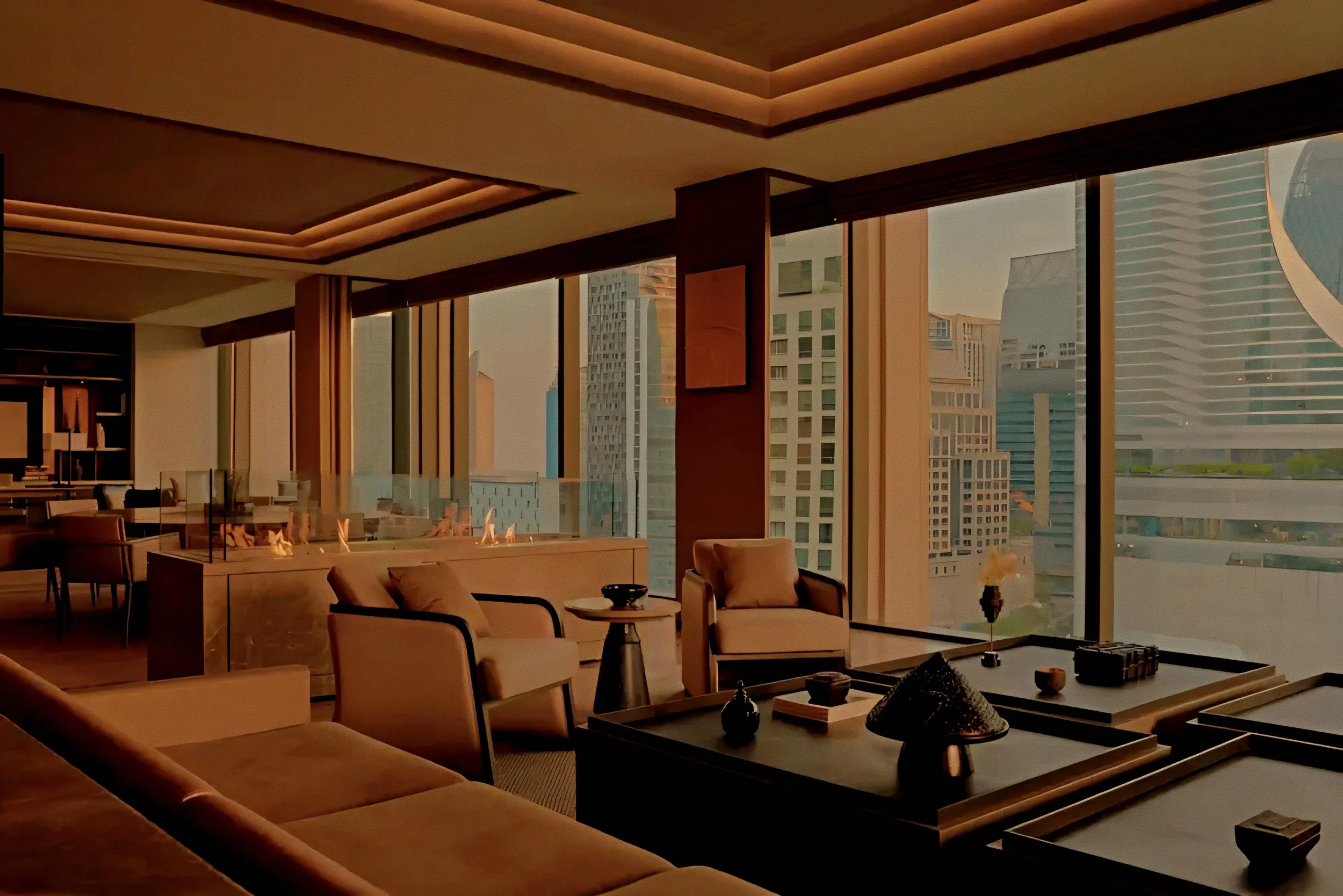
Low-profile velvet sectionals and dark timber coffee tables anchored against sprawling urban fenestration. Photo: Aman Nai Lert Bangkok
The living environments across the 52 suites draw their aesthetic power from Gathy’s signature layout philosophy, utilizing massive pivoting timber doors that allow spaces to transform instantly from open loft-like pavilions into private work and lounge quarters. Neutral, warm canvas palettes are paired with solid natural stone accent tables and exceptionally long, low-slung daybeds built directly along the window perimeters. Capturing the core intent behind these residential sanctuaries, architect Jean-Michel Gathy reflects, "Good design serves its intended purpose effectively. I believe a building should be balanced, harmonious, and visually attractive. Geometry creates order and balance, and ensures the structure is pleasant to the eye. In my vision, these elements are essential for creating designs that stand the test of time."
Echoing this focus on emotional resonance, interior lead David Schoonbroodt notes, "While the city outside moves with pace and energy, our property offers a rare sense of stillness." This architectural commitment to tranquility reaches its absolute zenith on the 17th floor with the singular Terrace Suite—a 114-square-meter west-facing sanctuary prized for its sprawling open-air deck designed for private sunset toasts. Inside, light-filled rooms feature pivoting panels that allow the bathroom's circular soaking tub to capture unobstructed skyline views, establishing an effortless fluid rhythm between indoor comfort and outdoor environment.
Crowning the apex of the tower on the 18th floor is the masterwork of the property: The Aman Suite. Encompassing the entire 18th floor across 566 square meters in its one-bedroom layout—and expanding up to 713 square meters when combined with connecting junior suites—this flagship residence represents the ultimate urban refuge. The suite is completely self-contained with its own private spa, complete with a reflection water pool, custom dry sauna, private steam rooms, hot and cold plunge pools, and a dedicated fitness gym. Complete with a private soundproofed screening room, a wood-carved cocktail bar, a professional kitchen for personal chefs, a quiet study, and dual-aspect terraces framing both west-facing sunsets and south-facing park vistas, it stands as an unmatched palace in the clouds.
The Epicurean Refectory
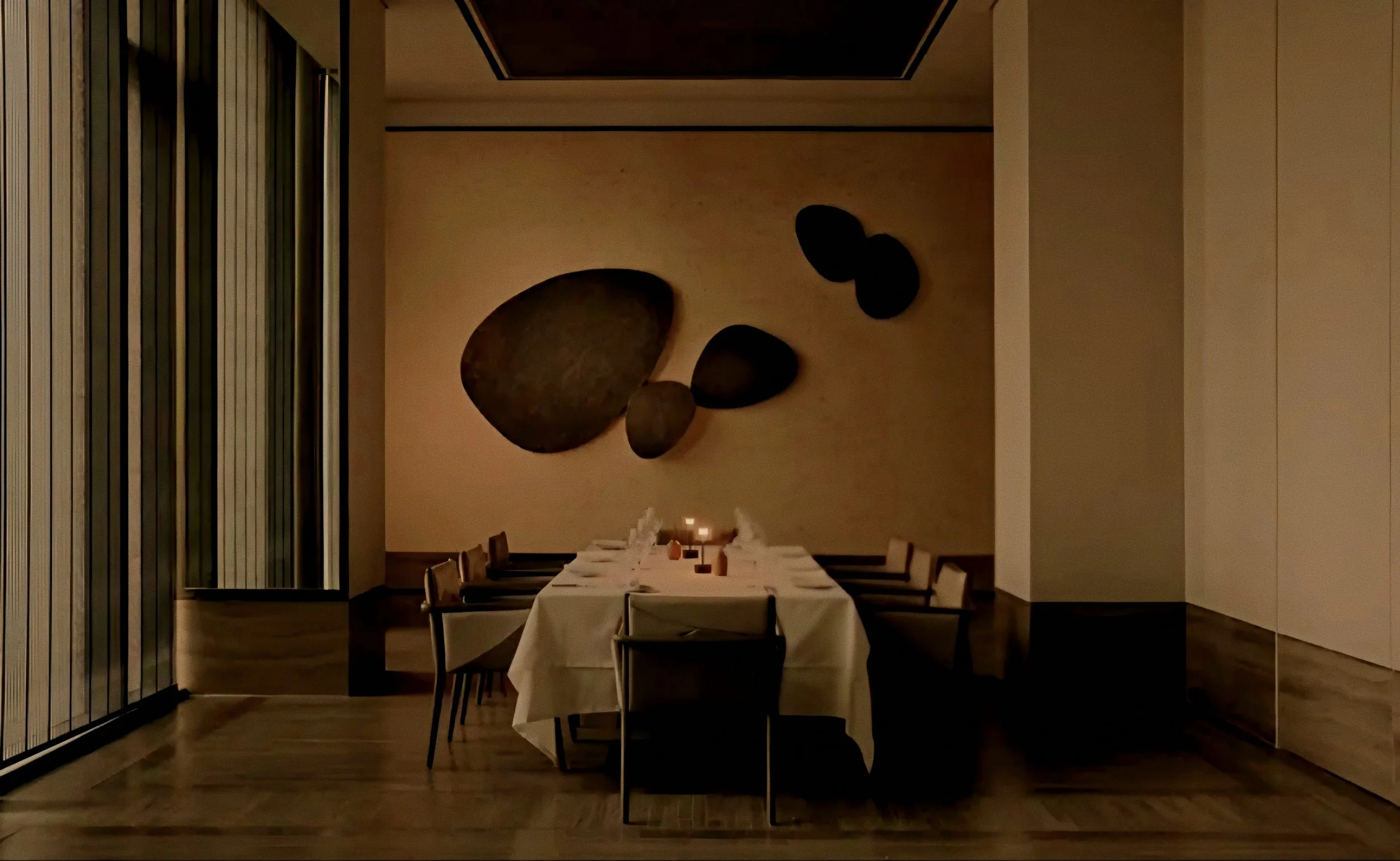
Tactile relief wall sculptures and crisp linen drapery defining a serene, softly illuminated dining salon. Photo: Aman Nai Lert Bangkok
The epicurean sanctuary at Aman Nai Lert Bangkok functions as two distinct worlds separated by height, privacy, and architectural access, spanning luxury restaurants and private dining enclaves distributed between the public 9th floor and the private 19th-floor Aman Club. Rooted in the Japanese philosophy of Godai—the five elements of Earth, Water, Fire, Wind, and Void—the culinary compass relies on strict seasonal discipline rather than heavy manipulation, drawing directly from a curated kitchen garden and urban micro-farm woven into the surrounding seven-acre Nai Lert Park grounds. Daily harvests of hyper-local Thai herbs, edible flowers, and fresh aromatics supply the kitchens, supplemented by ingredients traced to smallholder artisanal farms in Thailand, Italy, and Japan. Framing this holistic ethos, the culinary team reflects, "The purpose of dining at Aman is to bridge time and space—using the ancestral elements of the park to ground global culinary arts."
The social heart of the property unfolds across the 9th floor at Arva, the signature Italian fine-dining restaurant led by Chef de Cuisine Edoardo Traverso, where floor-to-ceiling glass looks onto the northern cityscape framed by warm stone and three exclusive private dining rooms accommodating up to 10 guests. Guided by Traverso’s mantra, "Respecting raw ingredients through Italian simplicity, while letting the local elements breathe," the kitchen delivers crudi arrays, hand-rolled Linguine Vongole, and slow-roasted meats–offering an understated, high-energy dining experience framed by tactile stone and sweeping high-altitude skyline views.
Ascending past the private "Club Door" onto the hyper-exclusive 19th floor, the atmosphere transitions into a hushed sanctuary reserved for hotel guests, residents, and Club Founders. Within this elevated realm sits Sesui, a 19-course traditional Edomae sushi temple where Master Sushi Chef Satoshi Tsuru prepares daily catches flown from Japan across a pristine Hinoki wood counter, paired with rare boutique sakes. Adjacent lies Hiori, a multi-sensory Teppanyaki Kaiseki theater helmed by Head Japanese Chef Yoji Kitayama, who elevates standard iron-grill cooking into a technical artform across a curved granite counter, serving graded Japanese Wagyu, market seafood, and house-aged misos under dark timber slats.
The Onyx Nocturne
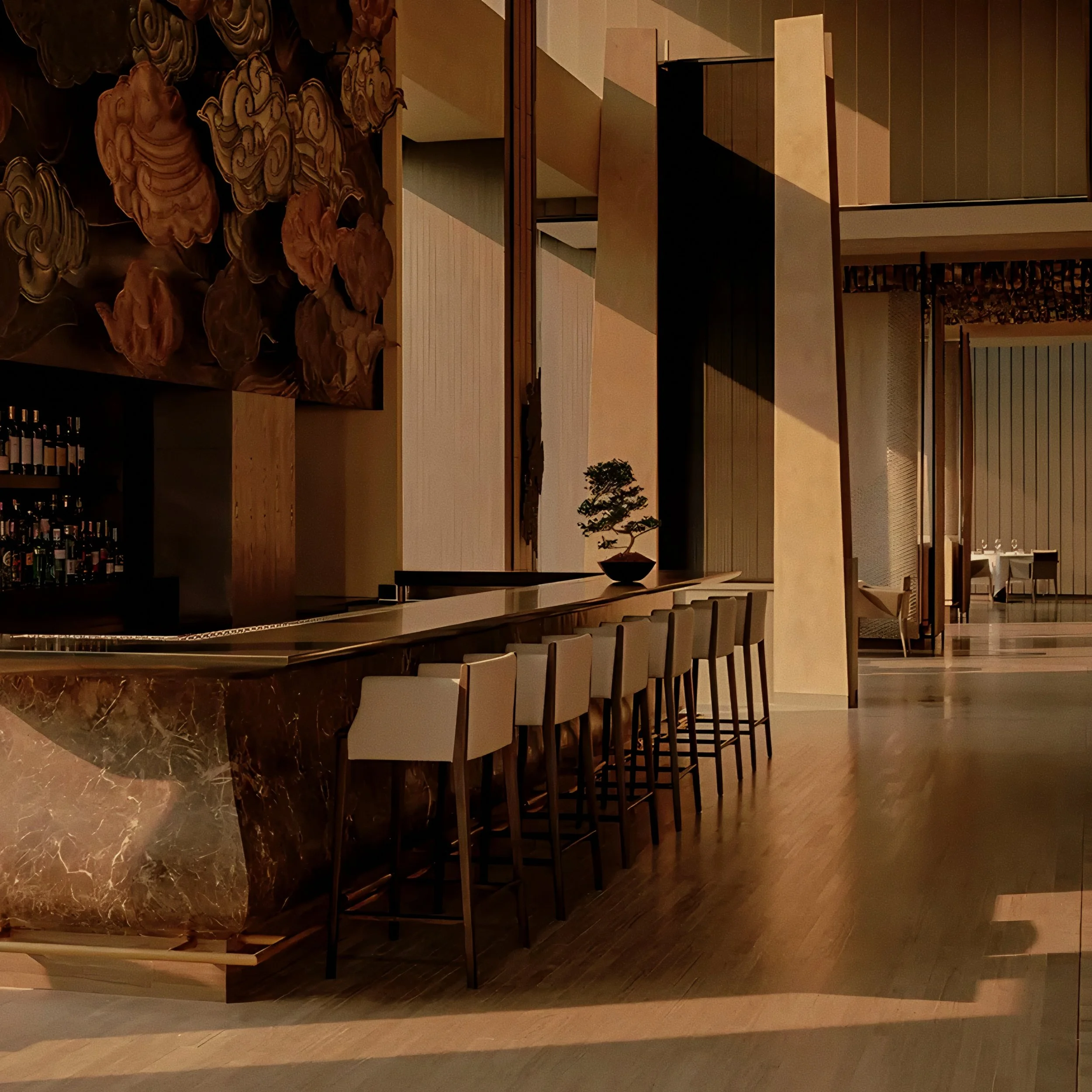
A sculpted green marble bar plinth and high-back seating beneath a dramatic bronze feature wall. Photo: Aman Nai Lert Bangkok
Anchoring the 9th floor as the primary social hearth of the hotel, 1872—named explicitly after the birth year of pioneer Lert Sreshthaputra—functions as an ambient lounge and bar that transforms effortlessly from a sunlit daytime retreat into a moody cocktail destination. Located adjacent to the lobby atrium with an outdoor terrace hanging directly over the ancient park canopy, the interior pairs low-slung minimalist seating with elaborate hand-carved wood paneling that pays direct homage to Nang Yai (traditional Thai shadow puppetry). Commanding the room is a monolithic bar carved from deeply veined dark marble set against warm timber pillars and delicate bonsai accents. Here, with subtle ambient lighting conceptualized by Withlight Interior Design, Director of Beverages and Bars Michele Montauti orchestrates an intimate evening aperitivo ritual, serving botanical cocktails infused with harvests from Nai Lert Park—from the signature 1872 Martini to the Blossom Negroni—alongside seasonal cicchetti, Thai home-style classics, and interactive mixology workshops.
High above on the 19th floor, the mixology narrative continues within the sky speakeasy of the Aman Lounge, where a triple-height glass facade frames an open-air terrace and sweeping sunset views over the Bangkok skyline. The cocktail program here is mathematically themed around the five Godai elements, paired with rare Japanese spirits, Izakaya-style bites, and nightly live acoustic vocalists. Hidden nearby is the secretive Cigar Bar—a dark, cloistered sanctuary featuring plush leather armchairs, dim library lamps, and state-of-the-art walk-in humidors housing rare hand-rolled vintage cigars and ultra-premium aged whiskies. From park-side botanical infusions to high-altitude sunset toasts, the bar ecosystem at Aman Nai Lert Bangkok captures the ultimate essence of refined luxury living.
The Subterranean Sanctum
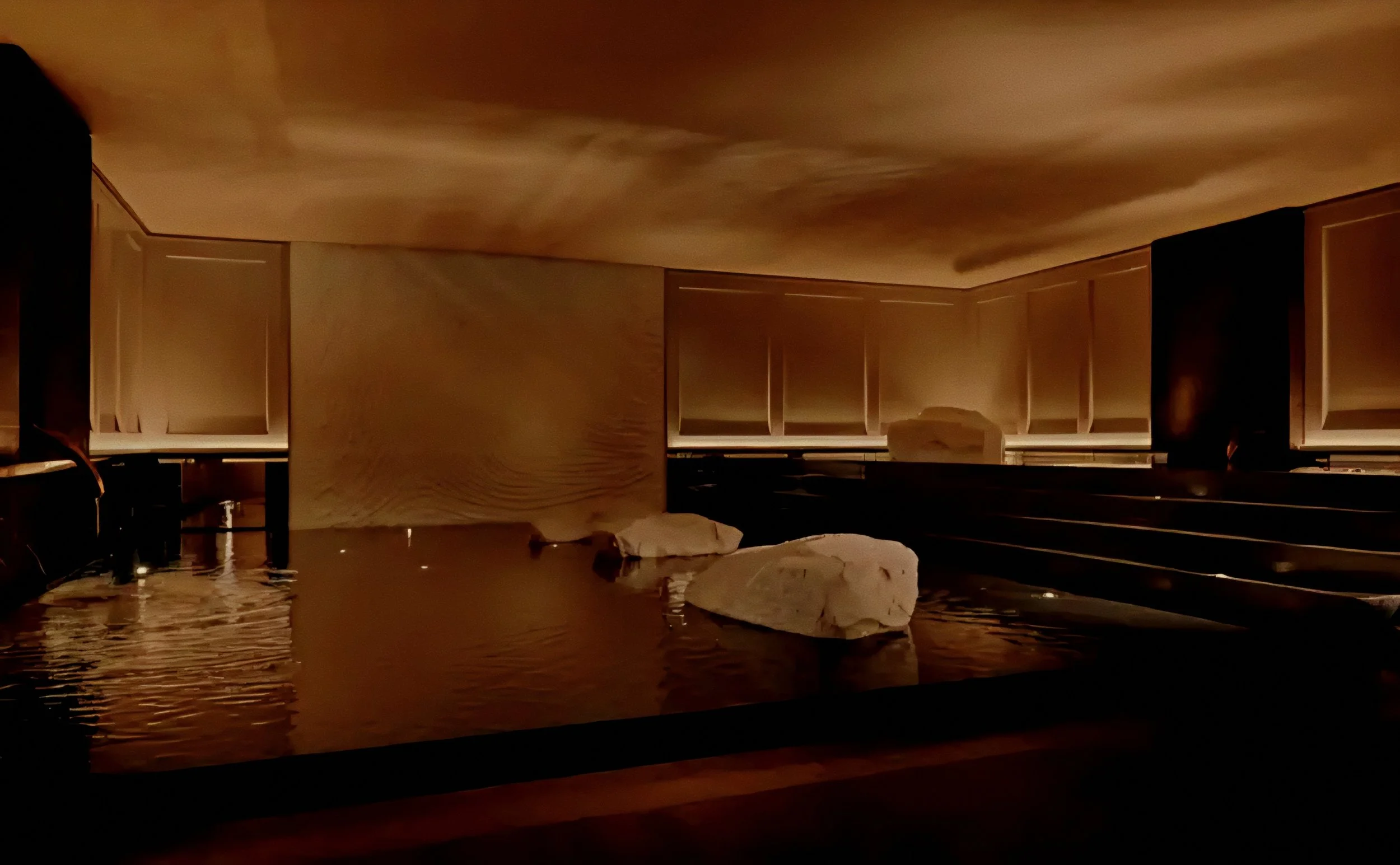
Polished dark stone reflecting still water and sculptural stone forms under subterranean light. Photo: Aman Nai Lert Bangkok
Spanning 1,500 square meters across three dedicated levels (Floors 8, 9, and 10), the Aman Spa & Wellness center reimagines urban longevity by pairing cutting-edge medical optimization with pristine hydrotherapy. Anchored on the 10th floor, the holistic sanctuary houses a comprehensive thermal circuit featuring dry saunas, steam rooms, hot tubs, cold plunge pools, and experiential showers designed for hot-and-cold contrast recovery. For absolute privacy, guests can reserve the Private Banya Spa House—a wood-clad thermal enclave complete with a Vichy shower and relaxation lounge—or indulge in caviar-infused anti-aging hair rituals at the Miriam Quevedo Finishing Salon. This spatial commitment to hydro-wellness is mirrored within the flagship 18th-floor Aman Suite itself, which houses a private spa sanctuary featuring a dark stone reflection pool anchored by natural river boulders.
On the 8th floor, luxury relaxation meets clinical medicine through an exclusive partnership with Hertitude Clinic, where medical doctors oversee eight private clinic rooms, an IV Nutrient Lounge for cellular hydration and jet-lag recovery, and full-body cryotherapy chambers engineered to accelerate athletic healing. Athletic conditioning continues in the 265-square-meter 24-hour gym equipped with Technogym apparatus, heavy boxing bags, and a dedicated Muay Thai ring for private martial arts instruction. Movement studios outfitted with Pilates Reformers, Cadillacs, and Wunda Chairs offer tailored alignment work, complemented by the 3-day Novak Djokovic Mobility & Recovery Programme—an elite training block created with the 24-time Grand Slam champion that integrates medical body composition analysis, contrast hydrotherapy, targeted tennis coaching, and restorative Banya sessions.
Beyond the architectural walls, the estate's greatest wellness asset remains the surrounding three-hectare Nai Lert Park itself, providing an untouched natural sanctuary where manicured paths wind beneath century-old canopies. Guests can engage in active meditation through traditional Thai flower garland crafting or lotus leaf folding, practice outdoor yoga beside reflective lotus ponds, or stroll to the heritage canal dock to feed giant fish. This harmonious interplay between clinical innovation, high-performance training, and natural grounding solidifies Aman Nai Lert Bangkok as a world-class temple of holistic longevity.
The Arbor Basin
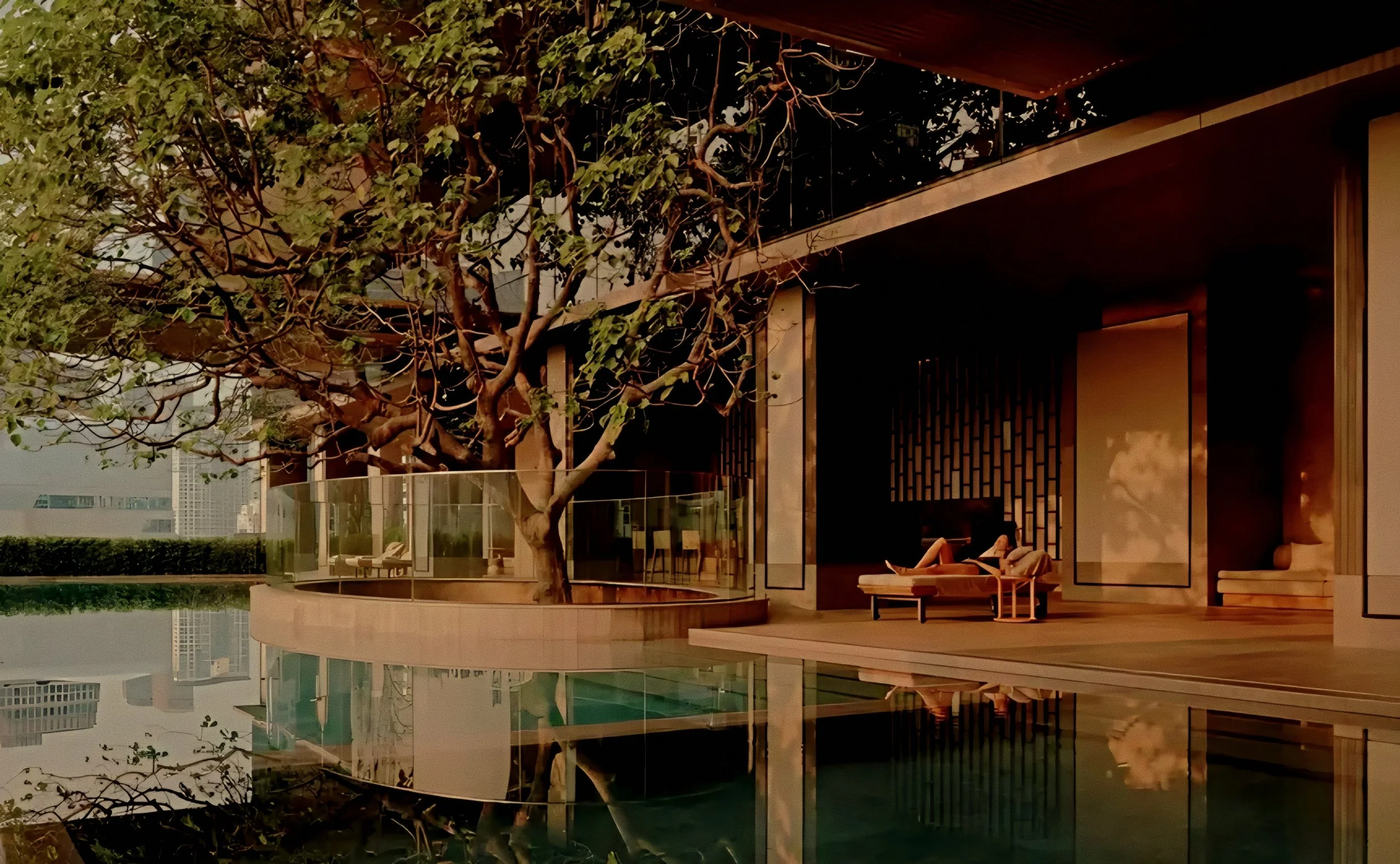
A cantilevered pool terrace wrapping around mature tropical canopy and tranquil aquatic reflections. Photo: Aman Nai Lert Bangkok
Perched on the 9th floor, the 25-meter outdoor infinity swimming pool at Aman Nai Lert Bangkok stands as an architectural masterwork engineered by Jean-Michel Gathy and Denniston. Designed to float flush against the ancient greenery of Nai Lert Park, the pool’s perimeter wraps organically around the estate’s century-old Sompong trees—including Bangkok’s third-tallest living tree, which pierces seamlessly through an elliptical cutout in the wooden deck into the open sky. Lined with smooth, dark local stone that transforms the water into a deep, black mirror pool, the basin reflects the lush foliage above while naturally filtering out the geometric lines of the surrounding city skyline.
Framing the pool deck are delicate natural timber louvers that filter the intense Thai sunlight, casting shifting geometric shadows across the reflective water throughout the day. Sleek, low-profile sun loungers upholstered in crisp neutral fabrics are neatly recessed into the wooden platforms, keeping sightlines uncluttered and focused on the park canopy. Positioned directly alongside the deck, The Pool restaurant and bar serves as a refined open-air day club, transitioning from fresh botanical juices and light afternoon bites into a relaxed sunset lounge—offering an unmatched high-altitude oasis where architecture and primary jungle exist in perfect harmony.
The Geometric Louvered
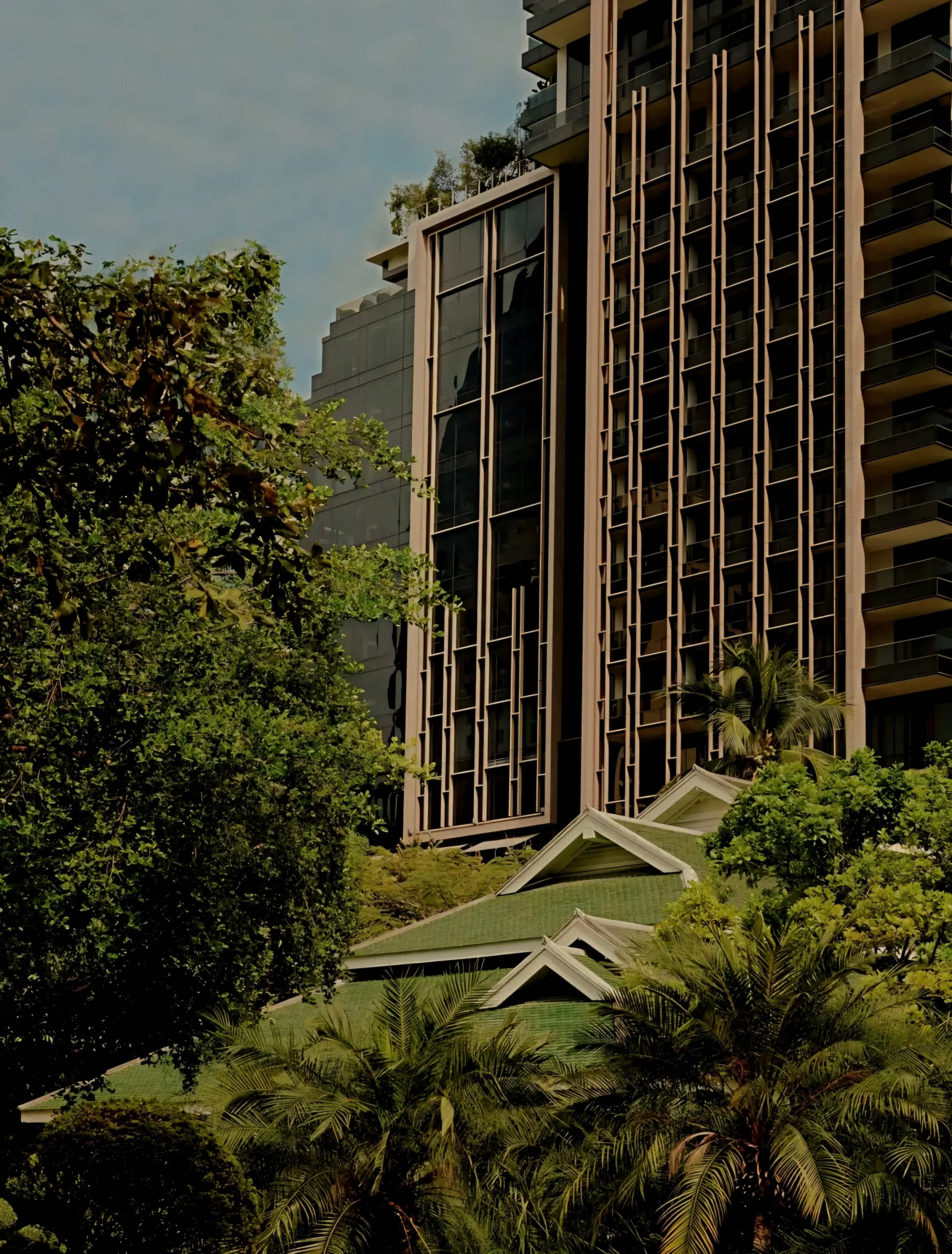
Bronze vertical louvers rising above traditional gabled green rooflines amid dense urban foliage. Photo: Aman Nai Lert Bangkok
Stepping beyond the vertical bronze-and-glass facade of the Aman tower and onto the wooden walkways of the Nai Lert Park Heritage Home marks an immediate entry into 1915 Bangkok. Elevated on massive timber pillars to channel natural cross-breezes and guard against canal flooding, the main teakwood bungalow stands as a preserved masterpiece of traditional Thai-Western fusion architecture. Built entirely from recycled teakwood planks salvaged from vintage naval ships and cargo barges, its sweeping open-air verandas and wide wooden breezeways connect directly to the seven-acre primary jungle. Inside, the home serves as a living museum of Siamese enterprise—housing vintage 1920s gramophones, ancient porcelain, hand-woven silks, Nai Lert’s European walking canes, and a preserved indentation in the floorboards as a testament to the estate's enduring resilience through wartime history.
The surrounding grounds preserve the pioneering transport legacy of Nai Lert alongside sacred natural monuments. Along the historic Saen Saep Canal dock rests one of his original, fully restored wooden motor taxi boats—the famous "White Boat" that once anchored Bangkok's canal network—complemented by a vintage garage displaying some of Thailand's first imported automobiles and classic horse-drawn carriages. Winding paths lead past giant lotus ponds and ancient Chamchuri and Sompong trees to the estate’s revered historic spirit shrine, adorned daily with fresh jasmine garlands. Guests of Aman Nai Lert Bangkok enjoy exclusive private access to this family sanctuary, where they can try their hand at crafting traditional handkerchief garlands or tour the boat museum, anchoring contemporary luxury directly into century-old soil.
In an era where modern metropolis developments often erase their natural and architectural origins, Aman Nai Lert Bangkok stands as a triumph of sensitive preservation and high-design restraint. Through Jean-Michel Gathy’s vision, the estate proves that ultra-luxury tower architecture and a century-old primary rainforest can coexist in an inspiring, symbiotic dance. From the floating canopy pool to the confidential teakwood halls of the ancestral home, the property does not simply host its guests—it invites them into the confidential lexicon of true Siamese prestige. It remains an enduring editorial statement—where history, art de vivre, and architectural gravity converge high above the capital.
L'Ordre de Royaume
ESSENTIAL INFORMATION
To preserve your personal privacy, secure direct guest privileges, and ensure end-to-end data safety, luxury travelers are advised to book directly through the property's official portal.
(Note: Royaume maintains zero affiliate partnerships or booking commissions. We link exclusively to official brand channels for property verification and reader security.)