The XVII-Century Visitandine Pavilion of Silent Cloisters and Tailored Tactile Interiors: Hôtel du Couvent
BY ROYAUME
OCTOBER 2026
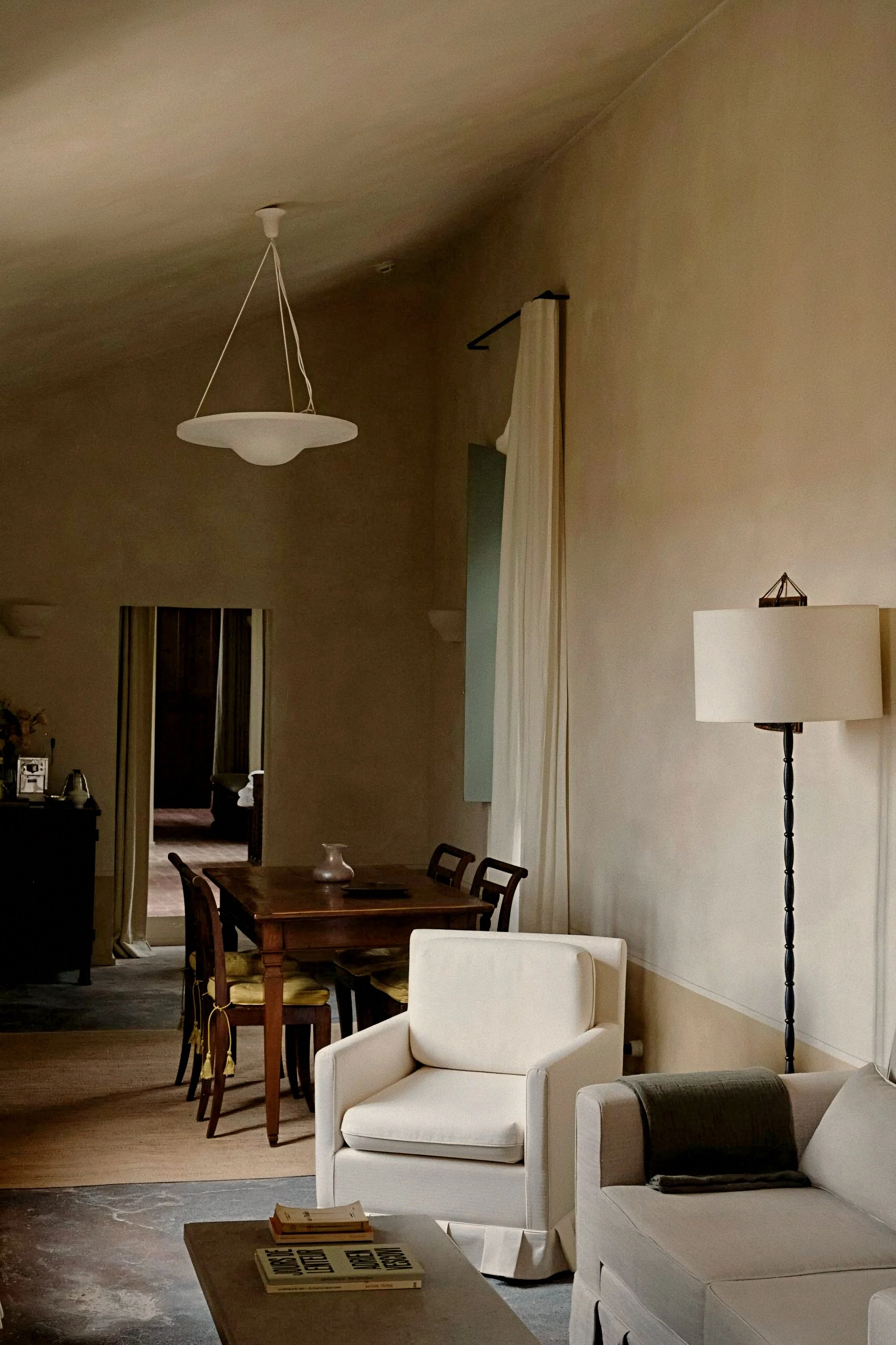
Muted lime-wash plaster and tailored slipcovered armchairs around an antiqued table under a paper pendant. Photo: Courtesy of Hôtel du Couvent
At the foot of Castle Hill in Old Nice (Vieux Nice), Hôtel du Couvent, a Luxury Collection Hotel, Nice, France arrives not as a high-gloss hotel, but as a cloistered estate of historical depth and tactile beauty—resurrecting a seventeenth-century convent into an ultra-luxury retreat defined by understated, "monk-chic" elegance. Originally constructed between 1604 and 1607 by the Poor Clares using stone salvaged from a ruined neighboring chateau, the sprawling stone complex stood for centuries as a self-sustaining religious refuge. Following occupation by the Visitandine nuns through the late twentieth century, the landmark sat abandoned for decades—its U-shaped cloisters, vaulted refectories, and historic apothecary falling into complete, silent disrepair.
The property’s rebirth is the result of a meticulous ten-year structural resurrection led by hotelier Valéry Grégo of the Perseus Group alongside his brother, architect Louis-Antoine Grégo, under a ninety-three-year lease with the city. Rejecting standard Riviera glitz, the restoration team—co-led by Indian architectural firm Studio Mumbai and local practice Studio Méditerranée—honored the site's original "useful beauty" philosophy. Paris-based interior duo FESTEN Architecture curated a tactile, "neo-monastic" aesthetic that preserves uneven four-hundred-year-old plaster, exposes vaulted stonework, and uses natural materials like antique terracotta, whitewashed lime, and solid oak. The result feels less like a commercial hotel and more like a quiet French-Italian village hidden behind secret stone walls.
Arrival unfolds as a deep sensory transition from the vibrant pedestrian alleyways of Old Nice into a world of absolute stillness. Passing through modest pedestrian gates into sun-dappled gravel courtyards framed by ancient Roman-style brickwork, guests bypass formal reception desks to sit on linen sofas surrounded by dark wood desks salvaged from historic structural beams. The air carries the rich scent of warm butter and baking dough pouring from La Boulangerie, where guests are welcomed with freshly baked madeleines and artisanal drinks—setting a contemplative rhythm reinforced by the deliberate absence of television screens throughout the estate.
Rooted in its civic heritage, the convent functions as a living cultural salon rather than an isolated resort. On the ground floor, Le Centre de Documentation offers an archival sanctuary featuring rare numbered editions, screen-printed art journals, and specialized collections dedicated to the avant-garde École de Nice movement. This intellectual depth is complemented by the Channels Music Residencies—an intimate series bringing global avant-garde musicians into the ancient U-shaped cloister for freeform, hypnotic performances. Together, these elements frame Hôtel du Couvent not merely as a hotel, but as a timeless retreat where literature, sound, and historical architecture converge.
The Monastic Boudoir
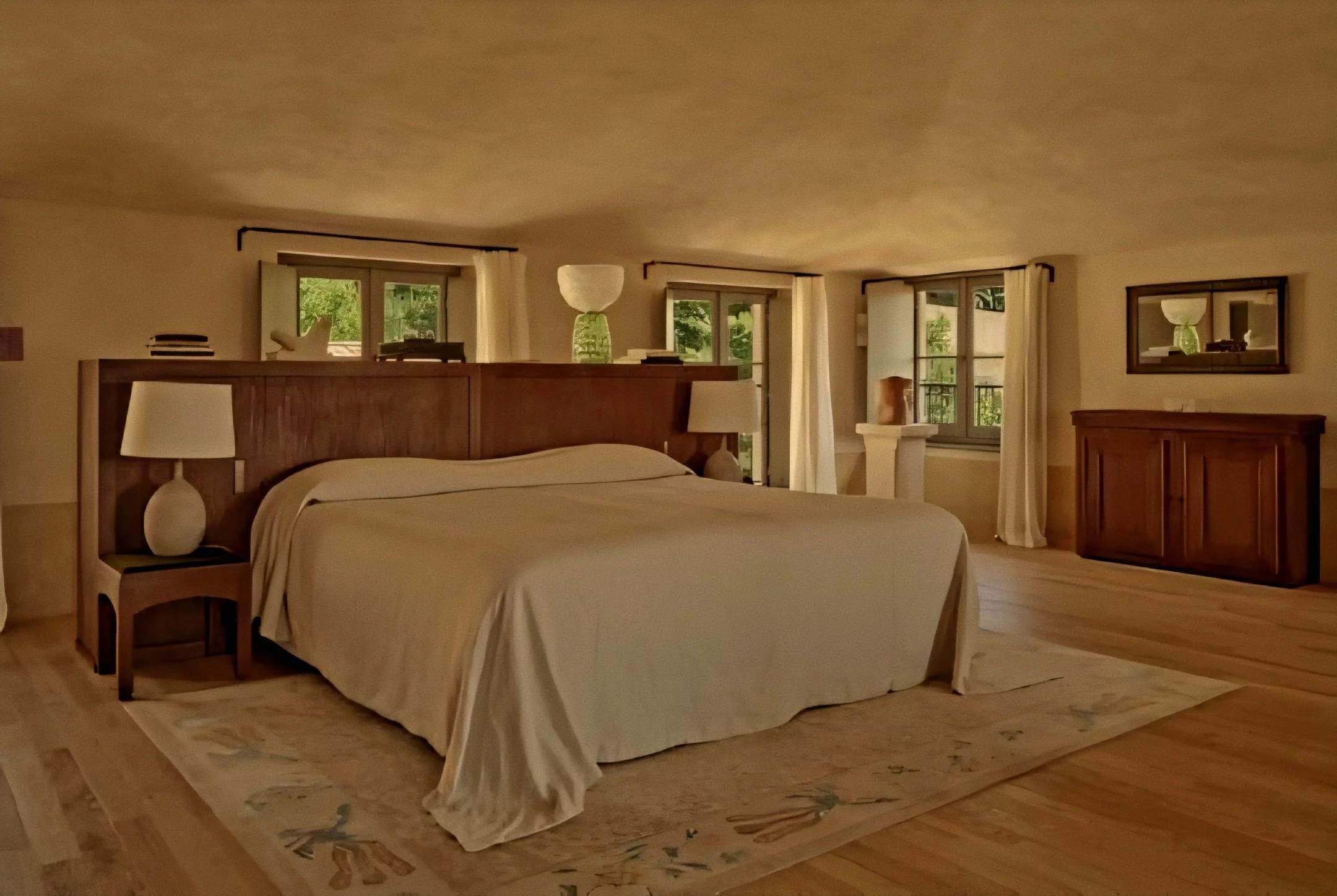
A low-slung linen bed anchored by a dark walnut partition headboard beneath low vaulted plaster and wide oak floorboards. Photo: Courtesy of Hôtel du Couvent
Spreading dynamically across three historic convent buildings, the eighty-eight rooms and suites at Hôtel du Couvent reject the uniform sterility of contemporary hospitality in favor of a deeply residential, unhurried rhythm. Because the accommodations are retrofitted directly into a four-hundred-year-old structural framework, no two floor plans are identical. The entry-level quarters—such as the Clarisses, Colettines, and Capucines—pay quiet homage to the ascetic simplicity of the original nuns' cells, averaging twenty-three to forty square meters of stripped-back, tactile purity.
Material honesty defines every tactile surface within the sleeping quarters. Heavy, unbleached organic linens drape over custom timber and wrought-iron bedframes, while subtle tactile details—like solid brass and nickel toggle switches—replace impersonal plastic smart panels. True to the estate's philosophy of contemplative disconnection, television screens are entirely absent from the bedrooms. Instead, visual engagement is left entirely to the play of natural light across patinated lime plaster, rare art volumes resting on oak nightstands, and deep-set casement windows framing the quiet architecture of the cloisters.
The perspective from these private chambers shifts gracefully with the property’s terraced hillside geography. Lower rooms look inward upon the silent, sun-warmed stone arches and lemon trees of the central Cour des Orangers, while upper-tier accommodations capture the vibrant, tightly woven terracotta roofs of Old Nice and the glittering azure expanse of the Mediterranean across the Baie des Anges.
The Alabaster Oasis
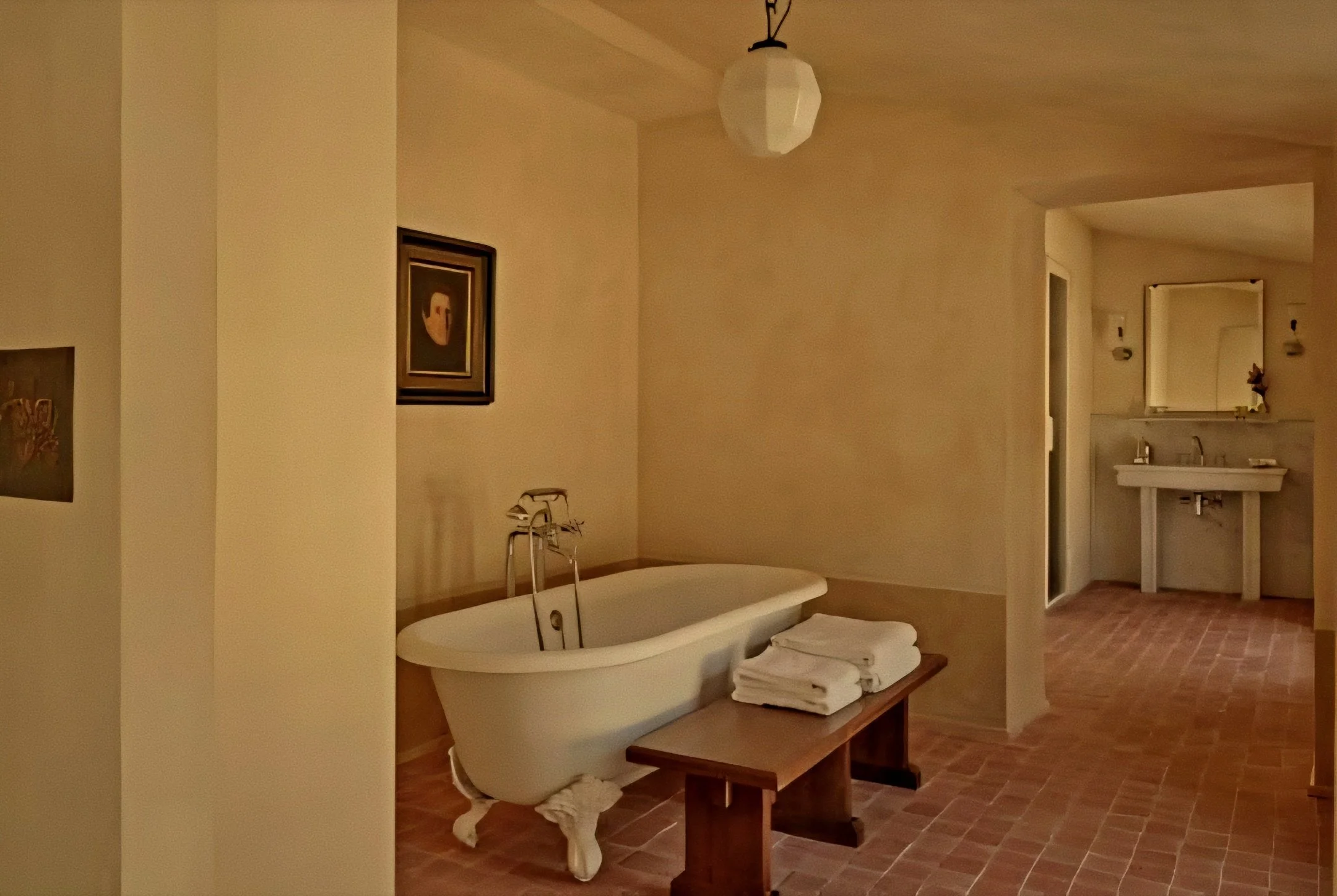
Festen Architecture framing a clawfoot soaking tub over hand-molded terracotta tiles alongside a rustic timber bench. Photo: Courtesy of Hôtel du Couvent
Conceived as intimate sanctuaries of renewal, the en-suite bathrooms eschew conventional hotel gloss in favor of custom Italian stonework, local marble, and centuries-old, hand-laid terracotta tile floors. Massive walk-in showers fitted with high-pressure rainfall showerheads are paired with custom polished-nickel tapware that echoes the utilitarian elegance of mid-century European craftsmanship.
Deep soaking tubs invite prolonged, meditative stillness, complemented by botanical bath formulations custom-blended by the convent's resident herbalist using native Provençal extracts. Bathed in soft morning light filtering through deep-set historic window frames, these bathing enclaves transform daily ablutions into a restorative ritual rooted in material authenticity and quiet indulgence.
The Connoisseur’s Salon
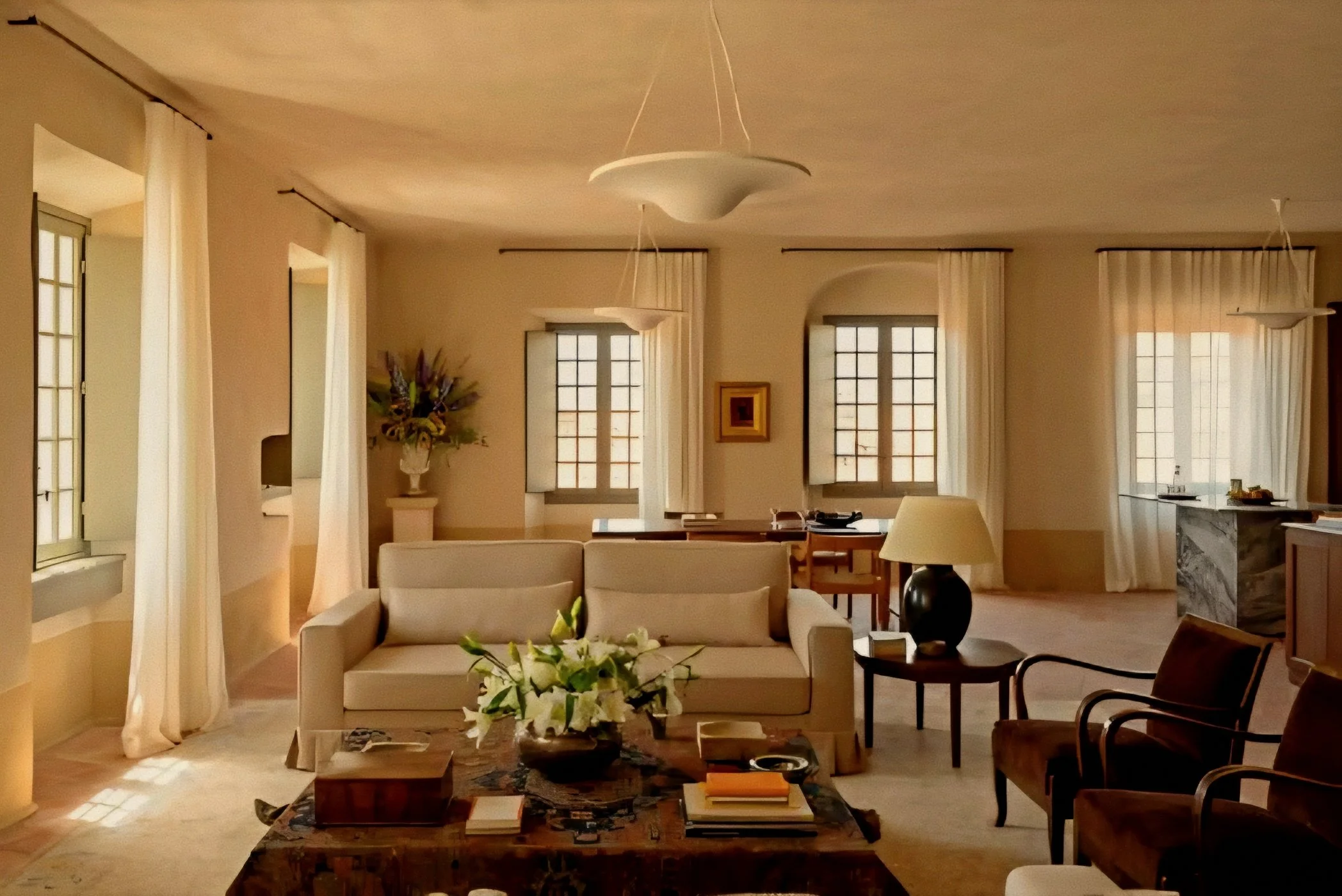
Slanted Mediterranean light washing across cream velvet seating, shuttered windows, and raw plaster walls. Photo: Courtesy of Hôtel du Couvent
Ascending to the nineteen suites, the property scales up to monumental residential proportions, led by crown-jewel accommodations like La Très Grande Suite, Le Séchoir, and the garden-enclaved Le Jardin Marguerite. Spanning a sprawling one hundred sixty-six square meters, La Très Grande Suite centers around a grand salon featuring Persian rugs and vintage armchairs, flowing effortlessly into a culinary wing equipped with a veined marble island and a professional La Cornue range. Nearby, Le Séchoir occupies the historic upper levels where nuns once dried herbs—offering an ultra-private aerie accessed via private elevator beneath exposed vaulted roof timbers—while Le Jardin Marguerite provides a multi-room sanctuary with direct access to a secluded, terraced citrus garden. Elevated by dedicated butler service and the option for private in-suite dinners cooked over open flames using hyper-local produce harvested directly from the estate's sister farm, Ferme Notre-Dame, these pinnacle suites redefine the gold standard of Mediterranean seclusion.
Curated by interior design duo Charlotte de Tonnac and Hugo Sauzay of FESTEN Architecture, these expansive living spaces celebrate the raw, weathered bones of the former Capuchin convent rather than masking its centuries of evolution. Antique European furnishings, real oil paintings, and solid dark oak wood rest against uneven, whitewashed lime-plaster walls, creating a sophisticated dialogue between historical gravitas and contemporary comfort.
"We approached the interiors not as a blank canvas, but as an archaeological dialogue," note FESTEN founders Charlotte de Tonnac and Hugo Sauzay, reflecting on the curation of the residence salons. "By preserving the raw, uneven plaster, historic terracotta, and structural timber bones of the convent, the living spaces achieve a neo-monastic elegance where history itself becomes the ultimate luxury."
The Culinary Atelier
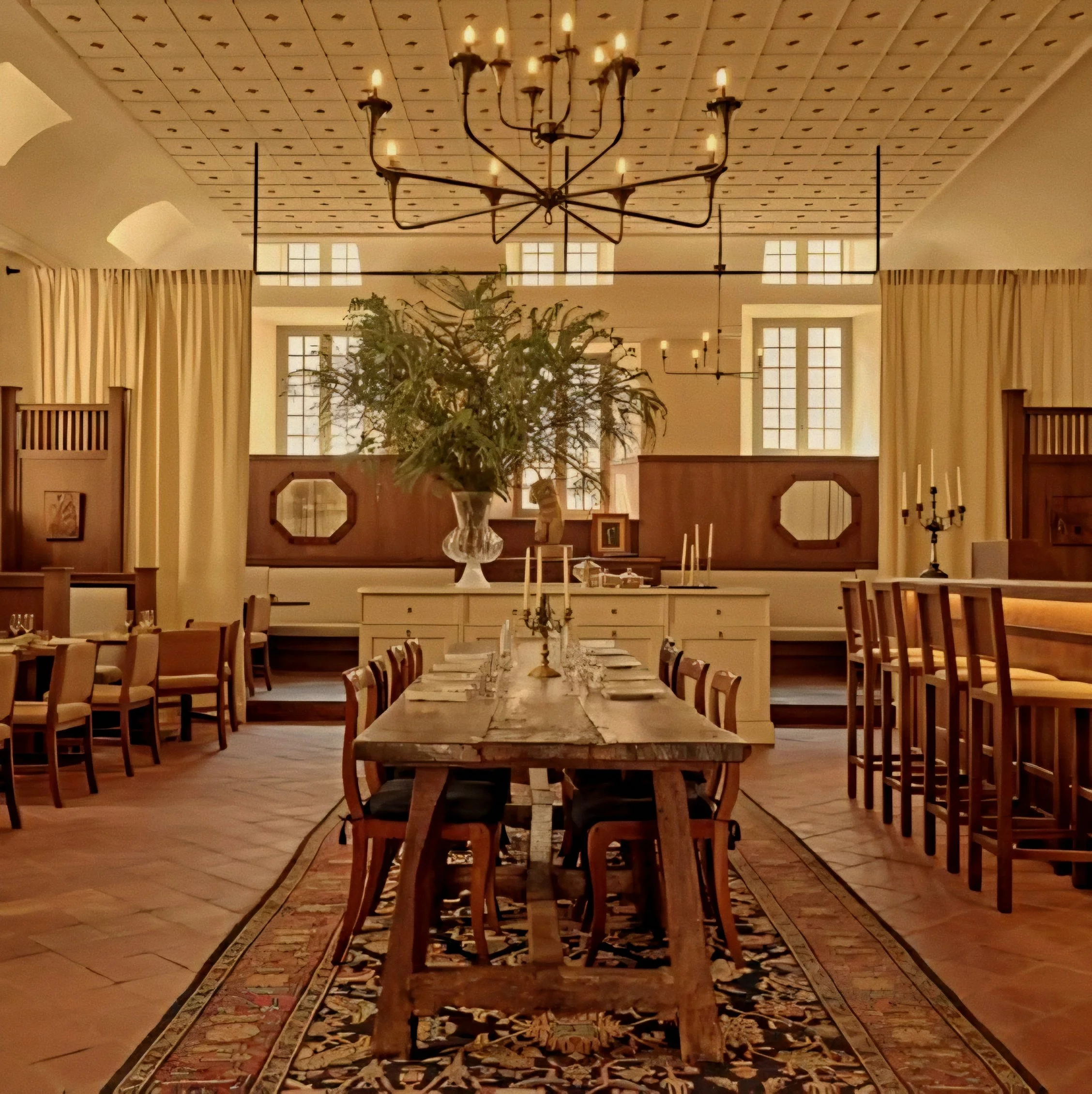
An monumental refectory table and forged iron chandelier set beneath a vaulted coffered ceiling over an antique oriental carpet. Photo: Courtesy of Hôtel du Couvent
At Hôtel du Couvent, dining is conceived not as a commercial service, but as a secular ritual directly honoring the daily traditions of the original Poor Clares. The gastronomic heart of the estate resides at Le 1604 (also known as Le Restaurant du Couvent), where guests dine beneath the vaulted stone arches of the seventeenth-century cloister gallery or out on the quiet, tree-shaded courtyard terrace. Reclaiming rustic open-fire cooking and zero-waste techniques, the kitchen serves hyper-seasonal Niçoise specialties—such as rabbit porchetta, crispy barbajuans, and wood-fired pissaladière. Nearby, La Guinguette offers an open-air sanctuary shaded by wild fig trees, climbing vines, and bitter orange branches—where classic iron bistro sets invite guests to linger over light bites, read, and soak in sun-drenched, breezy Mediterranean afternoons. Anchoring the street edge, Le Bistrot des Serruriers was named as an homage to the local tradesmen and craftsmen of the neighborhood (specifically the locksmiths); this bistro anchors the hotel to the surrounding community of Vieux Nice, complete with zinc countertops and vintage chalkboard menus where locals and hotel guests gather naturally over daily regional specials.
Crucial to this culinary ecosystem is La Boulangerie du Couvent, an on-site grain bakery helmed by baker Geffrey Marx—son of multi-Michelin-starred French chef Thierry Marx. Operating strictly between morning and mid-afternoon, the bakery mills unhybridized ancient grains daily on-site, utilizing a house-cultivated yeast strain to bake golden viennoiseries, sourdoughs, and focaccian loaves whose buttery aroma fills the gravel courtyards. Supply autonomy is anchored by La Ferme Notre-Dame, the hotel’s three-thousand-square-meter agricultural property in Touët-sur-Var. Managed by resident market gardener Avit Ghibaudo, the farm delivers same-day harvests of organic vegetables and eggs from two hundred fifty heritage hens, while the hotel's monthly Saturday market in the Cour des Orangers brings local artisanal cheesemakers and olive oil producers directly to the estate.
"We don't dictate what goes onto the plate; we accept what the earth gives us each morning and nothing else," explains Head Chef Thomas Vetéle on the estate's hyper-seasonal philosophy. "By cooking in rhythm with Avit's harvests at La Ferme Notre-Dame, we have deconstructed traditional restaurant cooking—allowing raw, unhybridized ingredients and open wood fires to guide the menu with total purity."
The Azure Rotunda
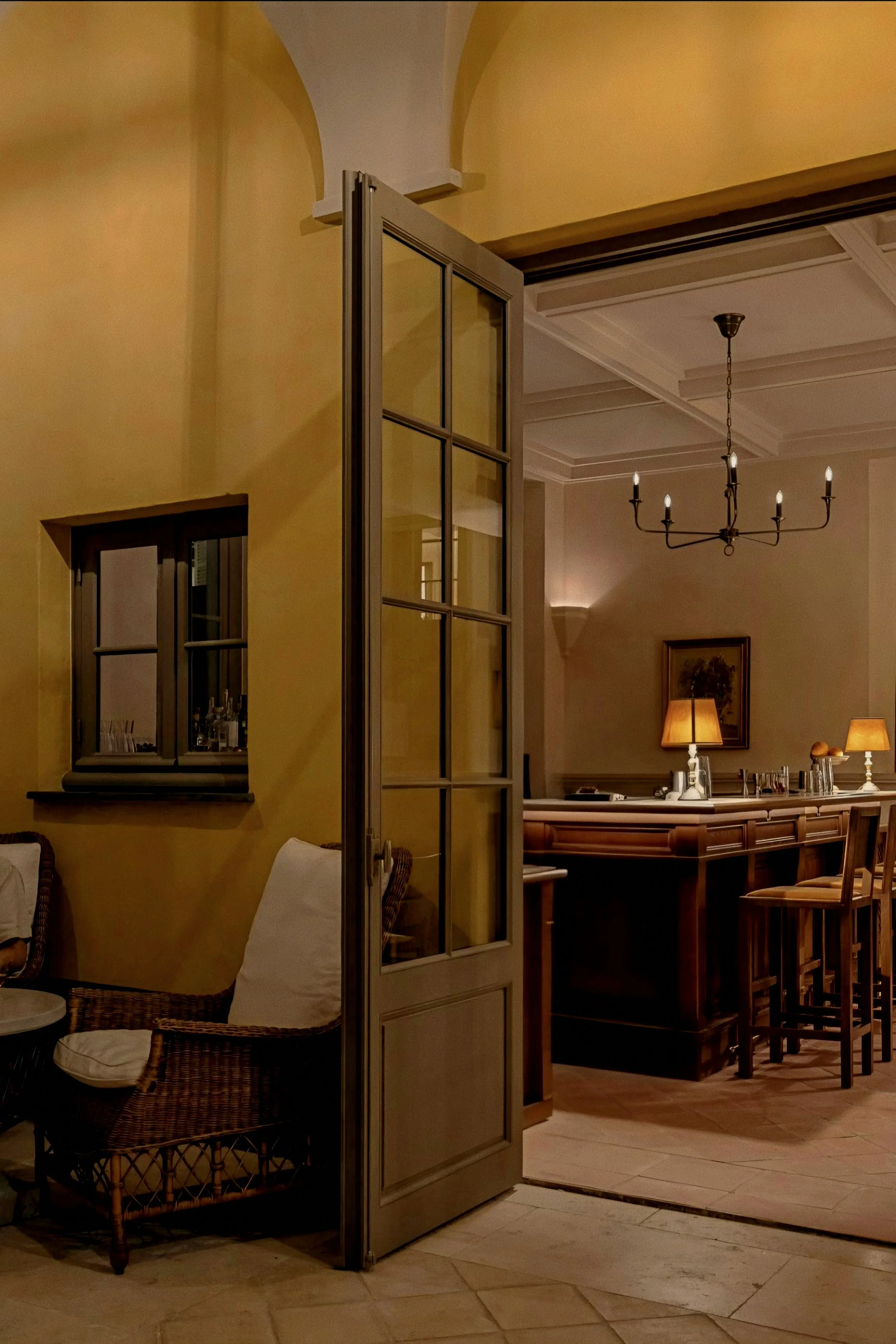
A dark wood bar counter and woven wicker armchairs seen through a glazed timber door portal under warm candlelight. Photo: Courtesy of Hôtel du Couvent
Tucked quietly within the vaulted stone arcades of the main cloister, Le Bar du Couvent offers an atmospheric sanctuary dedicated to living liquids and botanical mixology. Under the gentle glow of ambient candlelight reflecting off age-worn stone pillars and raw terracotta floors, patrons gather to sample bespoke cocktails infused with wild herbs and custom-bottled living wines from small-scale biodynamic vineyards. Local craft brews—including exclusive bottlings from Saint-Martin-Vésubie’s Brasserie du Comté—are served alongside house-cured olives and artisanal preserves in antique glassware.
Directly adjacent stands the hotel’s historic Apothecary, occupying the exact physical footprint of the convent’s original 1604 pharmacy. Managed by respected local master herbalist Grégory Unrein, the shop shuns generic retail products in favor of bespoke herbal teas, organic tisanes, and therapeutic oils blended according to four-hundred-year-old monastic recipe archives. Here, guests engage in interactive apothecary workshops, foraging flora from the terraced garden slopes to press custom botanical remedies and scented oils—a living bridge between historical monastic wisdom and contemporary wellbeing.
The Subterranean Sanctum
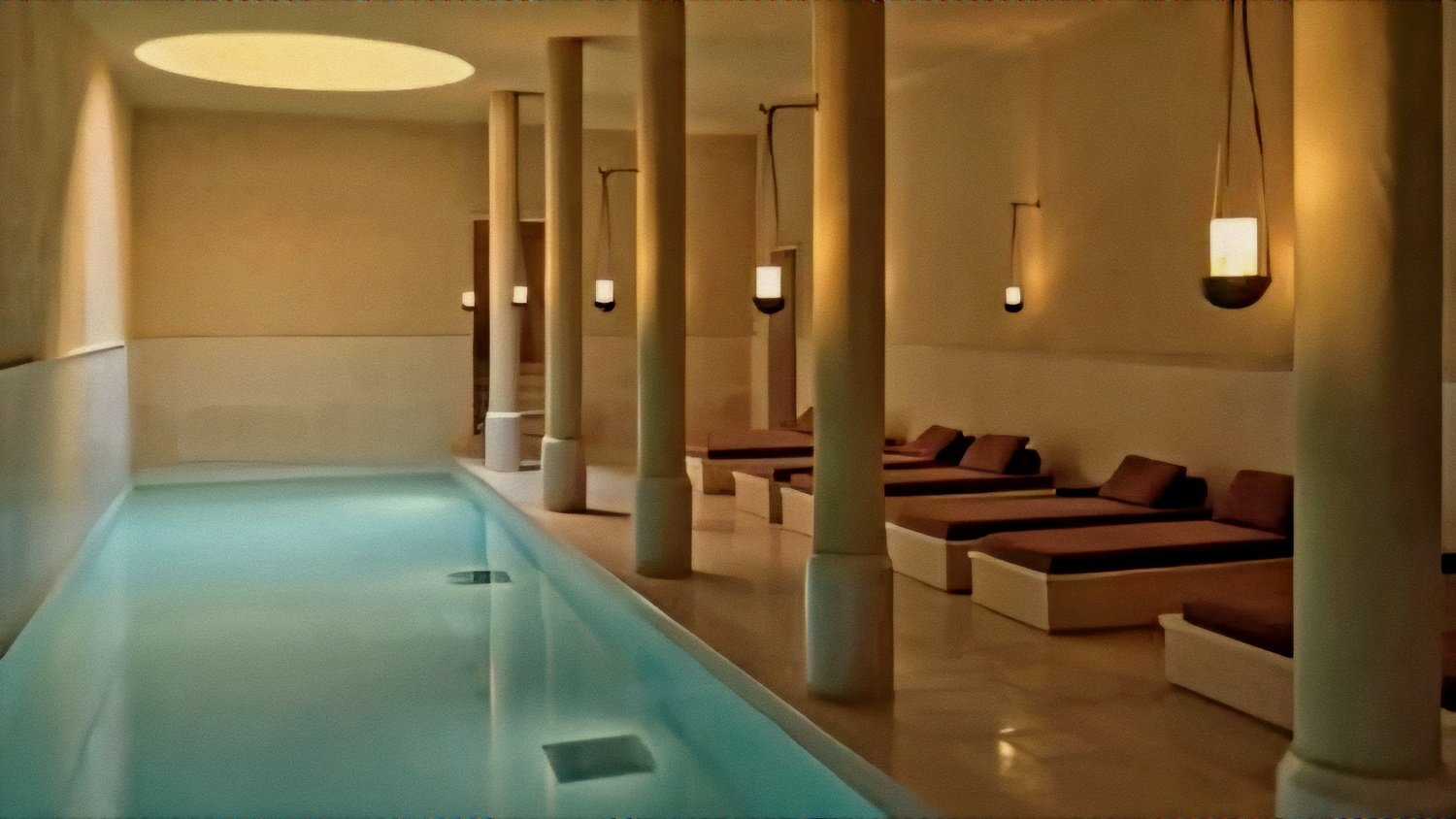
Monumental plaster columns framing a serene indoor lap pool lit by an oculus and atmospheric wall sconces. Photo: Courtesy of Hôtel du Couvent
Carved beneath the convent's underbelly lies a 7,500 sq. ft. subterranean bathhouse that pays homage to the ancient Roman thermal baths of Cimiez on the nearby hills of Nice. Grounded in the classical principle of mens sana in corpore sano, this multi-sensory sanctuary centers around a central relaxation pool anchored by a striking circular ceiling cutout—an oculus framed by fluted plaster vaults. Designed by lead architect Bijoy Jain of Studio Mumbai to draw shafts of natural Mediterranean daylight directly into the shadowed stone underworld, the oculus frames shifting clouds above, allowing bathers to float in silence between centuries. "The oculus was conceived as an architectural threshold where earth and sky meet," reflects Bijoy Jain on the geometry of the ceiling cutout. "By drawing the brilliant light of Nice down into the cool stone vaults, we created a quiet monastic axis that mirrors the sacred spatial harmony of the Pantheon."
Following ancient hydrotherapy traditions, guests navigate an unhurried thermal circuit engineered to stimulate circulation and soothe the nervous system. The journey begins in the temperate waters of the Tepidarium to ease muscle tension, before transitioning into the steamy heat of the Caldarium for deep cellular detoxification. A bracing plunge into the cold Frigidarium shocks the body and tightens the skin, concluding in the quiet warmth of the Unctuarium—a dedicated anointment room where manual therapies, customized body brushing, and ancient oiling rituals restore fluid balance.
Rerejecting standard hotel gyms filled with loud treadmills and digital screens, the adjacent Movement Studio serves as an ancestral sanctuary for bodyweight agility and primal mechanics. Beneath high stone ceilings, holistic movement practices focus on posture, joint elasticity, and ground-based fluidity—spanning floor-barre conditioning, Yoga, Pilates, and dynamic disciplines like Animal Flow and Ginastica Natural. Complemented by bespoke manual treatments by specialist Luca Bagnara and clean skincare formulations from De Mamiel, Ranavat, Activist, and Lilfox, the subterranean bathhouse offers a restorative refuge rooted in material purity and timeless renewal.
The Cliffside Caldera
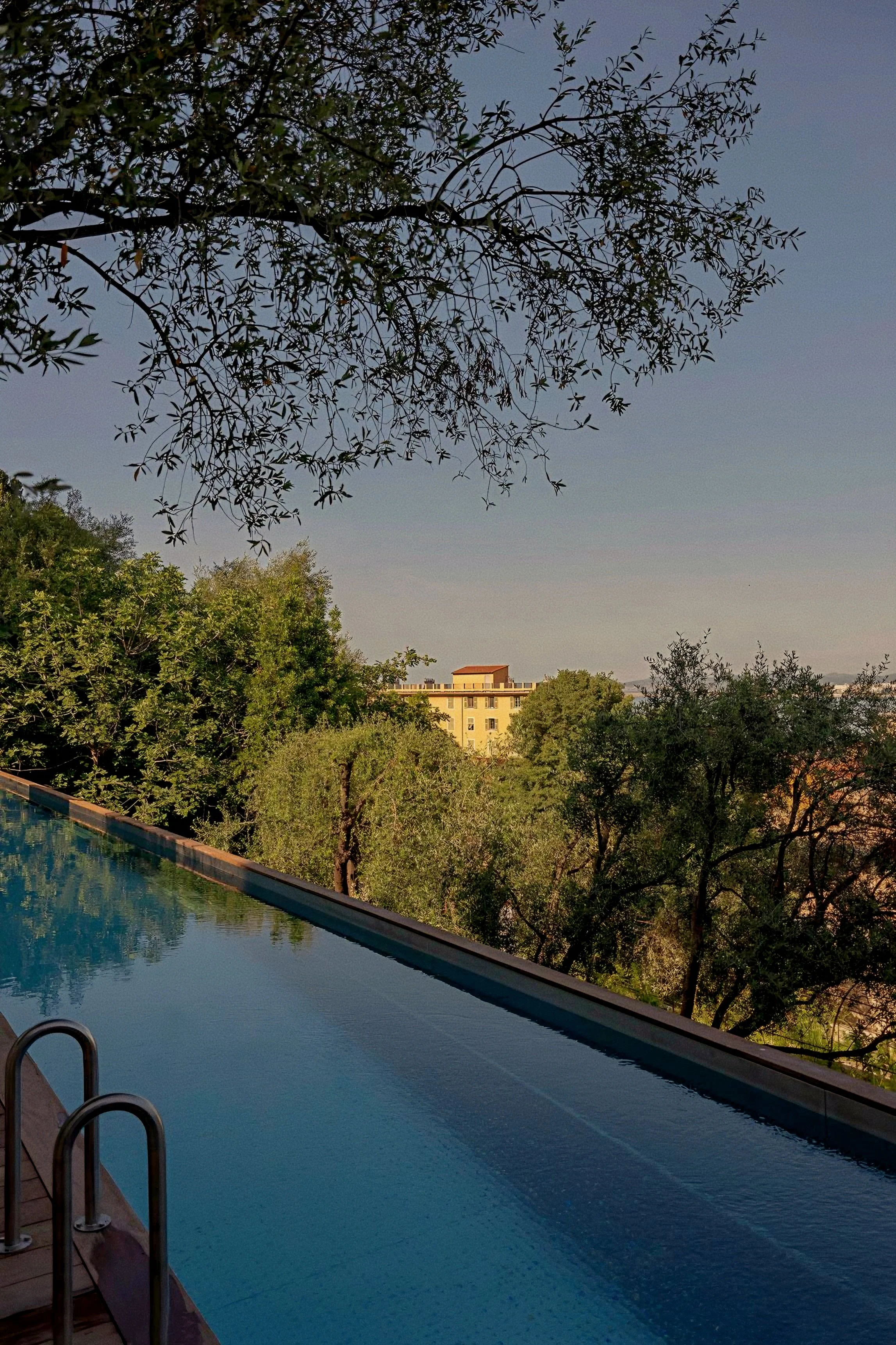
A slate-lined lap pool hovering above terraced olive groves with sweeping vistas over Old Town tiled roofs. Photo: Courtesy of Hôtel du Couvent
Ascending the steep, stone-paved paths above the convent cloisters, the estate unfolds across two point five hectares of cascading terraced gardens—a masterclass in historical landscape preservation and vertical agriculture. Far from a polished, ornamental lawn, these ancient stone-walled tiers are packed with over three hundred plant species, including native olive groves, wild lavender, and fruiting persimmon, apricot, tangerine, and bitter orange trees. Suspended directly above the city's rooflines, the estate’s twenty-meter garden lap pool offers a serene, elevated retreat where bathers float above the terracotta tiles of Old Nice (Vieux Nice) while gazing out toward the sparkling blue expanse of the Mediterranean Sea. During golden hour, the low Riviera sun bathes the historic city below in amber light, while guests resting on sun loungers watch culinary staff harvest fresh herbs and roots from the terraces below to stock the evening's dinner service.
Tucked into a quiet clearing alongside the vegetable terraces and La Guinguette café, an open-air garden cinema adds an enchanting cultural layer to the terraced sanctuary. Surrounded by the evening scent of blooming citrus and lavender under the night sky, guests gather for weekly screenings featuring an artfully curated mix of classic French films, international cinema, and contemporary releases. Supported by the garden bar, these outdoor film nights pair cinematic storytelling with glasses of organic wine, socca, and artisanal regional bites—creating a convivial, starry-night ritual where architecture, culture, and nature seamlessly converge.
The Verdigris Cloister
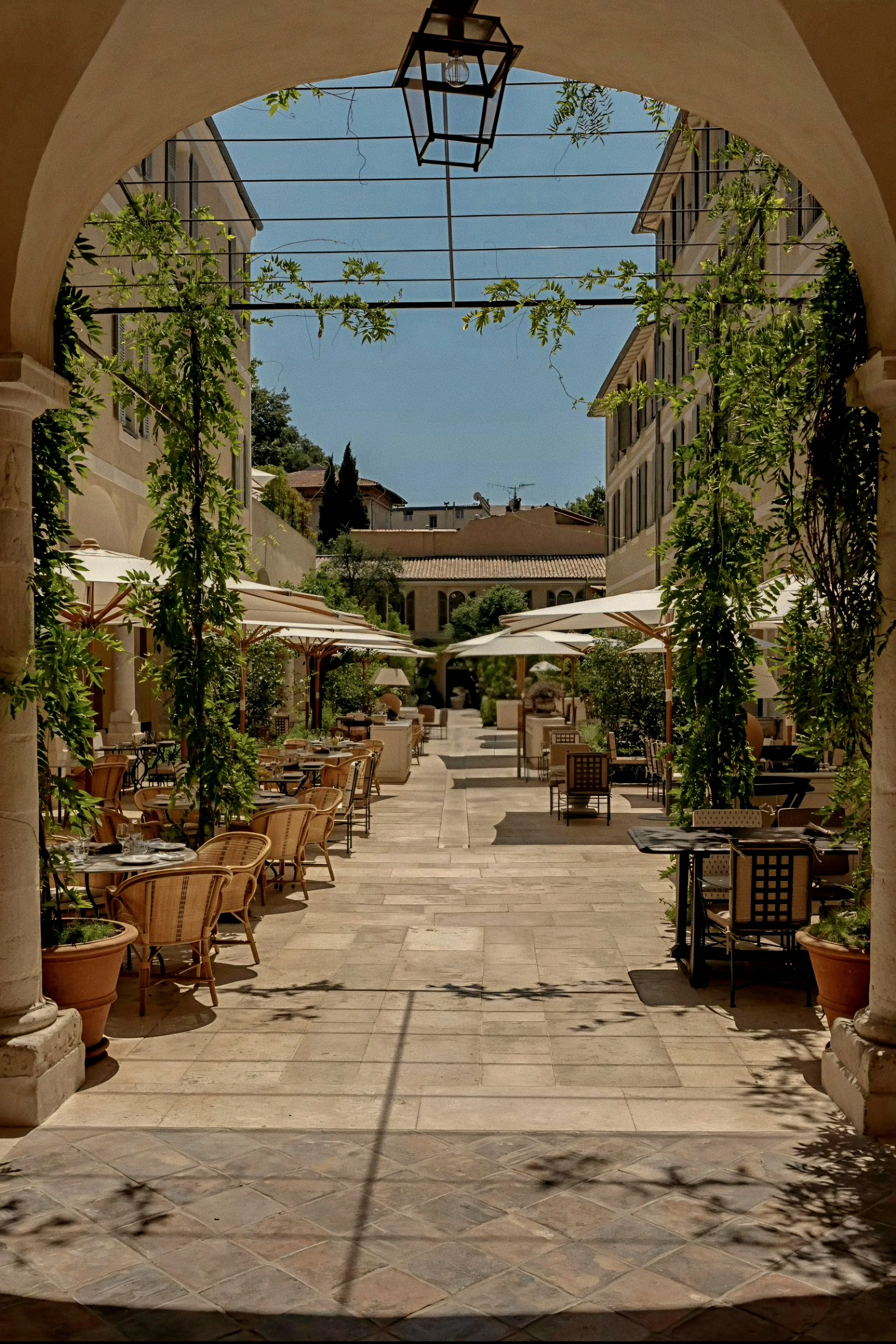
Classic stone arches opening to a sun-dappled courtyard framed by climbing greenery and canvas parasols. Photo: Courtesy of Hôtel du Couvent
Ultimately, Hôtel du Couvent stands as a profound redefinition of Mediterranean luxury—one that turns its back on superficial Riviera glitz to celebrate spatial memory, material honesty, and contemplative stillness. By choosing to preserve four centuries of architectural evolution rather than smooth away its historic scars, the restoration team has crafted an estate where past and present exist in quiet, seamless harmony. From the gentle scent of milled ancient grains at La Boulangerie to the cool subterranean stone vaults of the Roman baths, the property offers far more than refined shelter; it provides a sanctuary for unhurried living and deep sensory reconnection.
As twilight falls over the stone arcades of the cloister and the Mediterranean breeze stirs the leaves of the terraced citrus orchards, the former Franciscan convent reveals its true legacy. It is not merely a hotel, but a living cultural ecosystem where literature, community, and secular rituals intertw. In restoring this four-hundred-year-old monument to the fabric of Old Nice, Hôtel du Couvent reminds us that the ultimate modern indulgence is not excess, but time, space, and a poetic return to what is essential.
ROYAUME RECOMMENDED
ESSENTIAL INFORMATION
To preserve your personal privacy, secure direct guest privileges, and ensure end-to-end data safety, luxury travelers are advised to book directly through the property's official portal.
(Note: Royaume maintains zero affiliate partnerships or booking commissions. We link exclusively to official brand channels for property verification and reader security.)