The Pixelated Slate Sanctuary of Tactile Joinery and Restrained Modernism: PuXuan
BY ROYAUME
OCTOBER 2026
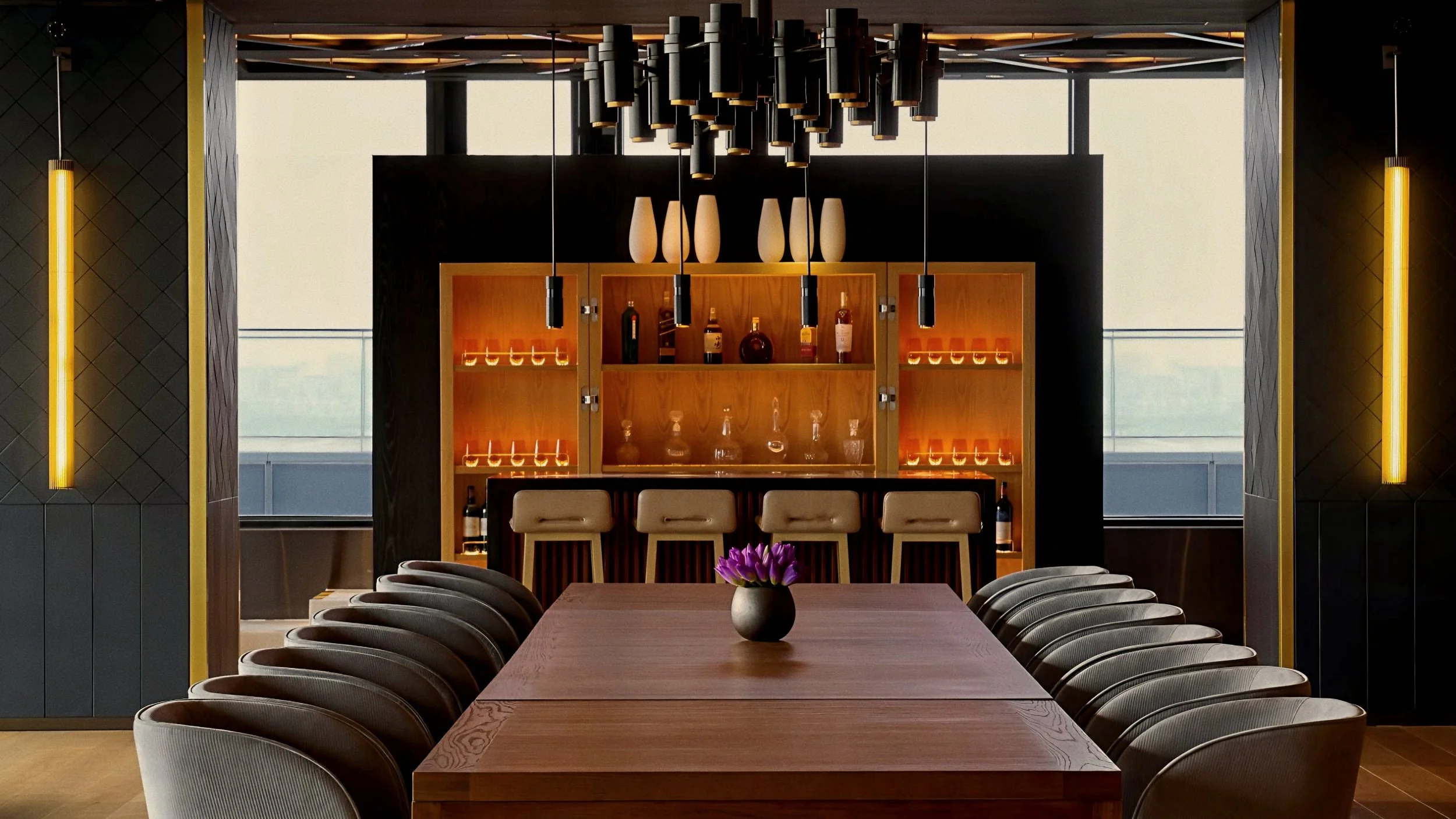
Fluted amber sconces and industrial cylinder chandeliers illuminating a tailored timber board framed by ribbed tub armchairs. Photo: Courtesy of The PuXuan Hotel and Spa
At The PuXuan Hotel and Spa in Beijing, China, modern architectural hyper-minimalism intersects with the imperial majesty of the ancient capital. Positioned at the symbolic crossroads of Wangfujing Street and Wusi Street—the historic epicenter of China's cultural enlightenment—this five-star sanctuary sits directly across from the National Art Museum of China, merely moments from Jingshan Park and the golden roofs of the Forbidden City.
Masterminded by renowned architect Ole Scheeren, the property stands atop the prestigious Guardian Art Center, operating not merely as an urban retreat, but as a living museum where contemporary design pays homage to centuries of Chinese artistic lineage.
The building’s exterior structure establishes a profound visual metaphor for Beijing’s architectural evolution. Its lower volume is composed of pixelated, charcoal-grey basalt stone blocks, perforated with thousands of circular openings that form a physical silhouette inspired by Dwelling in the Fuchun Mountains—one of China’s most celebrated historic landscape scroll paintings. Floating dramatically above this textured stone base is a modern, hollow ring of translucent glass bricks, mimicking the rhythmic scale and intimate geometry of the city’s ancient hutongs while housing serene residential sanctuaries within.
Stepping off the bustling avenue reveals an interior landscape defined by quiet, wealthy scholar serenity rather than commercial hotel flashiness. Masterfully conceptualized by MQ Studio and Remedios Studio, the public spaces feature heavily grained dark woods, hand-woven SHANG XIA silk screens, and polished stone floors that reflect soft natural light filtering through open-air courtyards. Floating directly above China Guardian Auctions—one of the nation’s oldest and most respected auction houses—The PuXuan offers an uncompromised sanctuary where museum-grade antiquity, high-fashion restraint, and imperial panoramas effortlessly converge.
The Imperial Gallery
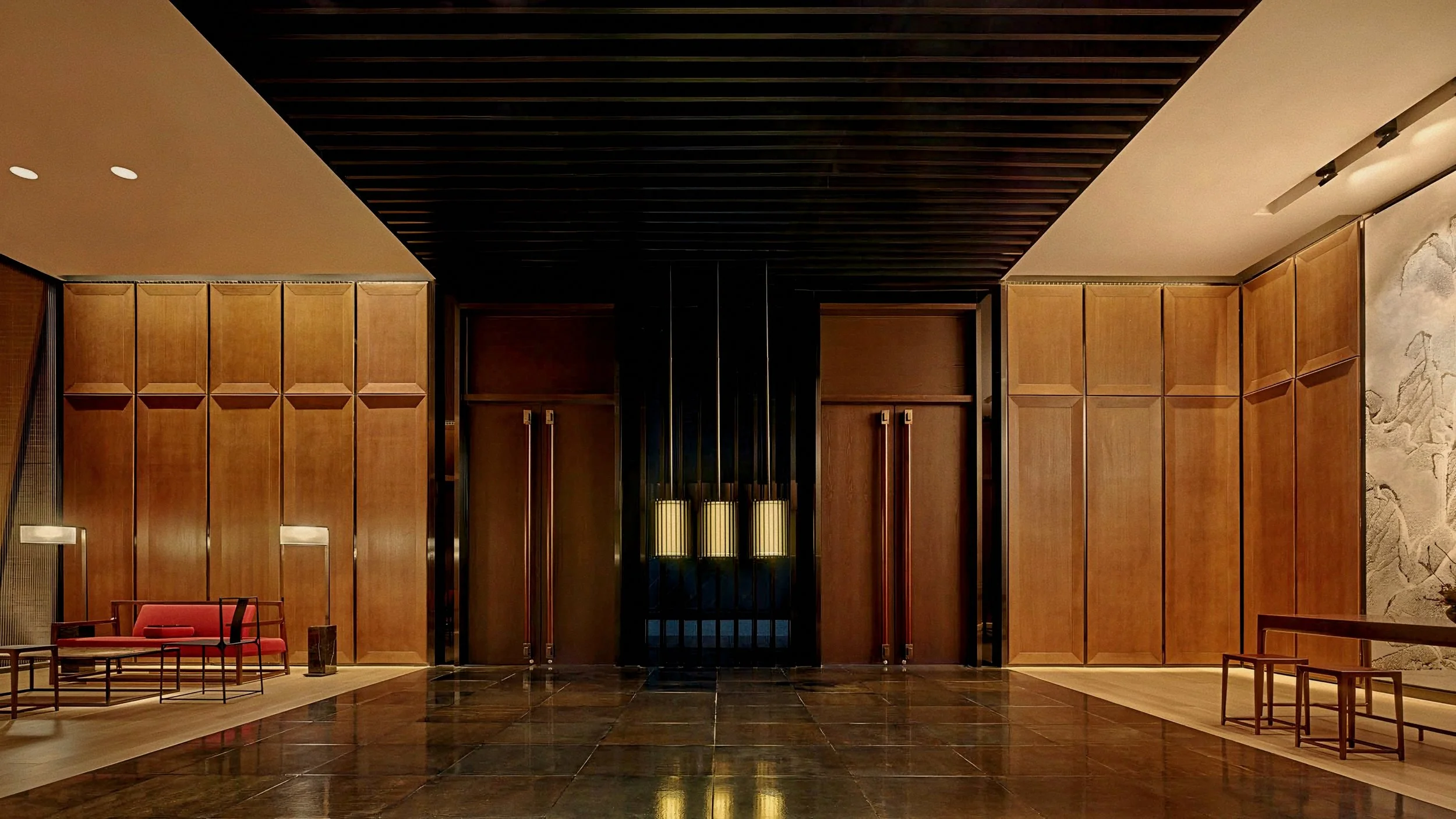
Warm oak paneling and polished stone floors opening into a soaring atrium lit by slender brass lanterns. Photo: Courtesy of The PuXuan Hotel and Spa
Arrival at the estate is an intentionally choreographed ritual of sensory transition, designed to strip away the bustling velocity of the capital and envelop guests in an atmosphere of profound residential calm. Eschewing the cavernous, multi-story grand lobbies typical of commercial luxury hotels, the ground-floor entry presents a low-ceilinged, warm wood-paneled arrival lounge lined with custom grey fabric wall panels that subtly echo the tactile masonry of Beijing's historic hutong alleyways. From this intimate threshold, guests ascend to the main reception via a specialized elevator pavilion encased in woven textiles, where backlit ceiling projections cast fluid shadows of sunlight filtering through digital forest canopies—creating the serene illusion of rising through a quiet woodland grove.
Emerging onto the fourth-floor Sky Reception reveals a luminous, beautifully proportioned sanctuary structured around a sunlit central water courtyard. Designed as a open-air glass atrium, this daylit oasis brings natural light streaming into the heart of the building, where the gentle trickling of water anchors the surrounding salons in meditative tranquility. Heavy-grained timber panelling, ribbed geometric ceilings, and dark, highly polished stone floors frame the public spaces, capturing the fluid reflections of the courtyard and blurring the boundary between indoor architecture and outdoor landscape.
Arranged dynamically around this central water garden, the main Lobby Lounge operates less like a hotel reception and more like the private living salon of an elite connoisseur. Low-slung contemporary armchairs paired with museum-grade literature, custom bronze accents, and curated artworks from the Guardian Art Center invite lingering over single-origin artisan teas and afternoon aperitifs. As natural light shifts across the polished dark stone, the arrival sequence reveals its true architectural intent: a modern interpretation of a classical Chinese manor house where centuries-old spatial philosophy meets modern high-fashion restraint.
The Boudoir Haven
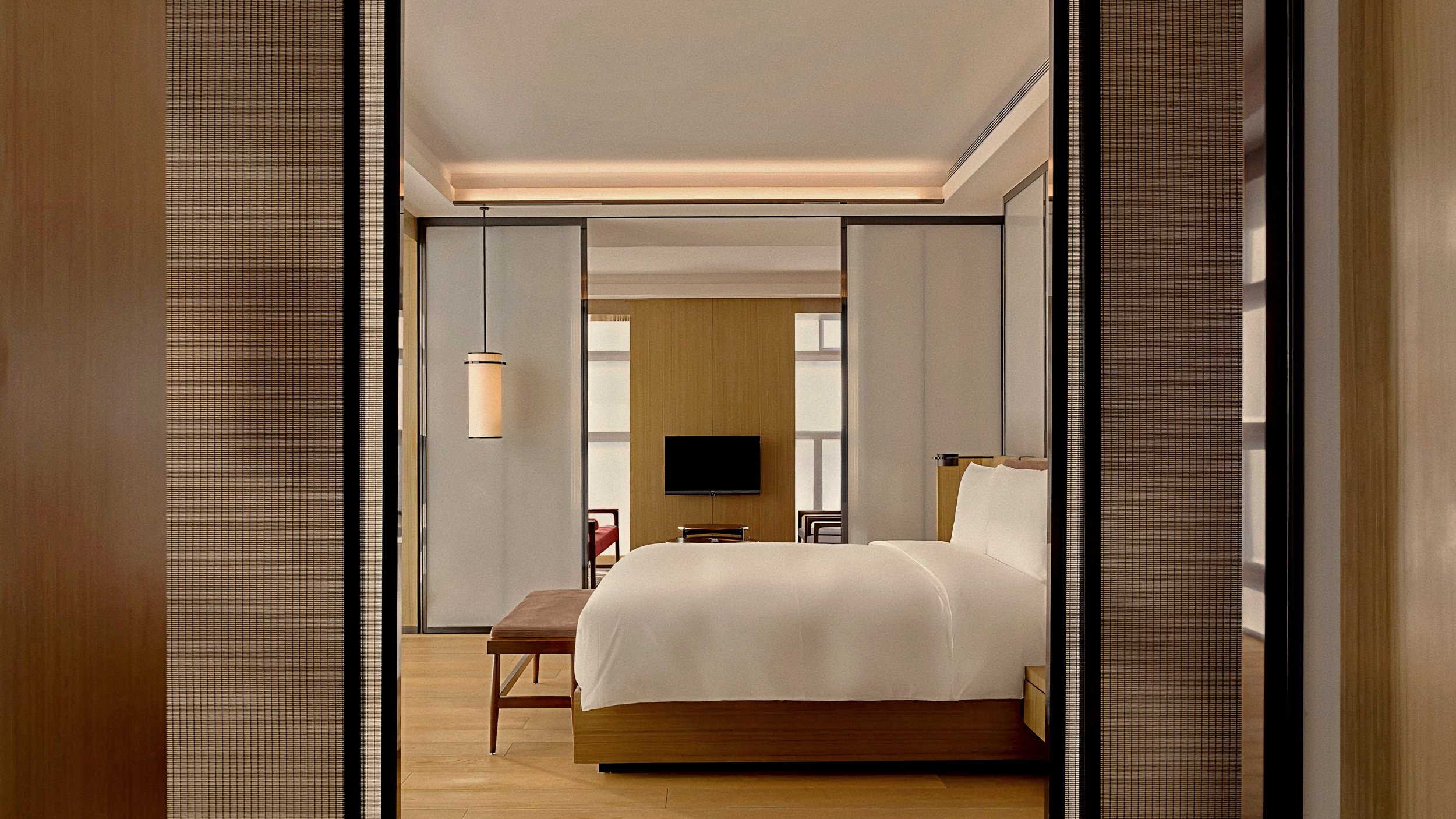
A crisp linen suite bed framed by minimalist paper lattice screens and warm architectural backlighting. Photo: Courtesy of The PuXuan Hotel and Spa
The estate's residential inventory encompasses an intimate collection of one hundred and sixteen accommodations, divided into ninety-two guest rooms and twenty-four expansive suites. Conceived as modern scholar manors, the sleeping chambers deliberately avoid commercial glitz in favor of quiet materiality and tactile restraint. Deeply grained, unpolished dark wood wall panels anchor the rooms, complemented by bespoke Chinese luxury furniture—where hand-woven rattan screens, raw silks, and supple leathers bring centuries of traditional joinery into a contemporary context.
Plush king beds layered in five-hundred-thread-count Italian linens sit centrally within the open-plan layouts, framed by subtle, ambient lighting and custom paper-screen partitions that slide to reveal private dressing zones. Reflecting the hotel’s position directly above China Guardian Auctions, higher-tier suites feature temperature-regulated, oversized art safes—custom-engineered to securely store newly acquired museum-grade scrolls and antiquities. Floor-to-ceiling windows act as living art frames, drawing in soft daylight while maintaining absolute acoustical insulation from the city streets.
At the pinnacle of the residential layout sits the signature PuXuan Suite, a sprawling corner residence wrapped entirely in glass to frame unobstructed, sweeping vistas over the golden roofs of the Forbidden City and the tree-lined slopes of Jingshan Park. Here, master sleeping chambers connect seamlessly to secluded scholar studies and dedicated tea lounges, delivering an uncompromised private estate experience high above the historic central axis.
The Alabaster Oasis
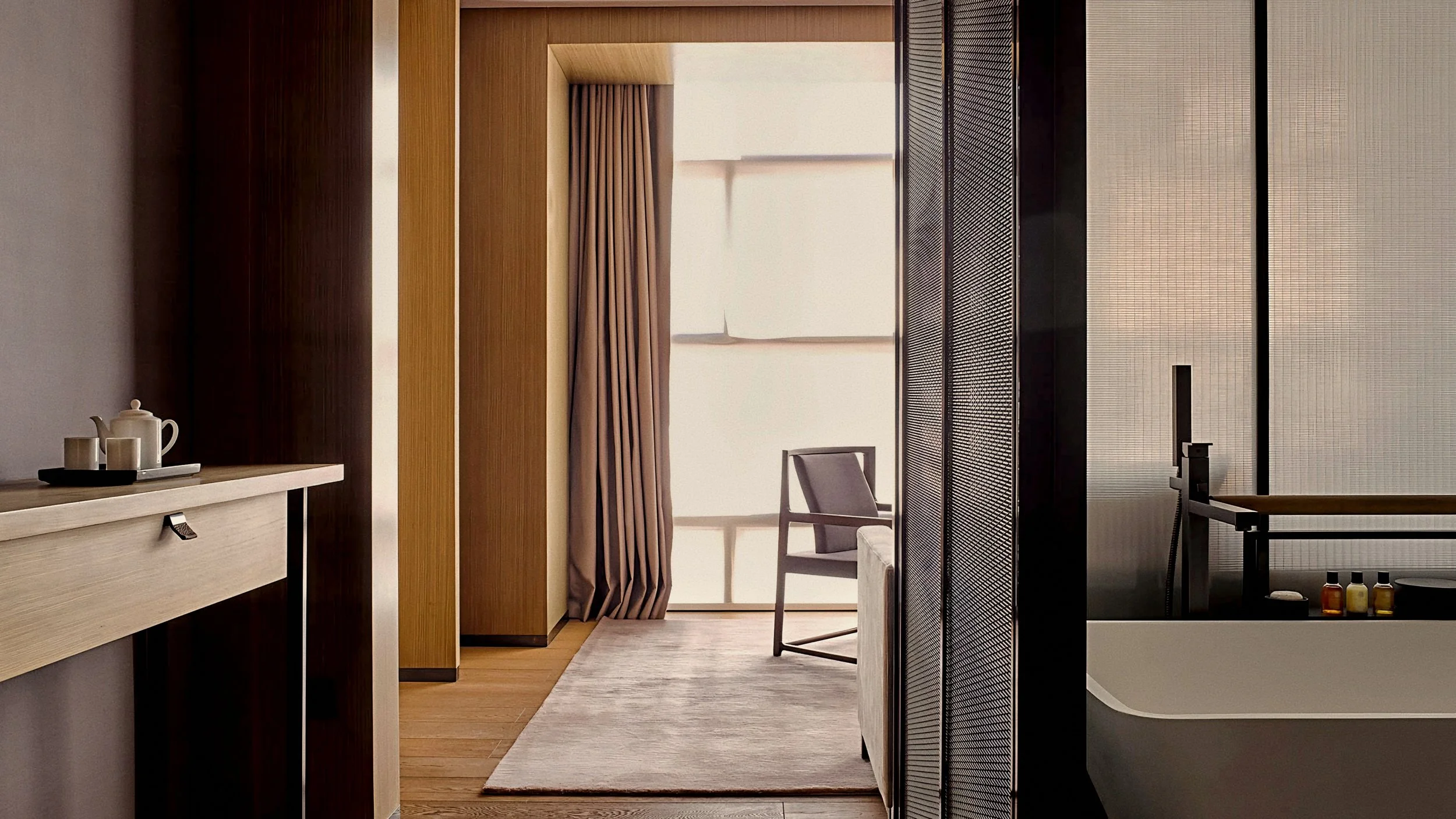
A matte white soaking tub set beside slatted timber screens and sheer drapery under diffused light. Photo: Courtesy of The PuXuan Hotel and Spa
Conceived as private sanctuaries for daily renewal, the bathing quarters across the suites represent a masterclass in architectural symmetry and material purity. Wrapped in dark, honed marble and warm timber millwork, these light-filled enclaves feature deep, freestanding oval soaking tubs positioned against translucent glass screens that filter soft natural light throughout the space.
Double-sink vanity basins crafted from smooth stone sit alongside brass fixtures, glass-enclosed rainforest shower stalls, and custom tea setups, bridging traditional ritual with modern comfort. Stocked with bespoke Guerlain bath essentials, the marble enclaves offer a quiet, meditative atmosphere where the frantic pace of the capital yields to pure residential tranquility.
The Living Alcove
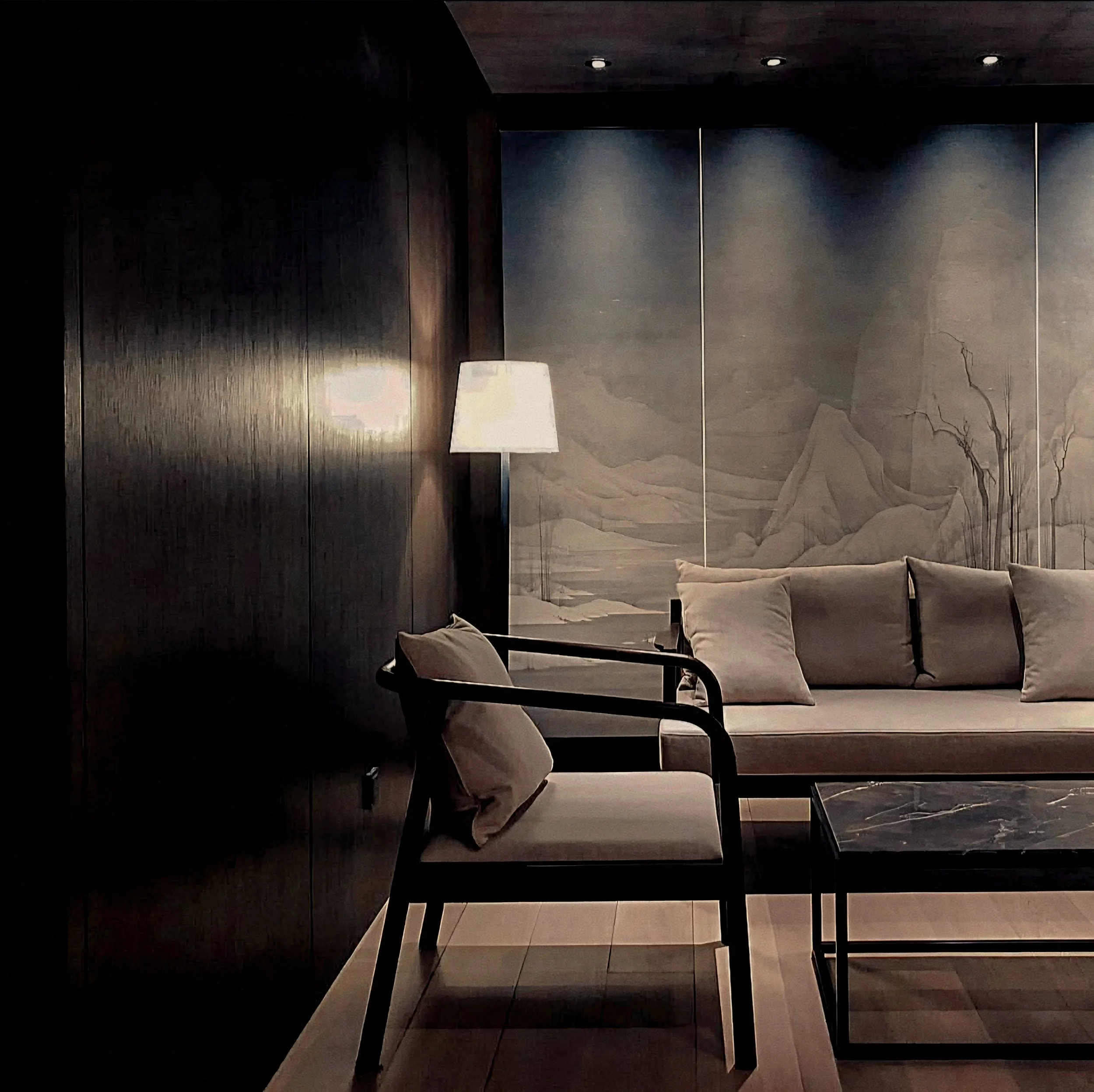
Low-slung contemporary lounge seating and a marble table set against a moody painted mountain mural. Photo: Courtesy of The PuXuan Hotel and Spa
Inside the suite living salons, low-slung contemporary seating, dark stone flooring, and bespoke silk murals establish an atmosphere of scholarly refinement. Grounding the main lounge areas are custom sofas upholstered in neutral textiles, set against floor-to-ceiling accent walls painted with delicate ink-wash mountain landscapes that pay homage to classical Chinese scroll art.
Designed for private entertaining and quiet contemplation, these residential spaces feature standalone tea preparation alcoves equipped for brewing rare loose-leaf selections. Circular stone perforations in the building's exterior facade act as physical camera lenses, casting artistic patterns of light and shadow across hand-carved furniture and curated contemporary artworks provided by the Guardian Art Center.
"In shaping the private interiors, our vision was to counteract the frenetic energy of downtown Beijing by crafting spaces that feel like the quiet, atmospheric estate of a wealthy modern scholar," reflect the interior design team, noting the selection of raw, beautifully aging materials. Whether enjoying a private tea ceremony at twilight or taking in views of the National Art Museum, these salons redefine modern oriental living through supreme restraint.
The Resplendent Literary
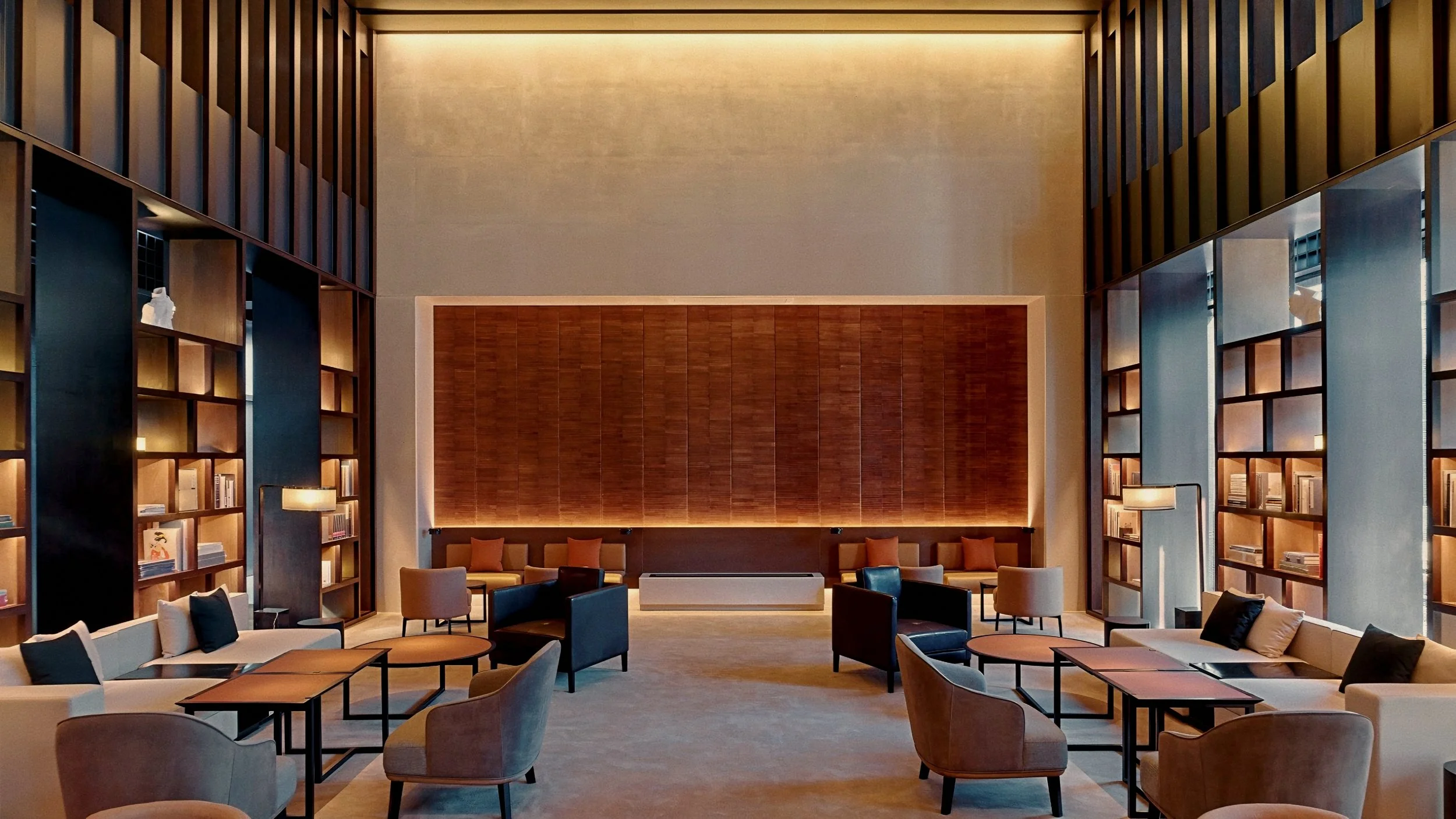
Double-height timber bookcases framing dark velvet club chairs under concealed perimeter lighting. Photo: Courtesy of The PuXuan Hotel and Spa
Shared spaces across the estate are conceived with the intimacy of a private manor, centering on two core pillars: scholarly focus and dramatic, front-row vantage points over Beijing's historic imperial axis. Positioned alongside the sunlit central water courtyard on the fourth floor, the Library functions as a quiet urban study—a warm, wood-paneled enclave lined with curated art literature, design journals, and low-slung residential seating designed for contemplative planning. Higher up on the eighth floor, The PuXuan Club completely reinterprets executive lounge hospitality, structured like a sprawling penthouse apartment featuring a domestic open-plan kitchen, private meeting salons, and expansive glass walls framing uninterrupted views over the tiled roofs of the Forbidden City and the hills of Jingshan Park.
Operating as a bespoke private retreat, the club eschews standard commercial buffets in favor of an entirely cooked-to-order dining concept, ranging from tailored breakfasts to elevated afternoon tea rituals. Spilling outward from the eighth-floor lounge are private, landscaped open-air roof terraces equipped with outdoor fireplaces, offering an exclusive venue for twilight cocktails overlooking the intricate, historic courtyard hutongs below. Blending modern connectivity with residential ease, these private enclaves offer guests an elevated sanctuary high above the capital.
The Culinary Atelier
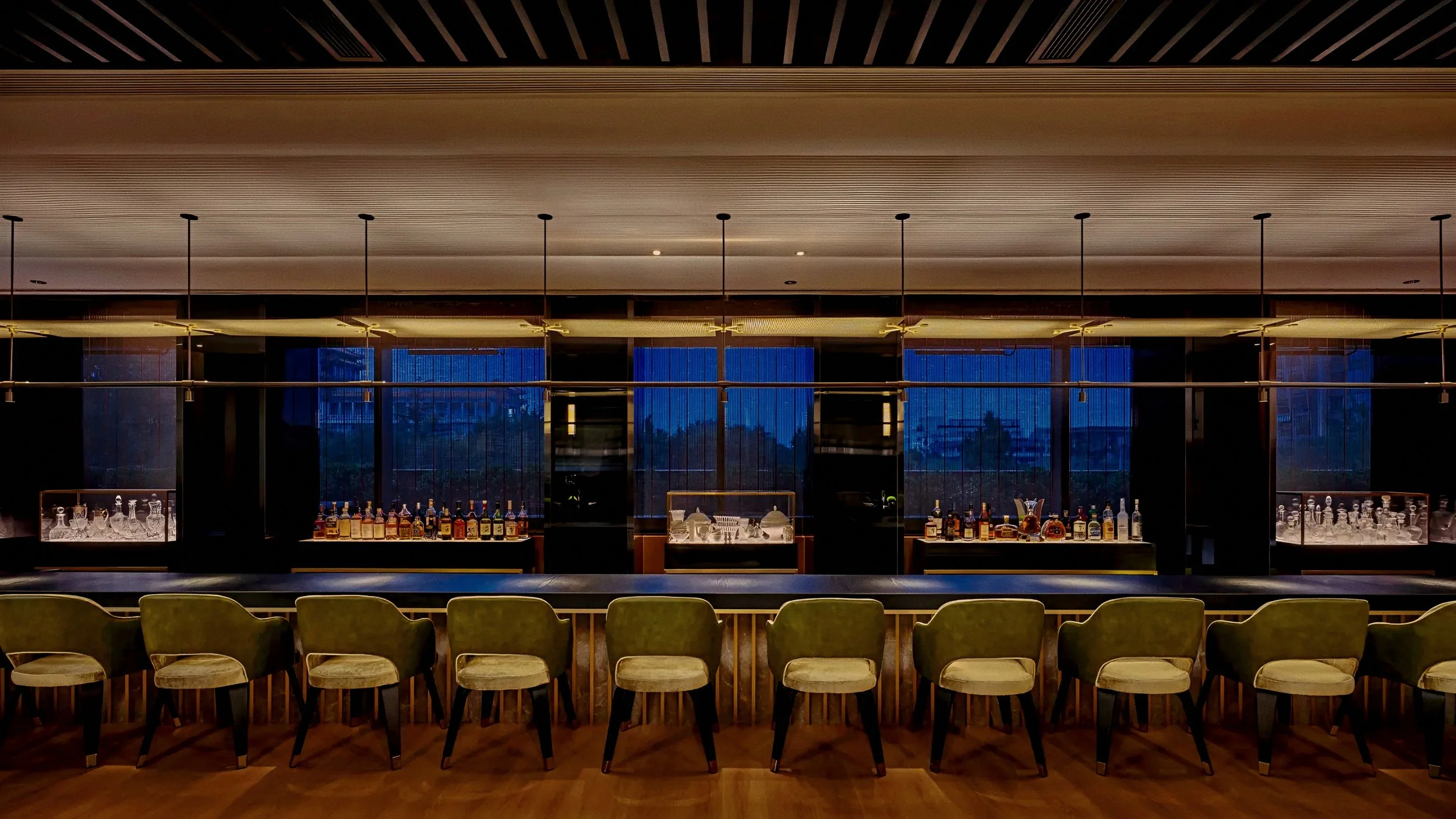
A floating brass canopy and sleek leather barstools stretching across an expansive counter anchored by backlit spirit displays. Photo: Courtesy of The PuXuan Hotel and Spa
Gastronomy at the estate avoids commercial high-volume dining in favor of intimate, standalone culinary destinations that celebrate heritage, technique, and seasonal terroir. Anchoring the dining collection on Level 3 is Fu Chun Ju, a Michelin-starred flagship Cantonese restaurant styled as a modernized Chinese courtyard house. Beneath warm amber illumination and structural screen dividers, private dining chambers named after historical Chinese artists set the stage for slow-cooked Cantonese mastery. Under the direction of Executive Chef Yeung Wai Kit, traditional regional methods are elevated into fine art—yielding signature dishes such as Chinese wine-marinated drunken shrimp, Wagyu beef fillet, and delicate dim sum. "True Cantonese cuisine is an exercise in subtle restraint," reflects Chef Yeung, "where time-honored slow-cooking methods honor the purest essence of every ingredient."
On Level 2, Rive Gauche bridges Parisian "bistronomy" with subtle oriental influences, bringing Left Bank romance to downtown Beijing. Framed by semi-circular velvet banquettes, an elongated copper bar counter, and vintage lamps, the dining room pairs French technique with playful local twists, such as warm house-made baguettes served with fermented tofu butter and Longjing tea panna cotta. Positioned at the restaurant's threshold is a Franco-Chinese bar lounge featuring custom furniture by Jasper Morrison, which opens directly onto an western-facing alfresco terrace. Looking across the tiled rooflines of the neighboring National Art Museum toward Jingshan Park, the terrace offers one of the capital's most coveted twilight aperitif settings.
Completing the culinary landscape on Level 4 is The Tea Room—a minimalist sanctuary dedicated to traditional Asian tea ceremonies and botanical exploration. Enclosed in pale native timber, floating glass panels, and private low-table tasting alcoves, the space features a specialized "tea laboratory" where tea masters break down the seasonal profiles and science of rare loose-leaf selections, including authentic Longjing green teas. From Michelin-starred Cantonese banquets to quiet tea tastings, the property offers a curated journey through global and regional flavor.
The Sculptural Atrium
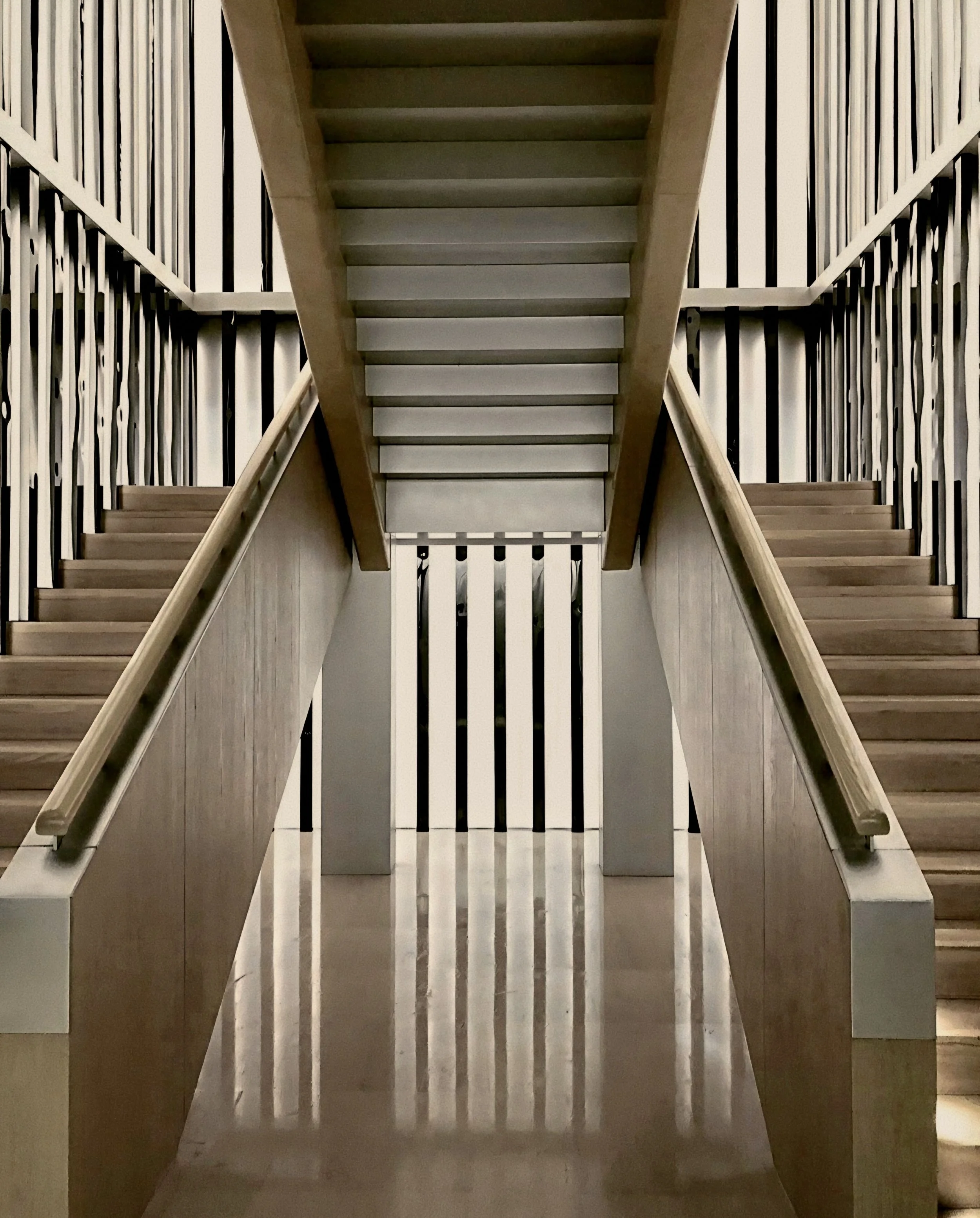
Symmetrical oak staircases bounded by metallic vertical balustrades and reflected on polished stone floors. Photo: Courtesy of The PuXuan Hotel and Spa
Operating atop the upper rings of the Guardian Art Center, the estate functions less like a hotel and more like an immersive, living art pavilion. Seamlessly connected to the museum exhibition halls and auction galleries directly below, the public spaces blur the boundary between hospitality and high-art curation through rotating collections curated by world-class art experts. At the center of this architectural narrative is the striking glass staircase—a sculptural installation crafted from illuminated glass panels that rise dramatically against jet-black carbon fiber walls. Ascending toward the upper wellness sanctuary, the staircase creates a translucent play of light and shadow, transforming vertical movement into a floating, light-filled experience.
Artistic intention permeates every corner, from the circular facade openings that frame pixelated city views to bespoke furnishings custom-forged by Chinese luxury house SHANG XIA. Utilizing traditional joinery, hand-woven rattan, and raw silk, these pieces blur the line between functional furniture and collectible sculpture. In quieter enclaves, delicate bone-china sculptures by Paula Bastiaansen and custom couture fans from Maison Duvelleroy sit subtly on display, reinforcing an atmosphere where global craftsmanship and contemporary Chinese heritage exist in harmonious balance.
The Couture Sanctum
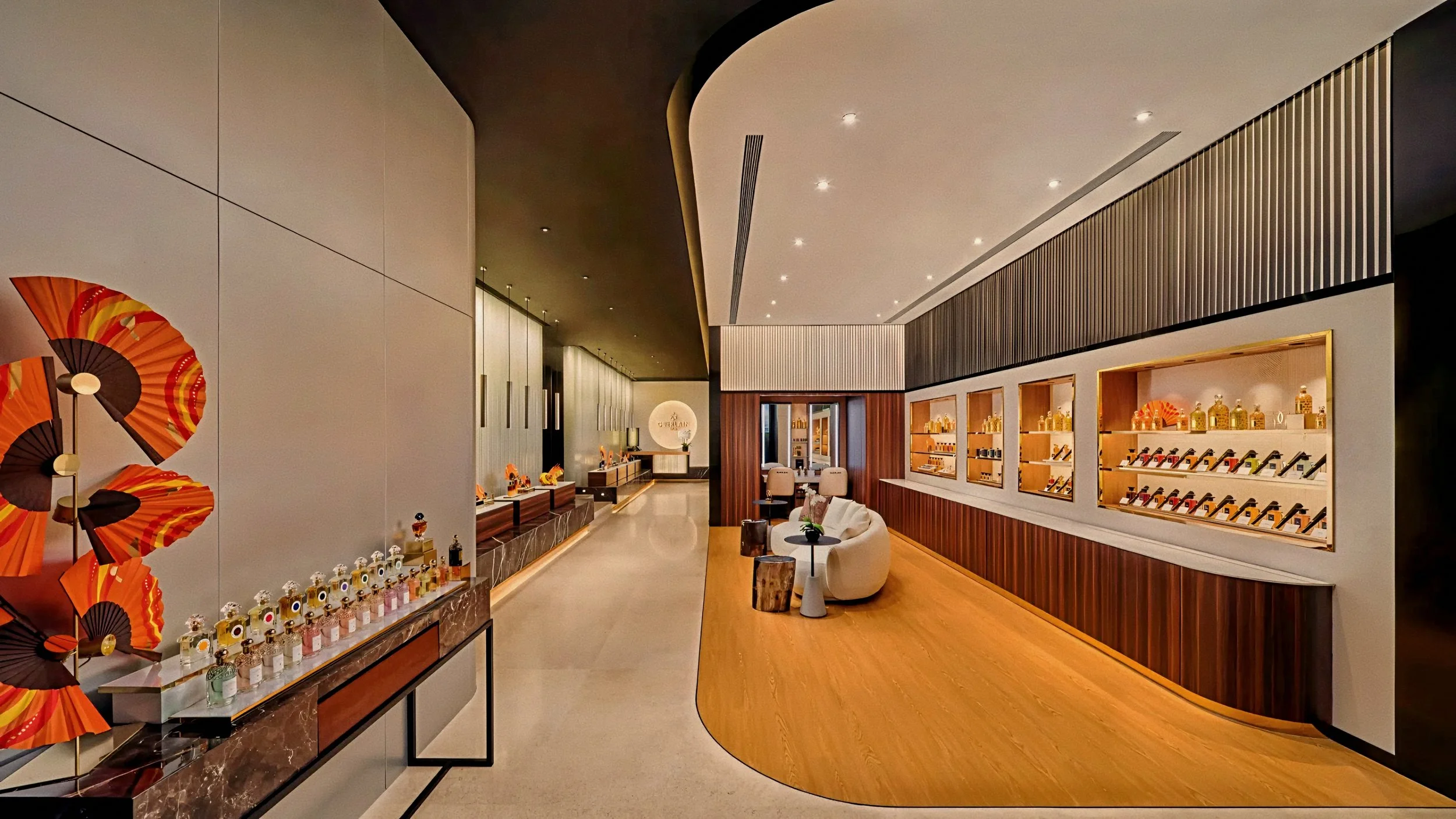
Curved wood joinery and fluted wall panels framing bespoke fragrance vitrines along a marble spa corridor. Photo: Courtesy of The PuXuan Hotel and Spa
Wellness at the estate is anchored by mainland China’s first flagship Guerlain Spa, extending the prestigious lineage of Paris’s original 1939 Beauty Institute at 68 Avenue des Champs-Élysées. Occupying a serene two-level sanctuary, the interior architecture is designed to suspend time through minimalist stone paths, soft ambient lighting, and discreet art installations—including bone-china sculptures by Paula Bastiaansen and bespoke couture fans crafted by France’s Maison Duvelleroy. Six private treatment suites, two dedicated body scrub rooms, saunas, and steam baths establish an atmosphere of absolute isolation, where therapists trained in intensive Parisian protocols deliver sensory skin treatments.
The hallmark of the treatment menu is the exclusive Orchid Youth Ritual, created solely for the property and unobtainable anywhere else in the world. Blending heated lava stones with a facial technique where therapist movements mimic fluid, calligraphy-style brushstrokes, the ritual balances internal energy while promoting cellular skin regeneration. Complementing the treatment rooms is a private fragrance and skincare boutique carrying Guerlain’s elite Orchidée Impériale, Abeille Royale, and L'Art & La Matière collections, offering advanced personalization services where guests can customize perfume cords, seals, and bespoke bottle engravings.
Beyond the treatment suites, the wellness ecosystem extends into movement and mindfulness spaces, supported by a state-of-the-art fitness center with personal trainers and private yoga instruction. Holistic health even penetrates the sleeping quarters through custom in-room wellness bars stocked with organic functional refreshments, ensuring physical realignment follows guests throughout their stay. From bespoke French skincare science to quiet meditative movement, the spa stands as an uncompromised sanctuary for physical and mental renewal.
The Basalt Citadel
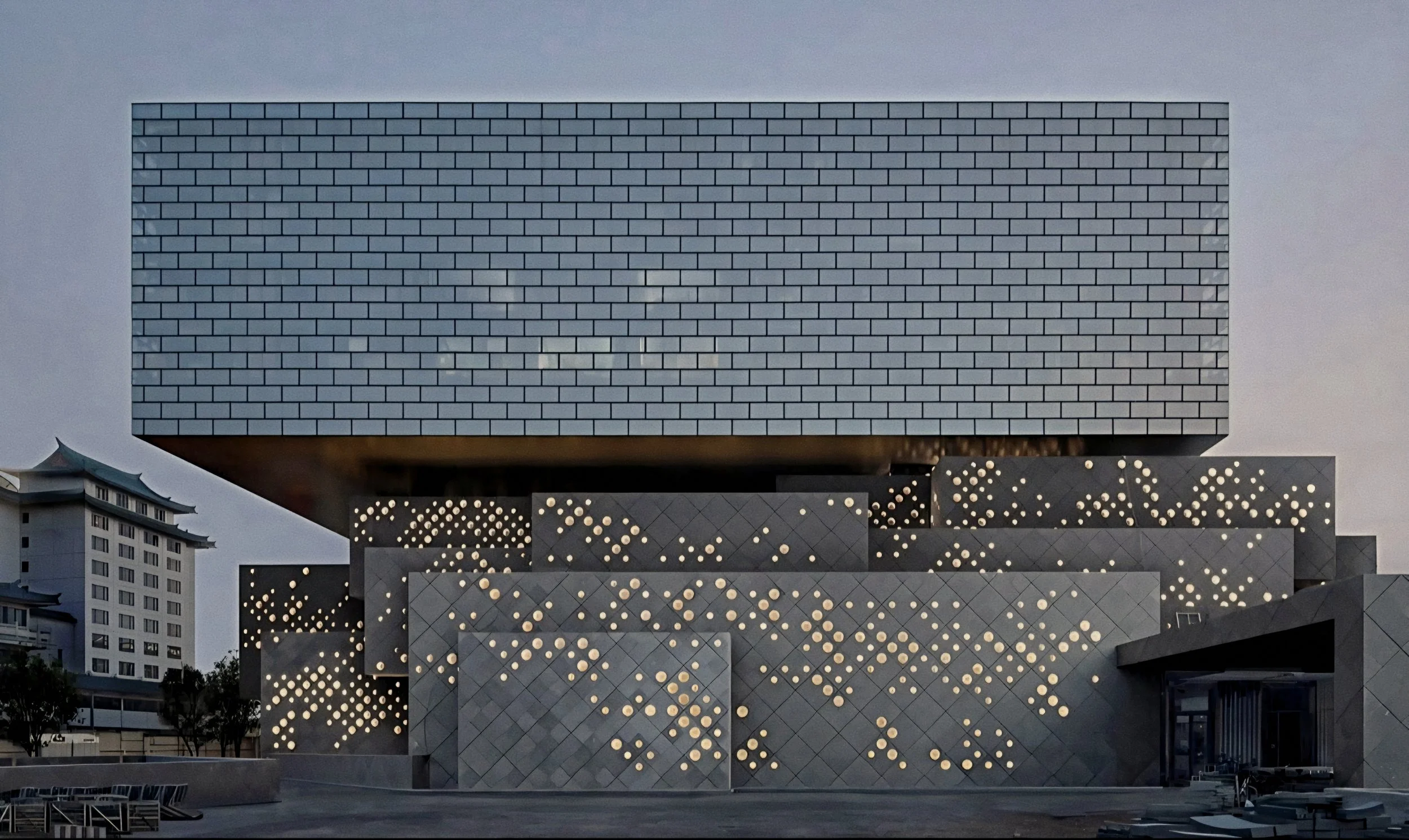
Perforated basalt stone tile blocks crowned by a glowing glass brick upper volume. Photo: Courtesy of The PuXuan Hotel and Spa
Conceived by architect Ole Scheeren as a multipurpose cultural machine, the building’s exterior represents a masterclass in bridging hyper-modernism with ancient imperial lineage. Anchoring the lower volume is a pixelated base crafted from thousands of charcoal-grey basalt stone blocks, directly echoing the grey-brick geometry, scale, and texture of Beijing’s surrounding historic hutongs. Perforated with thousands of circular openings, the stone facade creates a living architectural wall that, when viewed from a distance, translates the delicate silhouette of the 14th-century masterwork Dwelling in the Fuchun Mountains into physical form. Floating dramatically above this textured masonry foundation sits a hollow, translucent ring of glass bricks—housing the hotel's residential quarters while establishing a luminous, weightless contrast against the solid stone below.
"In designing the structure, our objective was to formulate a dialogue between Beijing's urban memory and its contemporary cultural future," reflects the architectural design team, noting the synthesis of the Guardian Art Center and residential hospitality. "By abstracting the texture of the ancient hutongs into a pixelated stone landscape and crowning it with a floating glass volume, the architecture honors imperial history while offering a modern window over the Forbidden City." Standing at the symbolic crossroads of Wangfujing and Wusi Street, the estate remains an enduring masterpiece where Chinese artistic heritage, architectural innovation, and ultra-luxury hospitality exist in quiet, perpetual harmony.
ESSENTIAL INFORMATION
To preserve your personal privacy, secure direct guest privileges, and ensure end-to-end data safety, luxury travelers are advised to book directly through the property's official portal.
(Note: Royaume maintains zero affiliate partnerships or booking commissions. We link exclusively to official brand channels for property verification and reader security.)