The Fortified Maritime Citadel of Wind-Carved Ramparts and Sun-Bleached Adriatic Tides: Aman Sveti Stefan
BY ROYAUME
OCTOBER 2026
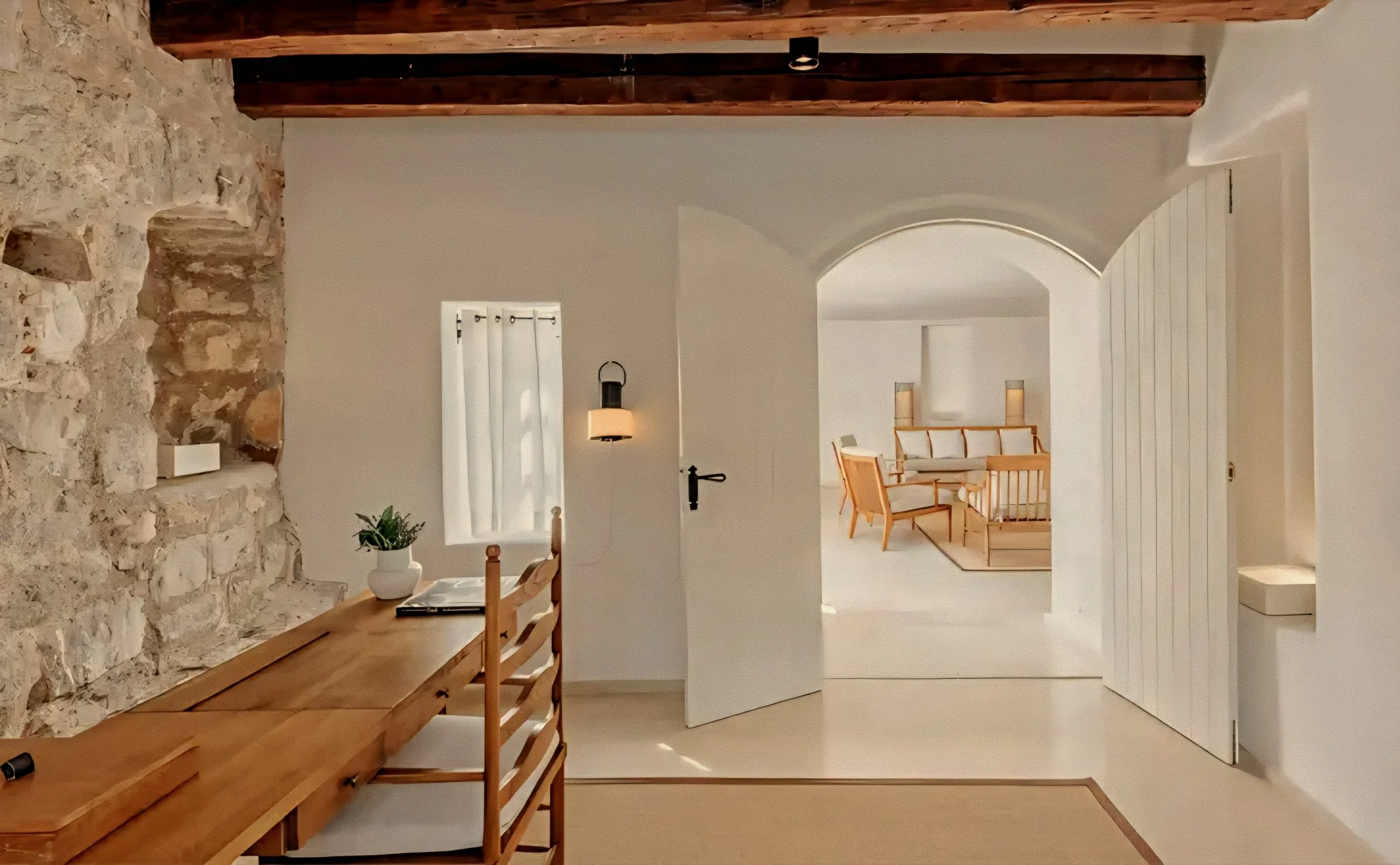
A rugged expanse of heritage masonry meeting pristine lime-washed plaster beneath exposed structural timber. Photo: Courtesy of Aman Sveti Stefan
Floating off the Budva Riviera like a medieval stone mirage, Aman Sveti Stefan, Montenegro unfolds not as a standard luxury hotel, but as a five-hundred-year-old fortified village preserved in absolute stillness. Connected to the mainland by a narrow, pink-pebble isthmus, this three-hectare limestone islet originally emerged in the 1440s as a strategic stronghold for the fierce Paštrovići tribe. According to local lore, the sea-fortress was built using captured Turkish treasure to shield twelve coastal clans from Ottoman raids and Mediterranean pirates—anchored around a sacred sanctuary dedicated to Saint Stephen and a central court of justice. Across the water on the mainland, this royal lineage expanded in 1934 when Queen Marija Karađorđević of Yugoslavia erected Villa Miločer, a grand stone summer residence nestled among centuries-old olive groves and rare cedar pines overlooking the crescent-shaped Queen's Beach.
By the mid-twentieth century, as industrial fishing waned, the Yugoslav government under President Tito recognized the islet’s cinematic grandeur and transformed it into Europe’s first luxury "town-hotel" in 1960. Preserving the rugged medieval stone facades while refitting the interiors, Sveti Stefan became an unhurried playground for the global jet set. Elizabeth Taylor and Richard Burton made its winding cobbled pathways their personal haven, while Sophia Loren famously declared it the most enchanting destination she had ever beheld. Following a period of quietude during the region’s political transformation, the property entered a new golden age under Aman’s stewardship, triumphantly reawakening in summer 2026 after a five-year restorative pause to solidify its status as the peak of Mediterranean seclusion.
Masterfully restored by legendary architect Jean-Michel Gathy of Denniston Architects alongside Island Planning Corporation, the architectural philosophy celebrates strict historical preservation. Gathy approached the village's chaotic medieval footprint with extreme restraint—highlighting hand-chiseled 15th-century stone walls, neutral cream linens, and custom local oak furnishings rather than masking centuries of structural character. Subtle homage is paid throughout to the island’s maritime heritage, from iron door latches to custom window lanterns modeled after those used by fishermen’s wives centuries ago. Meanwhile, transplanted centuries-old olive trees and native Mediterranean flora frame ancient stone alleyways, seamlessly bridging raw historic bones with modern spatial luxury.
Arrival at the estate is orchestrated as a deliberate ritual of spatial transformation, shedding the friction of the modern world before one ever sets foot on the island. Passing through the secure mainland gates and past the stone reception pavilions, guests forego motorized transport to traverse the one-hundred-meter stone causeway on foot, watching the medieval sea-fortress loom larger against the horizon. Stepping beneath the heavy stone archway of the original 15th-century fortress gate—where a historic iron bell once warned villagers of approaching pirate ships—the path opens into a hushed world of cobbled lanes and stone-vaulted loggias. Here, check-in dissolves into a quiet homecoming, anchored by the central stone Piazza where guests gather under wild fig trees just as the Paštrovići clans did five hundred years ago.
The Adriatic Boudoir
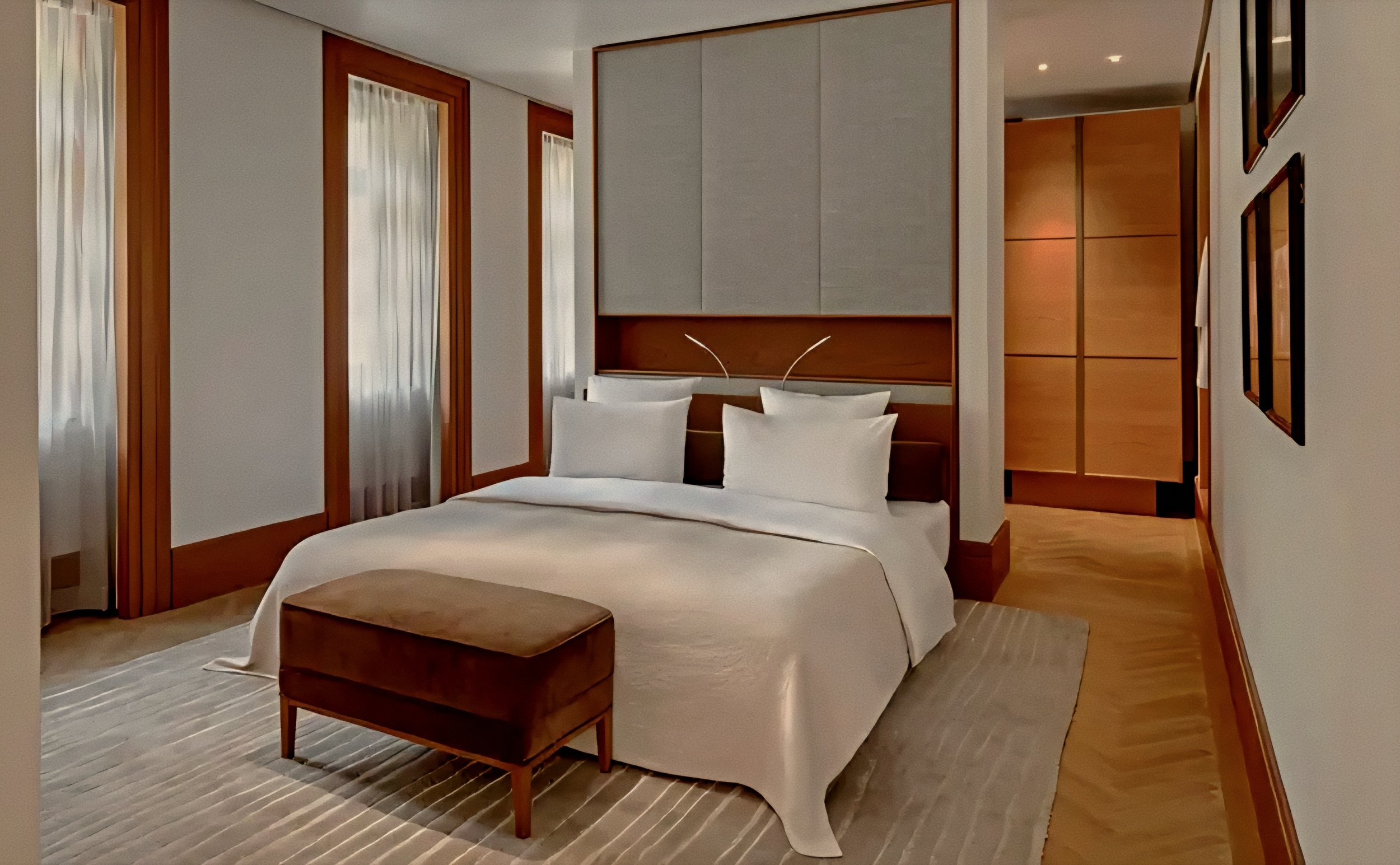
Tailored organic textiles and muted walnut paneling unfolding in a sanctuary of restrained monochromatic calm. Photo: Courtesy of Aman Sveti Stefan
Sprawling across fifty-eight converted historic listings, the accommodation landscape at Aman Sveti Stefan rejects standard hotel uniformity in favor of a deeply residential, highly unconventional spatial experience. Split between the seasonal private island fortress and the year-round royal mainland estate, the quarters are categorized strictly as Rooms, Cottages, and Suites to honor their 15th- and 20th-century origins. On the private island, fifty converted fisherman’s stone cottages preserve their rugged medieval shells, ensuring no two room floor plans, ceiling volumes, or window orientations are alike. Ranging from cozy Village Rooms looking over tiled rooftops to expansive multi-level Village Cottages connected by winding outdoor stone stairs, each sanctuary offers an intimate retreat framed by exposed grey stone walls and pristine white plaster borders.
Restraint and material honesty guide every sleeping quarter within the island’s stone walls. Custom king beds carved from solid local oak are dressed in heavy, crisp cream linens, placed to command quiet views of the cobbled lanes or the azure horizon of the Adriatic Sea. Lighting remains soft and atmospheric, purposely eschewing ostentatious artwork to let the tactile depth of the historic stone act as the room’s true visual anchor. Traditional dark wooden shutters swing open to narrow, iron-grated casements, where the gentle rustle of sea air and the scent of wild pine replace standard hotel air conditioning.Traditional dark wooden shutters swing open to narrow, iron-grated casements, where the gentle rustle of sea air and the scent of wild pine replace standard hotel air conditioning.Traditional dark wooden shutters swing open to narrow, iron-grated casements, where the gentle rustle of sea air and the resinous perfume of wild pine filtered through open timber shutters cultivate a living, coastal microclimate.
Across the causeway on the mainland, the eight suites within Villa Miločer offer a regal, aristocratic counterpoint to the island’s rustic stone vernacular. Built in 1934 as the summer retreat for Queen Marija Karađorđević of Serbia, this grand stone mansion trades exposed masonry for warm hardwood parquet floors, plush wool carpets, and hand-woven silk drapery. Spanning seventy square meters across Garden View and Sea View layouts, these grand quarters feature Juliet balconies framing tranquil pine forests and over eight hundred mature olive trees, providing guests direct interior access to the estate's royal living salons and historic library.
The Crimson Sanctorum
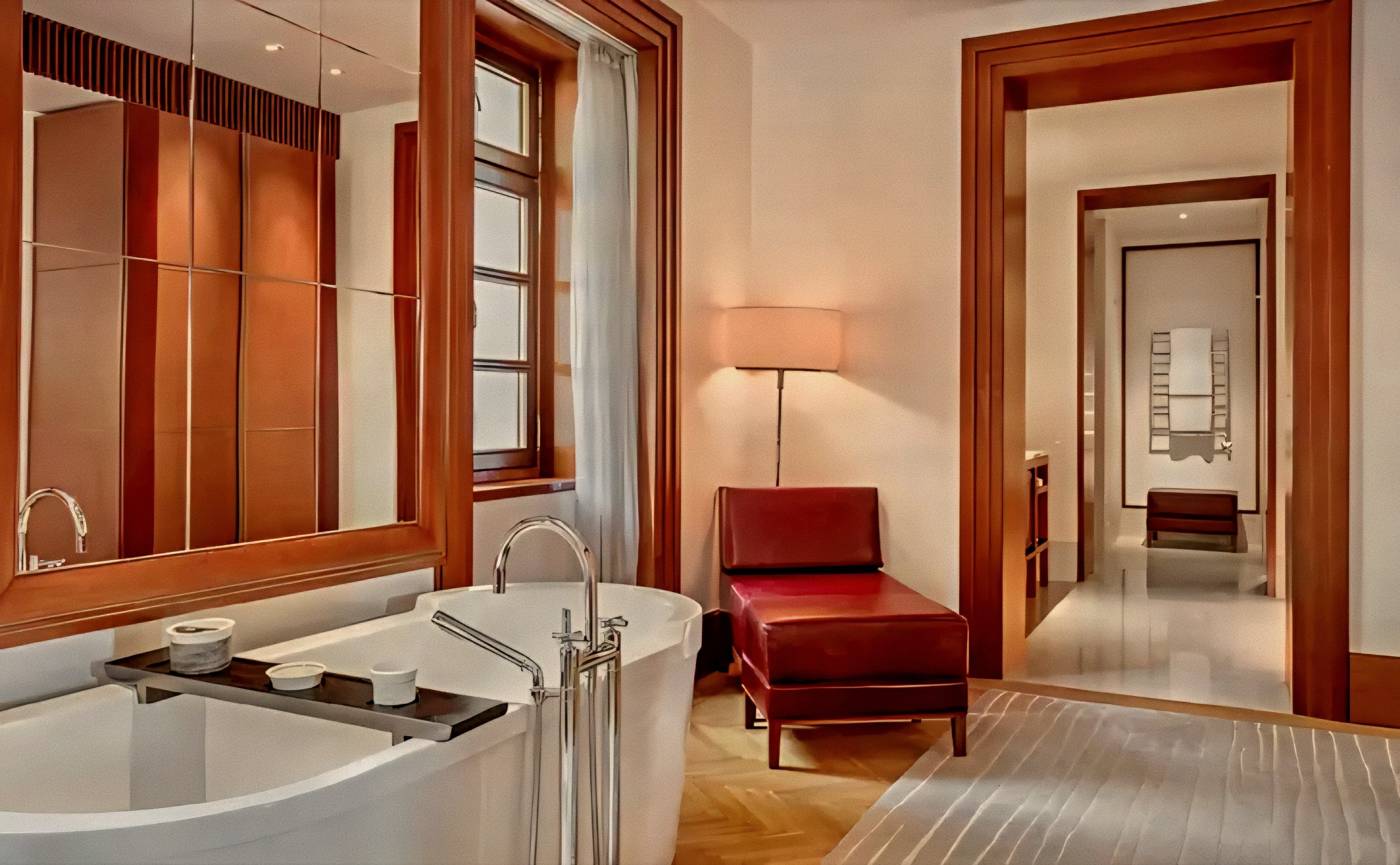
Monolithic porcelain and warm timber joinery reflecting the soft, diffused light of quiet coastal mornings. Photo: Courtesy of Aman Sveti Stefan
Designed as generous, spa-like sanctuaries, the en-suite bathrooms on the private island often serve as the physical centerpiece of each historic cottage. Hand-cut local stone tiles and polished terrazzo floors line the expansive spaces, warmed from underneath by concealed floor heating systems. Heavy freestanding stone bathtubs sit beneath subtle ironwork lanterns, paired with double-console stone vanities, separate walk-in rainfall showers, and bespoke bath products custom-infused with native Montenegrin herbs.
On the mainland at Villa Miločer, the bathing enclaves scale up to grand, aristocratic proportions clad entirely in slabs of polished European marble. Bathed in natural sunlight filtering through towering French doors, these majestic spaces feature deep soaking tubs, oversized glass-enclosed rain showers, and refined nickel tapware—reflecting the understated elegance of 1930s royal architecture.
The Connoisseur’s Salon
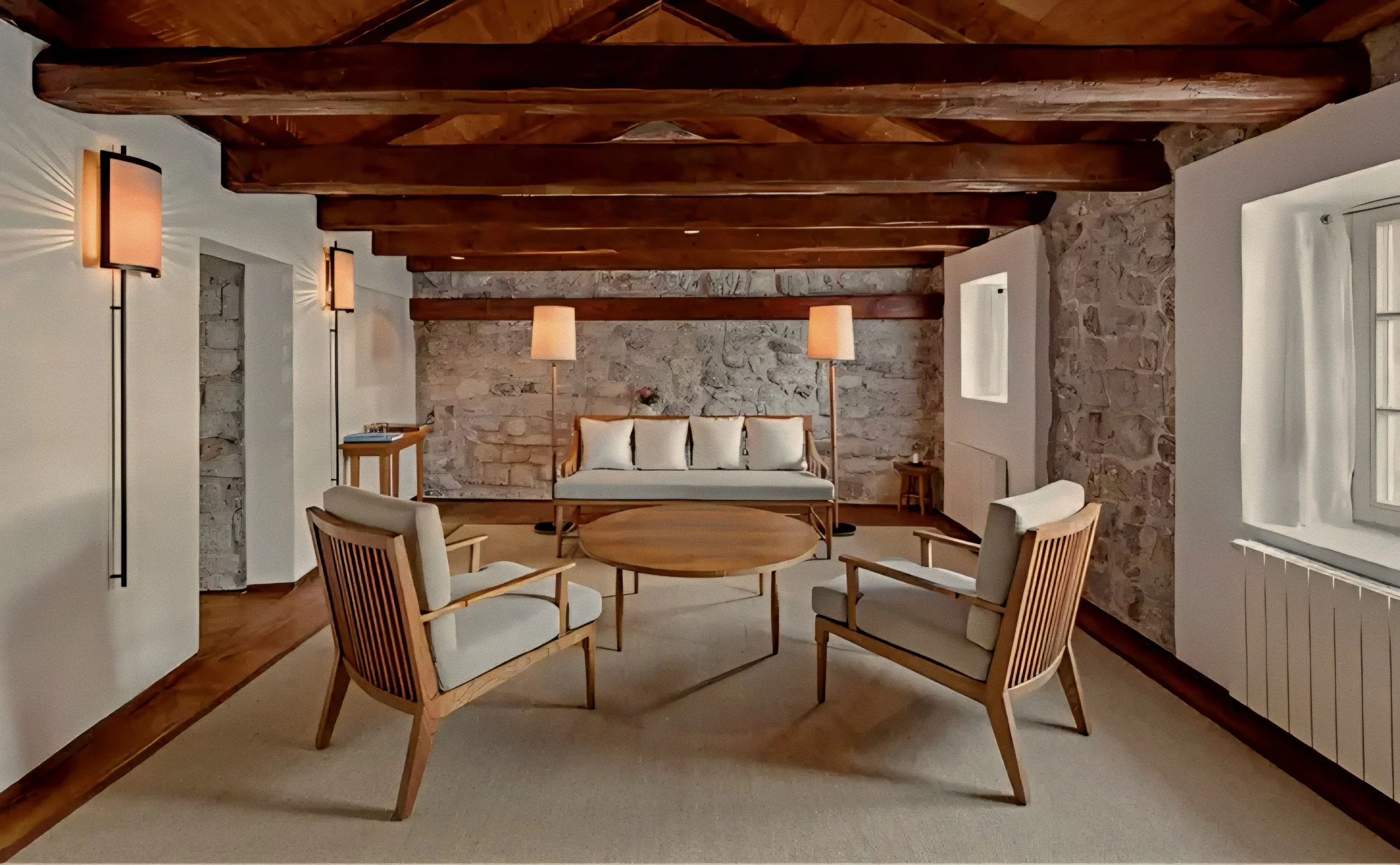
Centuries-old stone framing low-slung artisan seating beneath monumental hand-hewn ceiling beams. Photo: Courtesy of Aman Sveti Stefan
Scaling up to monumental residential proportions, the estate’s suites and living salons feel less like hotel accommodations and more like private European manors. Within the island’s Cottages and Suites, living rooms feature neutral-toned linen sofas, custom oak desks, wrought-iron accents, and soft woven rugs, with minibars discreetly hidden behind custom timber millwork. At the absolute peak of the property stand three legendary pinnacle residences: the sprawling bi-level Sveti Stefan Suite—the only island accommodation featuring a private pool embedded into a stone sea-terrace alongside a butler’s pantry, steam room, and formal dining salon—the loft-style Adriatic Suite, boasting three private stone view terraces; and the standalone Queen Marija Suites on the mainland, defined by grand stone fireplaces and private forest-edge terraces.
Conceptualized by lead architect Jean-Michel Gathy of Denniston Architects, the design of these private living spaces balances the raw, chaotic layout of the 15th-century village with absolute spatial serenity. By preserving thick exterior walls and exposed timber ceiling joists while introducing sleek oak geometry and neutral textiles, the salons cultivate a warm, unhurried atmosphere that honors the island's five-hundred-year story. "When transforming a protected historical monument like Sveti Stefan, architecture must learn to speak in whispers rather than shouts," notes Jean-Michel Gathy on the design ethos of the residences, emphasizing that by highlighting raw, patinated stone walls and introducing a disciplined geometry of oak, cream linen, and soft light, the interiors preserve the soul of a 15th-century village within a modern framework of absolute comfort.
Enclaved within centuries-old masonry that naturally insulates against outside sound, these grand residential sanctuaries frame the dramatic Adriatic horizon through private, open-air stone loggias. Every salon transition is orchestrated to offer an effortless flow between indoor quietude and outdoor panoramas—seamlessly bridging 1930s royal Yugoslav elegance with the timeless, unscripted seclusion of the sea.
The Culinary Atelier
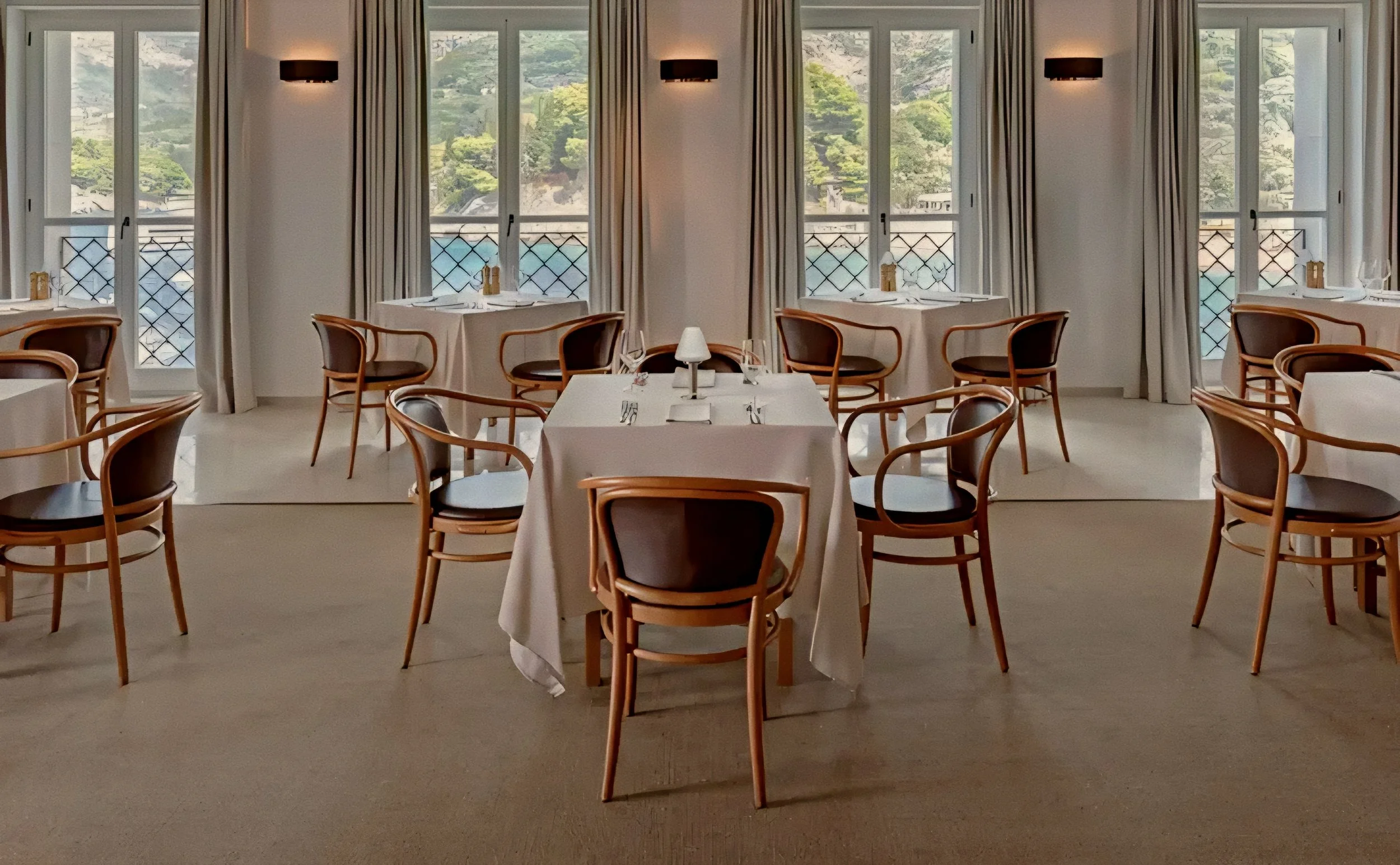
Crisp linens and classic bentwood silhouettes bathed in the coastal glow filtering through historic muntin windows. Photo: Courtesy of Aman Sveti Stefan
Rooted in a refined cucina del raccolto—or harvest kitchen—philosophy, the dining program at Aman Sveti Stefan celebrates time-honored Balkan culinary traditions and wild Montenegrin foraging. Perched dramatically on the private island's cliffside edge, Arva serves as the estate's flagship showpiece, where an open-air stone terrace provides sweeping sunset panoramas across the Adriatic. The kitchen pairs elevated Italian technique with day-boat seafood and local mountain produce, crafting hand-rolled pastas and fresh-caught sea bass filled with lobster mousse. Across the causeway, the year-round Villa Miločer Restaurant offers a palatial counterpoint within Queen Marija Karađorđević’s 1934 stone residence, where guests dine under wisteria-covered loggias overlooking King’s Beach on wild game, artisanal cheeses, and mountain-cured meats from nearby Njeguši village.
Gathering spaces across the island mirror the unhurried rhythm of medieval village life. The open-air Piazza acts as the island's beating heart, cascading across stone terraces shaded by mature pines and split into three distinct zones: The Taverna for rustic outdoor lunches, The Antipasti Bar for fresh charcuterie, and The Enoteca, a stone-built vault housing rare Montenegrin and international vintages. High on an upper island terrace, the atmospheric Rakija Bar offers twilight tastings of double-distilled, house-infused fruit brandies—from wild plum to local honey—paired with dried fruits. For monumental celebrations, private tables are orchestrated amidst the ruins of the Church of Alexander Nevsky or along the water's edge at Queen's Beach under live stone hearths.
"True luxury in gastronomy is not about imported excess; it is about honoring the immediate landscape and the micro-seasons of the land," reflects Chef Norbert Niederkofler on shaping the estate's culinary direction. "By working directly with multi-generational Montenegrin families—sourcing wild honey from the coastal cliffs and olive oils pressed from centuries-old groves—we allow the raw purity of the Adriatic harvest to tell its own timeless story.”
The Stone Colonnade
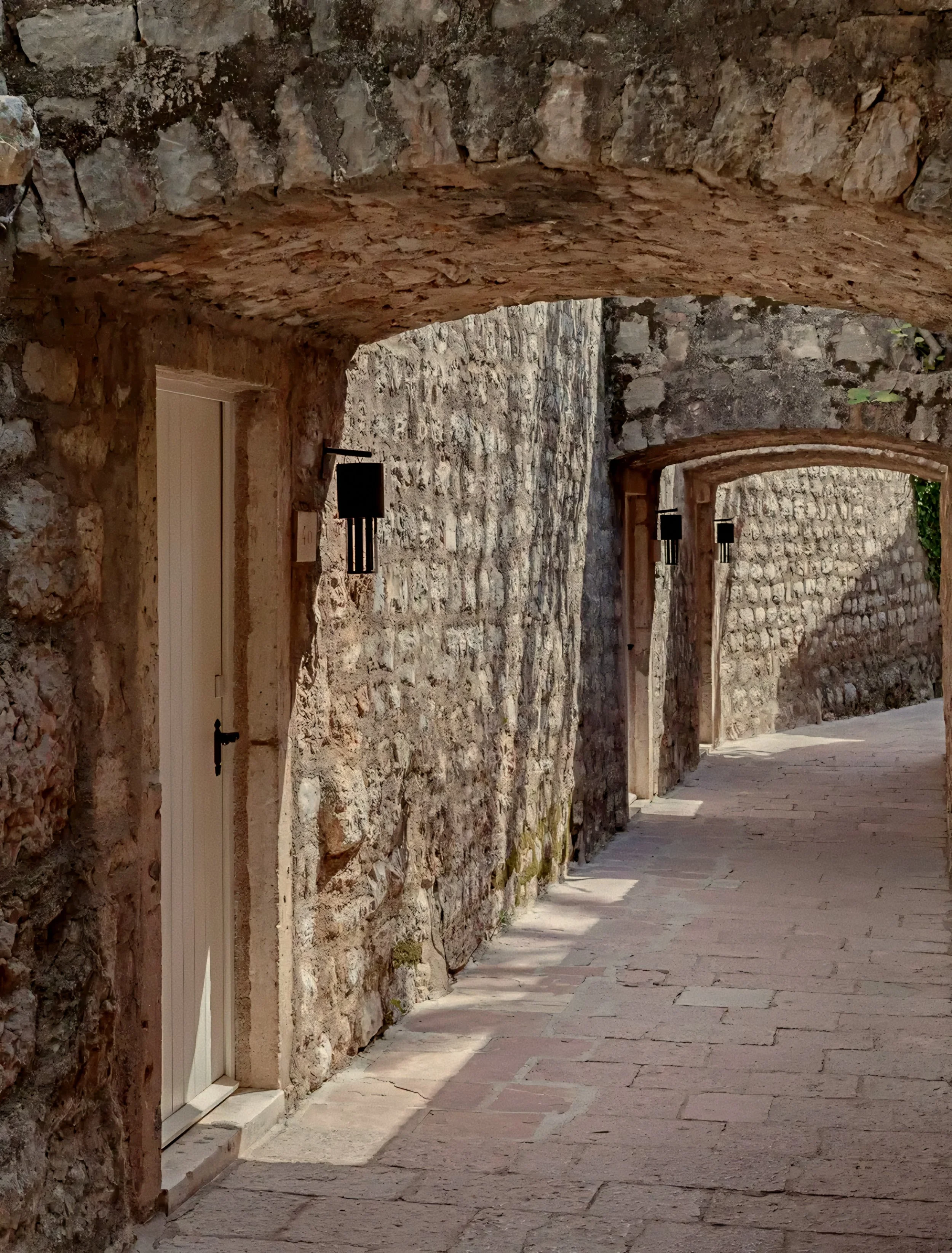
Sunlight casting sharp, cinematic geometries across medieval stone archways and time-worn masonry. Photo: Courtesy of Aman Sveti Stefan
Navigating the private island of Sveti Stefan is an exercise in three-dimensional spatial poetry, where a protected labyrinth of hand-laid 15th-century cobblestones traces the organic contour of the coastal cliffs. Void of straight lines or modern symmetry, the narrow, winding pathways cascade up and down via hundreds of worn stone stairs—constructed over five hundred years ago using local limestone that has been polished smooth by centuries of footsteps. Embedded directly into the patinated stone walls along these quiet alleys are original iron rings, tactile remnants where medieval fishermen once hung their hemp nets to dry in the salt air, preserving an indelible link to the island’s maritime soul.
Hidden along these intimate stone lanes are three preserved medieval sanctuaries that anchor the islet’s spiritual heritage. Crowned at the highest crest of the island, the Church of Sveti Stefan (St. Stephen) features original stone frescoes that whisper of ancient iconographic traditions, while the delicate Church of the Mother of God (Preobraženje) offers an intimate, stone-vaulted chapel nestled directly within the residential quarters. Nearby, the excavated ruins of the Church of Alexander Nevsky stand dynamically preserved along the stone terraces, serving as a silent, sacred testament to the layered centuries that continue to breathe within this fortress by the sea.
The Subterranean Basilica
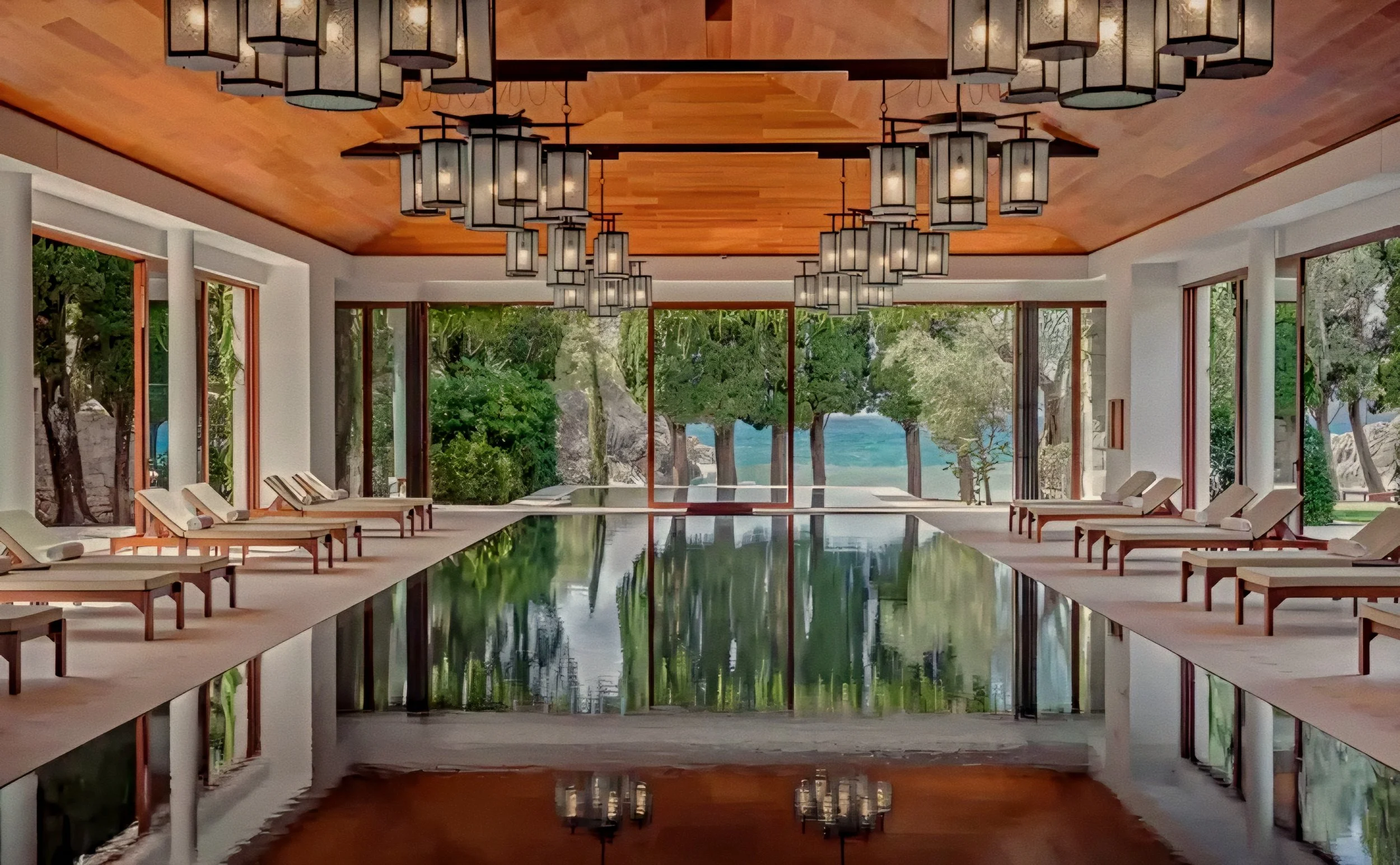
Stilled water mirroring a coffered cedar canopy and the warm, amber hush of custom lantern arrays. Photo: Courtesy of Aman Sveti Stefan
Set entirely on the mainland estate along the edges of Queen’s Beach, the twenty-four-thousand-square-foot Aman Spa functions as an independent, standalone sanctuary of sensory disconnect and longevity. Tucked deeply into protected royal pine forests, the complex relies on a brutalist organic aesthetic—pairing monolithic local stone and soaring timber ceilings with floor-to-ceiling glass walls that look directly out onto the emerald sea and ancient cedar groves. The centerpiece of this water network is its twenty-four-meter heated infinity pool, an architectural marvel enclosed within a stone-vaulted timber structure that glides seamlessly out into the forest canopy. Three private hydrotherapy suites expand this aquatic ritual, each outfitted with its own granite cold plunge pool, dry Finnish sauna, and private steam room, alongside an outdoor pebble-submerged reflexology path designed to boost circulation using smooth Adriatic stone.
Rerejecting compact treatment rooms, the spatial architecture favors four massive, standalone Treatment Cottages designed as complete private apartments. Each cottage incorporates its own relaxation lounge, an open-fire stone hearth for cooler months, dual massage tables, and private stone bathing enclaves—guaranteeing total sanctuary and complete isolation throughout the therapeutic journey. Complementing bodywork, bright glass-enclosed Yoga and Pilates Pavilions look into the surrounding pine canopy for private one-on-one reformer sessions, breathwork, and Hatha yoga, anchored by a state-of-the-art fitness center and a dedicated finishing salon.
Avoiding synthetic machine therapies, the wellness philosophy centers on indigenous wild foraging and chemical-free, ancient European remedies. Every formulation, wrap, and scrub is mixed fresh daily using local sea salt pulled straight from the Adriatic, extra-virgin olive oil from nearby centuries-old groves, and wild Montenegrin mint, rosemary, and lavender. Therapists utilize a custom Queen’s Beach blend of regional marigold and cedarwood to soothe sun-exposed skin and calm the nervous system—creating an authentic botanical sanctuary where forest, stone, and sea quietly converge.
The Azure Basin
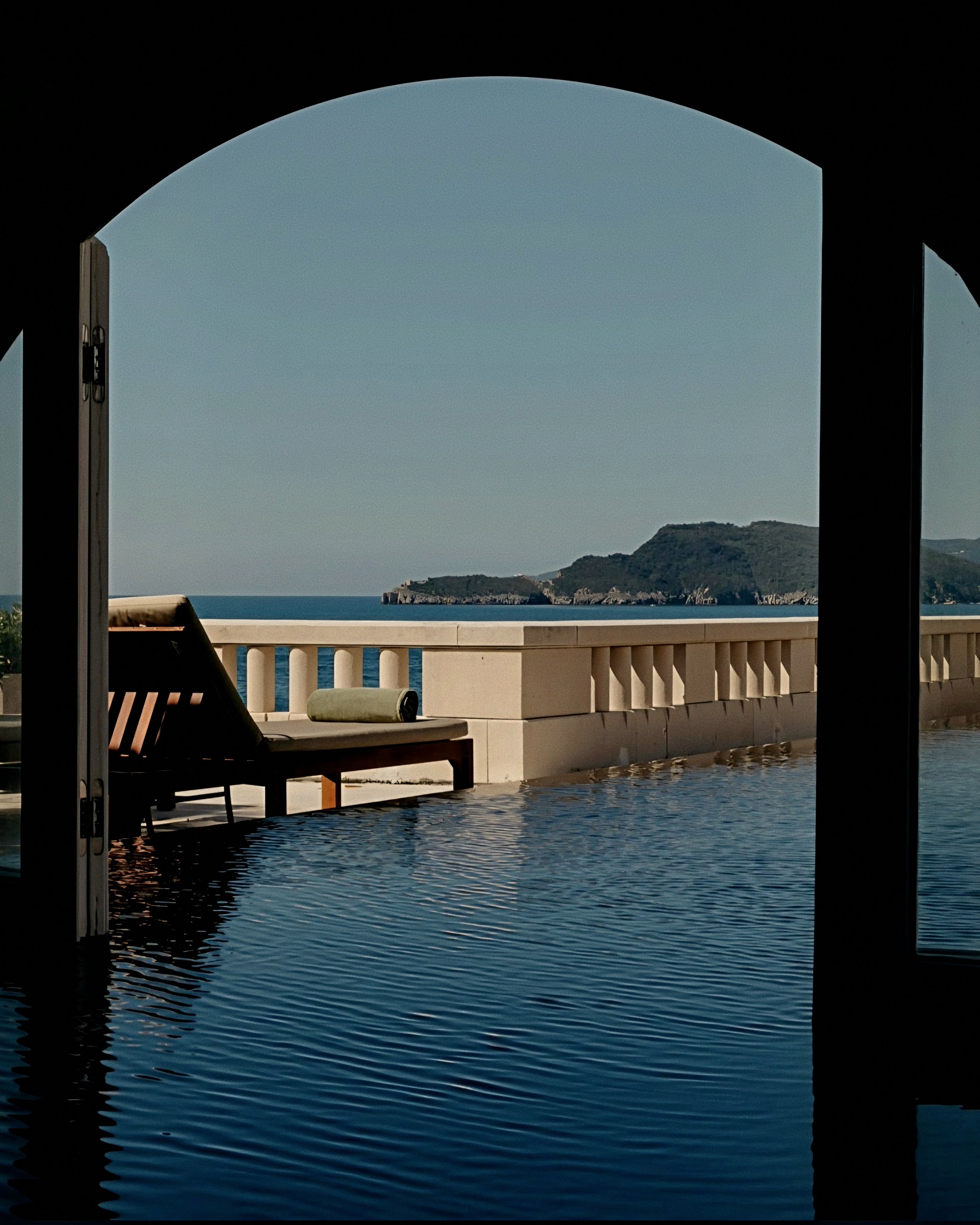
A suspended plane of deep azure dissolving seamlessly into the boundless horizon of the Adriatic. Photo: Courtesy of Aman Sveti Stefan
Suspended along the dramatic southern precipices of the private island, the adult-only Cliff Pool offers an ethereal sense of levitation, functioning as an infinity basin framed by rugged stone masonry and ancient pine trees rooted directly in the rock face. Lined with sleek grey stone tiles that mirror the shifting shades of the Adriatic, this secluded aquatic retreat is serviced by dedicated pool butlers dispensing chilled towels, refreshing botanicals, and delicate daytime crudos from the adjacent Cliff Pool Bar—a chic, sun-drenched daytime lounge reserved exclusively for residents. Deeper within the medieval village walls, the historic Piazza Pool provides a charming, family-friendly oasis that blends effortlessly against the stone facade of a restored stone cottage, evoking the intimate atmosphere of a private European courtyard rather than a conventional resort pool.
Beyond the island's stone perimeter, the estate commands two kilometers of protected Adriatic coastline celebrated for its rare, naturally pink-hued sand and pebble beaches. Tucked inside a secluded emerald lagoon framed by towering cliffs and fragrant pine forests, Queen’s Beach remains an ultra-exclusive sanctuary reserved entirely for guests. Across the water, crescent-shaped King’s Beach stretches before the grand Villa Miločer mansion amidst centuries-old gardens, while the private shores flanking the stone causeway offer curated white-supertied loungers and seamless seaside service against the backdrop of the open sea.
The Fortified Islet
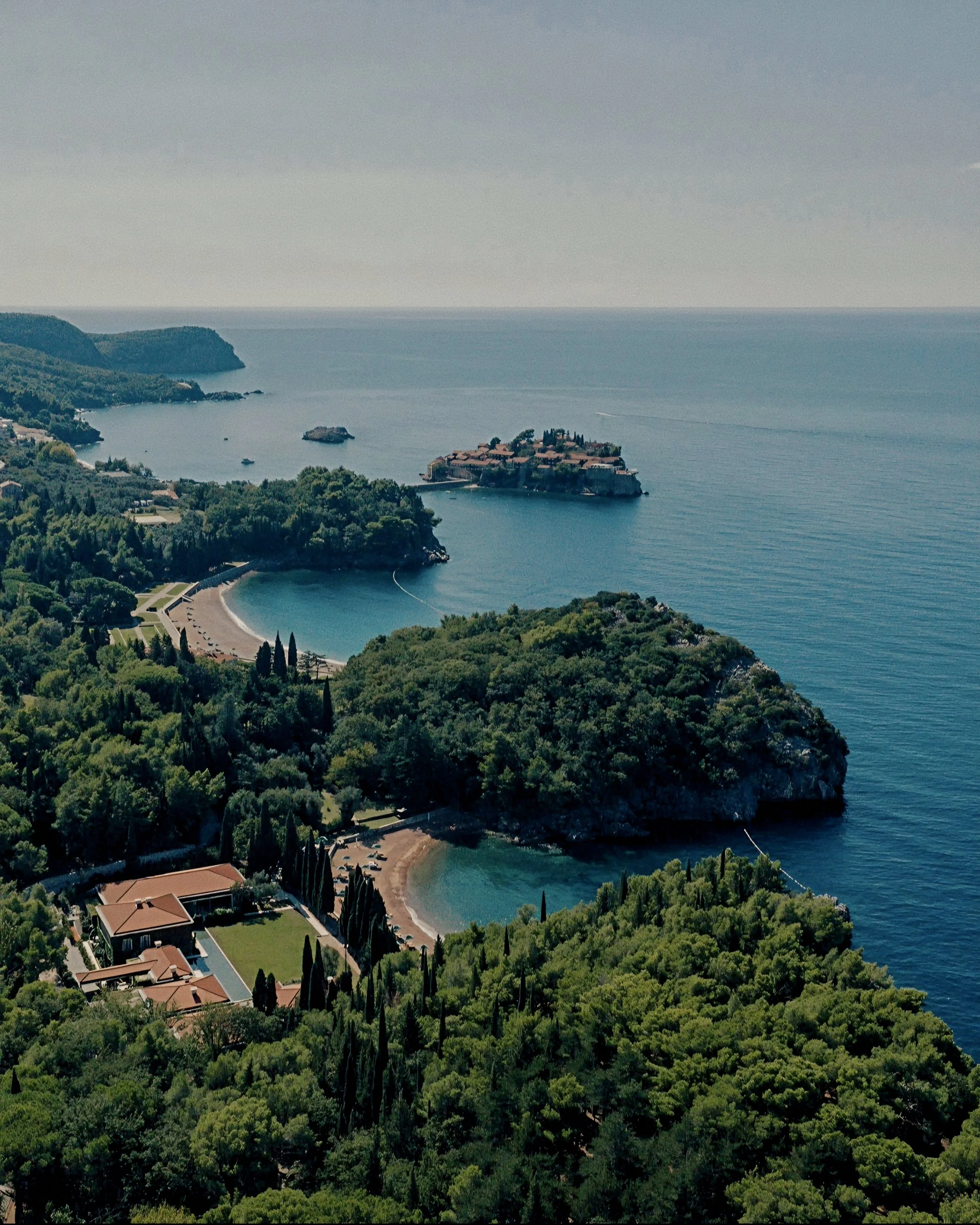
An ancient citadel of rose-hued stone rising like a mirage above pine-fringed crystalline waters. Photo: Courtesy of Aman Sveti Stefan
Ultimately, Aman Sveti Stefan transcends the conventions of luxury hospitality to stand as an enduring monument of spatial preservation and historical continuity. By choosing to protect five centuries of layered island heritage rather than succumb to modern gloss, the estate has cultivated a rarefied realm where past and present exist in unbroken harmony. From the scent of wild pine and sea salt drifting across the mainland forest canopy to the cool, patinated stone of the medieval alleys, the property offers a sanctuary for unhurried living and deep sensory restoration. It is a living ecosystem where the ghosts of cinematic royalty and tribal chieftains dissolve into the timeless rhythm of the Adriatic tide.
As twilight descends over the pink-pebble shores and the stone walls of the islet catch the amber glow of the setting sun, the true weight of the sanctuary reveals itself. Here, behind heavy fortress gates and guarded forest perimeters, luxury is redefined not as excess, but as absolute privacy, stillness, and space. In masterfully anchoring a medieval Montenegrin fishing village into the vernacular of modern minimalist grace, Aman Sveti Stefan remains an unmatched coastal haven—proving that the ultimate modern indulgence is the rare, profound privilege of stepping completely outside of time.
ROYAUME RECOMMENDED
ESSENTIAL INFORMATION
To preserve your personal privacy, secure direct guest privileges, and ensure end-to-end data safety, luxury travelers are advised to book directly through the property's official portal.
(Note: Royaume maintains zero affiliate partnerships or booking commissions. We link exclusively to official brand channels for property verification and reader security.)