Inside Italy’s Most Reserved Coastal Escape: Forte dei Marmi
BY THE EDITORS
AUGUST 2026
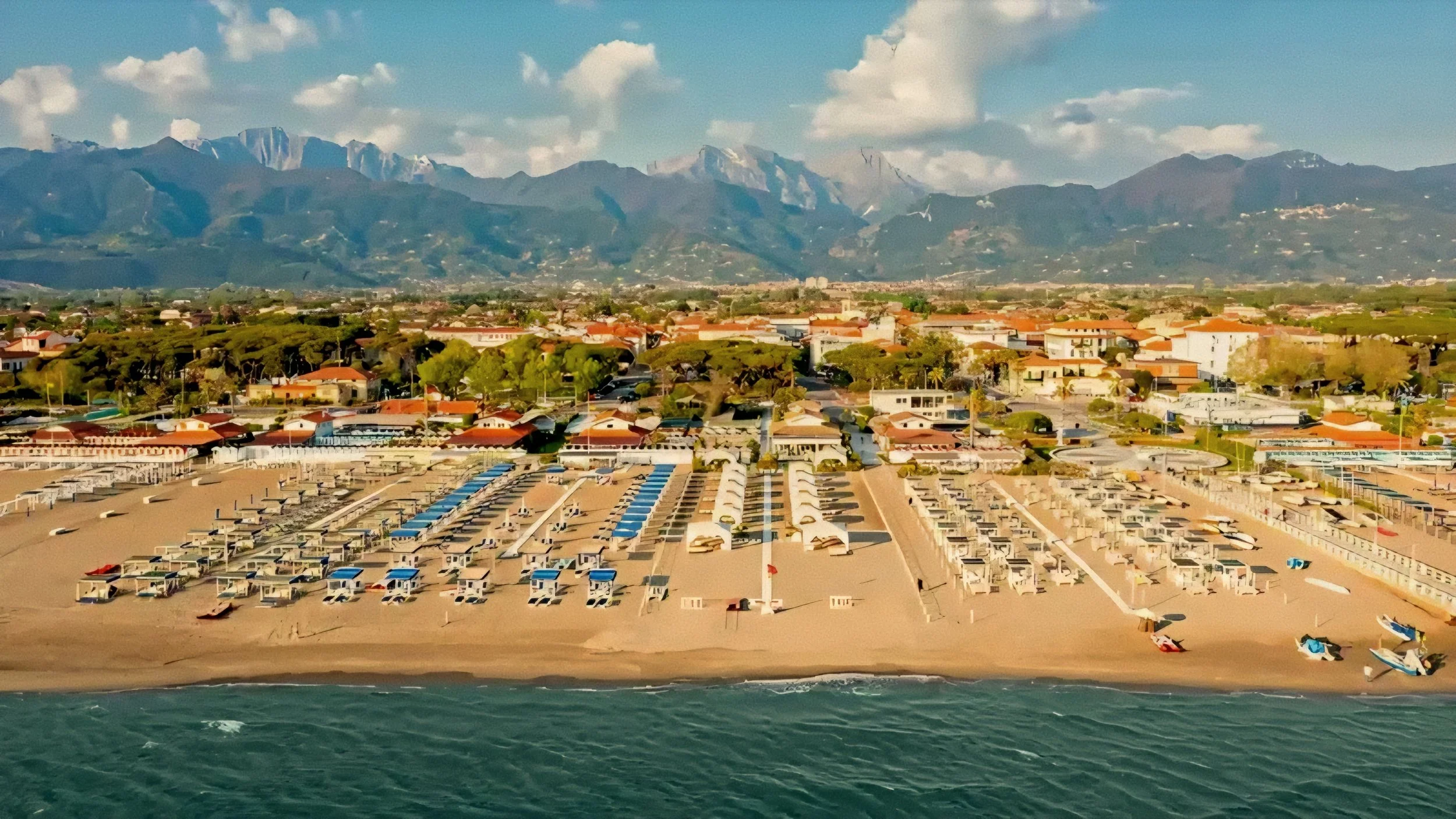
An aerial vista of the Versilia coastline framed by the Apuan Alps. Photo: Courtesy of Villa Costanza Boutique Hotel
Located along the Tuscan coast just north of Pisa, Forte dei Marmi, Italy stands as the ultimate old-money Italian beach town. Positioned on the exclusive Versilia Riviera beneath the Apuan Alps, this fashion-forward destination serves as Europe's premier coastal sanctuary. Framed by dense groves of stone pines and marble-paved avenues, this coastal enclave offers a rhythm rarely found on the modern Riviera—where time slows to the cadence of salt-tinged breezes and long, unhurried afternoons.
Unlike high-octane resort towns where luxury is loudly performed, Forte dei Marmi operates on an unwritten, generational code of quiet elegance. “It is not a place you visit to be seen,” noted one long-time resident of the enclave; “it is where one goes to disappear into the comfort of absolute familiarity.” Here, old-money families return summer after summer, conducting life not in gilded hotel lobbies, but within private villa gardens and shaded canvas beach cabanas along the Tyrrhenian shore.
The atmosphere is defined by an understated, barefoot ease that belies the immense wealth moving quietly beneath the surface. Helicopters touch down discreetly inland, yet the primary mode of transport through town remains the humble, custom-built bicycle—a charming paradox that defines the town's unique approach to high-society living.
To step into Versilia during the high season is to experience an idyllic, almost cinematic slice of Italian heritage—a world where morning espresso seamlessly turns into late-afternoon aperitifs, and the art of il dolce far niente is elevated to its highest possible form.
The Estate Sanctuaries of Roma Imperiale
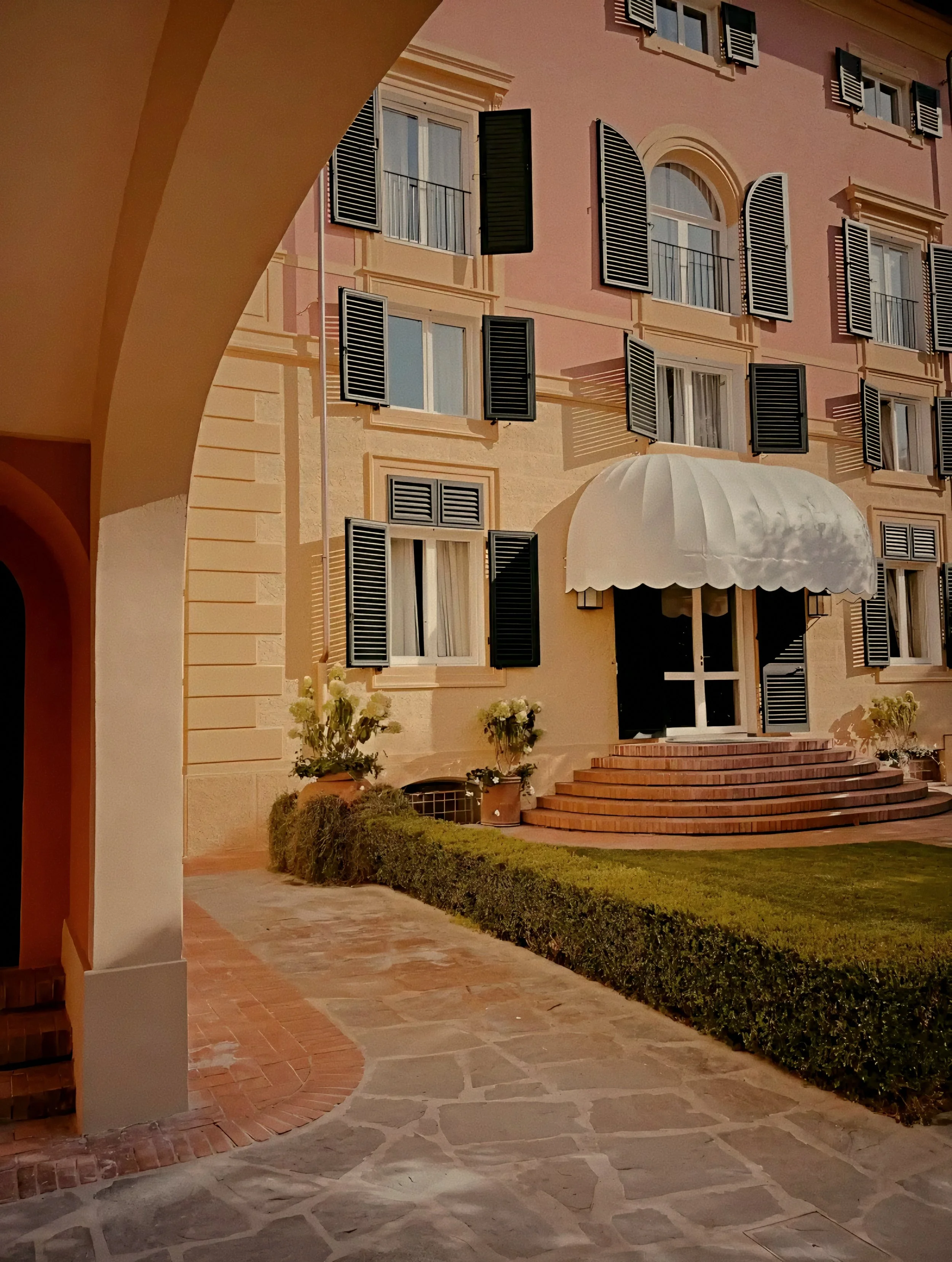
The terracotta façade of Augustus Hotel & Resort, formerly the seaside estate of the Agnelli family. Photo: Courtesy of Augustus Hotel
To understand the discreet soul of Versilia, one must venture into Roma Imperiale—the historic residential quarter where Italian industrial royalty, from the Agnellis to noble European houses, built their private summer retreats behind towering, manicured hedges and stone walls. Along the pine-shaded curves of Viale Ammiraglio Morin, modern excess yields entirely to timeless custom. The ultimate mark of true status here is not an exotic supercar, but cruising the quiet, resin-scented avenues on a leather-saddled bike in tailored Tuscan linen—a daily ritual that feels almost untouched by the passing of decades.
This tradition of residential sanctuary finds its living architectural blueprint in legendary institutions like the Augustus Hotel & Resort. Originally constructed as Villa Costanza by Admiral Morin at the beginning of the twentieth century, the estate was purchased in 1926 by Edoardo Agnelli and became the legendary Villa Agnelli, established the definitive blueprint for high-society privacy—shrouded in sprawling botanical gardens and connected to its private beach via a discreet, subterranean pine-lined tunnel. “The architecture was never meant to show off,” an interior preservationist observed during its restoration—it was designed as an impenetrable private sanctuary for deep, restorative quiet.
Even today, as new generations of international elites discover the coast, the architectural integrity of Roma Imperiale remains strictly preserved. The sprawling villas, hidden behind dense Mediterranean flora, continue to serve as the ultimate backdrop for private family gatherings, secluded dinner parties, and an enduring style of Italian hospitality that values privacy above all else.
The Architecture of the Cabana
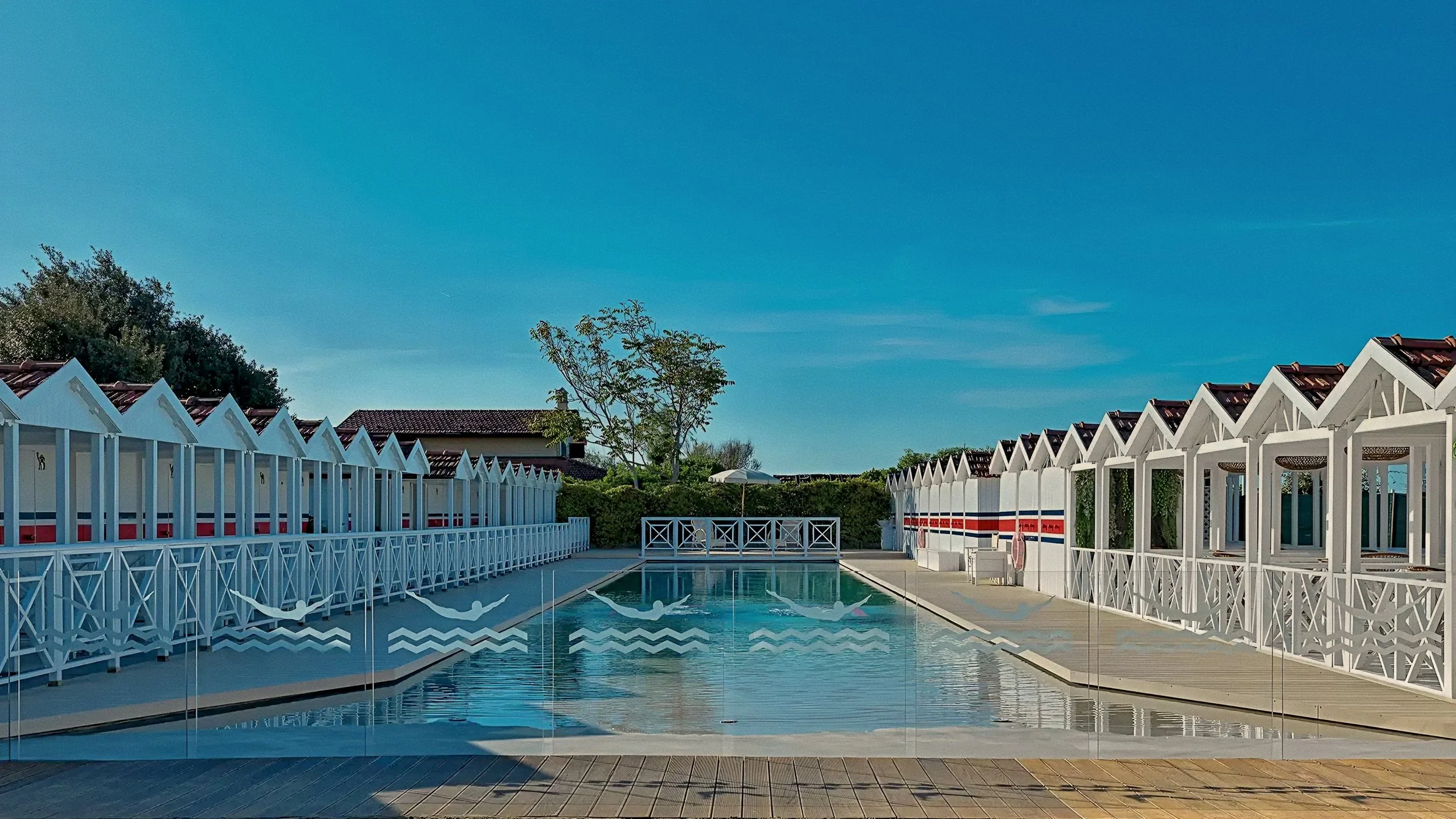
Canvas cabanas framing the private pool deck at Augustus Beach Club. Photo: Courtesy of Augustus Hotel
Running parallel to the coastal spine of Viale Italico, the waterfront is defined by historic, multi-generational bagni—private beach clubs that function as open-air, sand-dusted drawing rooms rather than public shores. Along this wide, golden stretch of coast, prominent families hold the exact same canvas cabanas for generations, treating the beach as a private estate for unhurried conversation, reading, and sunlit lunches.
These structured canvas pavilions—draped in crisp creams, deep navy, or muted sage—offer absolute seclusion from the outside world. Here, the maritime day unfolds with effortless precision: crisp local Vermentino served barefoot on the sand, the ambient murmur of the sea replacing the noise of daily life, and lingering multi-course seafood lunches beneath pine-shaded pergolas that gently stretch straight into the amber light of golden hour.
High Society & The Evening Promenade
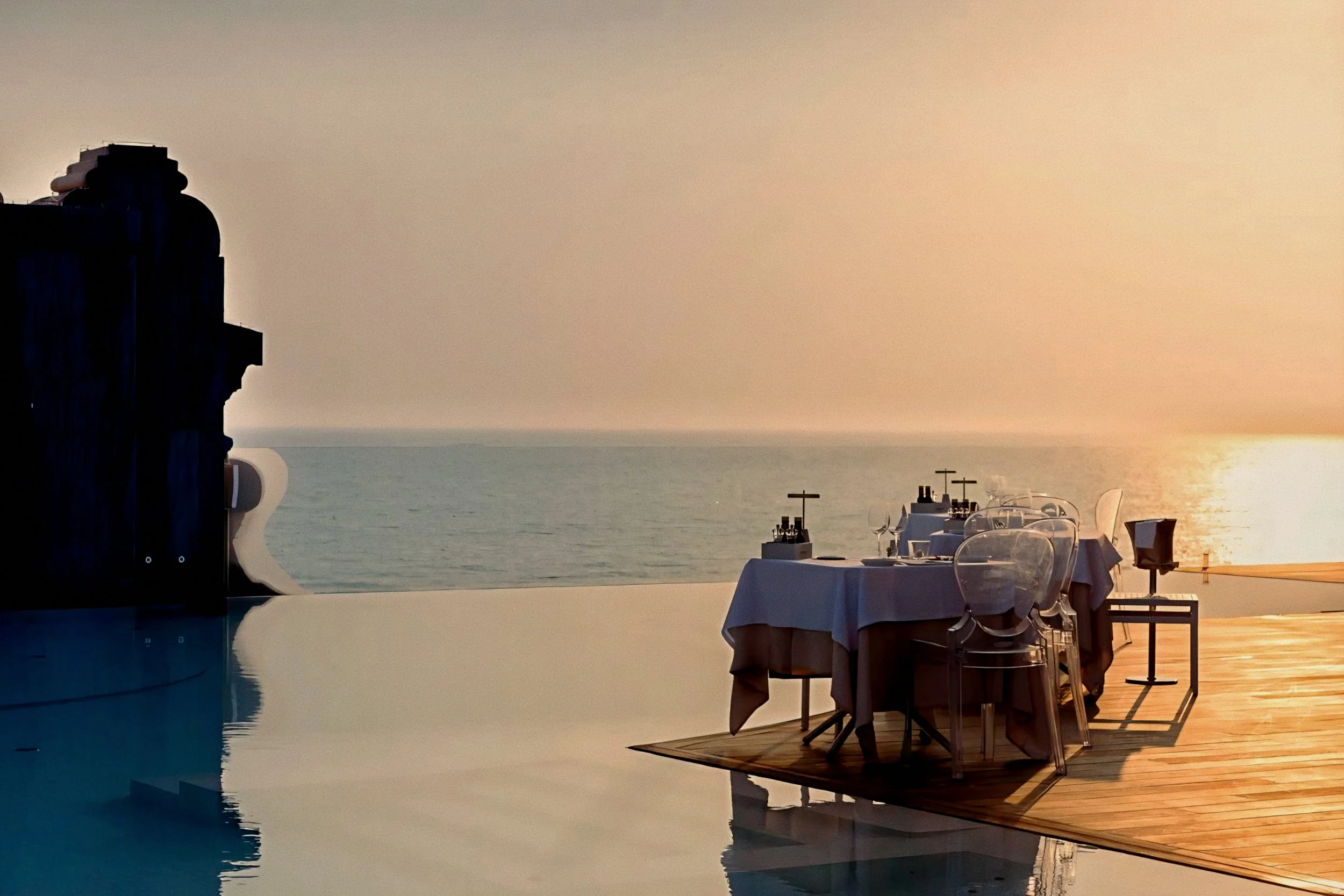
Sunset dining suspended over the pool deck at Hotel Principe. Photo: Courtesy of Hotel Principe Forte dei Marmi
As dusk casts a warm, honeyed glow across the coast, the day's quiet energy seamlessly shifts toward the pedestrianized heart of town. Branching out from the historic landmark of Piazza Garibaldi, the elegant avenues of Via Carducci, Via Roma, Via Spinetti, and Via Mazzini transform into an understated evening promenade. High fashion houses—from Prada and Bottega Veneta to Hermès—occupy low-slung, whitewashed Tuscan buildings, integrating haute couture into the town's relaxed coastal architecture without a trace of commercial glare.
This high-society lifestyle naturally revolves around cherished local rituals that have dictated the summer calendar for generations. On Wednesday mornings, global tastemakers and stylish locals quietly gather at the iconic Mercato del Forte in Piazza Marconi—a legendary open-air market where one hunts for rare cashmere, bespoke linens, and fine leather goods crafted by master Tuscan artisans. “It is the only market in the world where you will see couture clienteles hunting for simple, perfect textiles alongside local craftsmen,” remarks an Italian fashion editor.
By nightfall, the enclave gathers for white-glove dining at Lux Lucis, the spectacular rooftop Michelin-starred restaurant located directly within Hotel Principe, or legacy institutions like Ristorante Lorenzo. Welcoming statesmen, artists, and international icons since 1981, dining here—surrounded by modern Italian masterworks and served with immaculate, traditional precision—remains an essential, deeply civilized ceremony of the Versilian summer.
ESSENTIAL INFORMATION
To preserve your personal privacy, secure direct guest privileges, and ensure verified reservations, luxury travelers are advised to book each featured hotel, beach club, and dining venue directly through its official portal.
For verified municipal directives—including Versilia coastline regulations, private beach club access codes, and local civic protocols—readers may consult the town’s official municipal portal.
(Note: Royaume maintains zero affiliate partnerships or booking commissions. We link exclusively to official brand channels for property verification and reader security.)